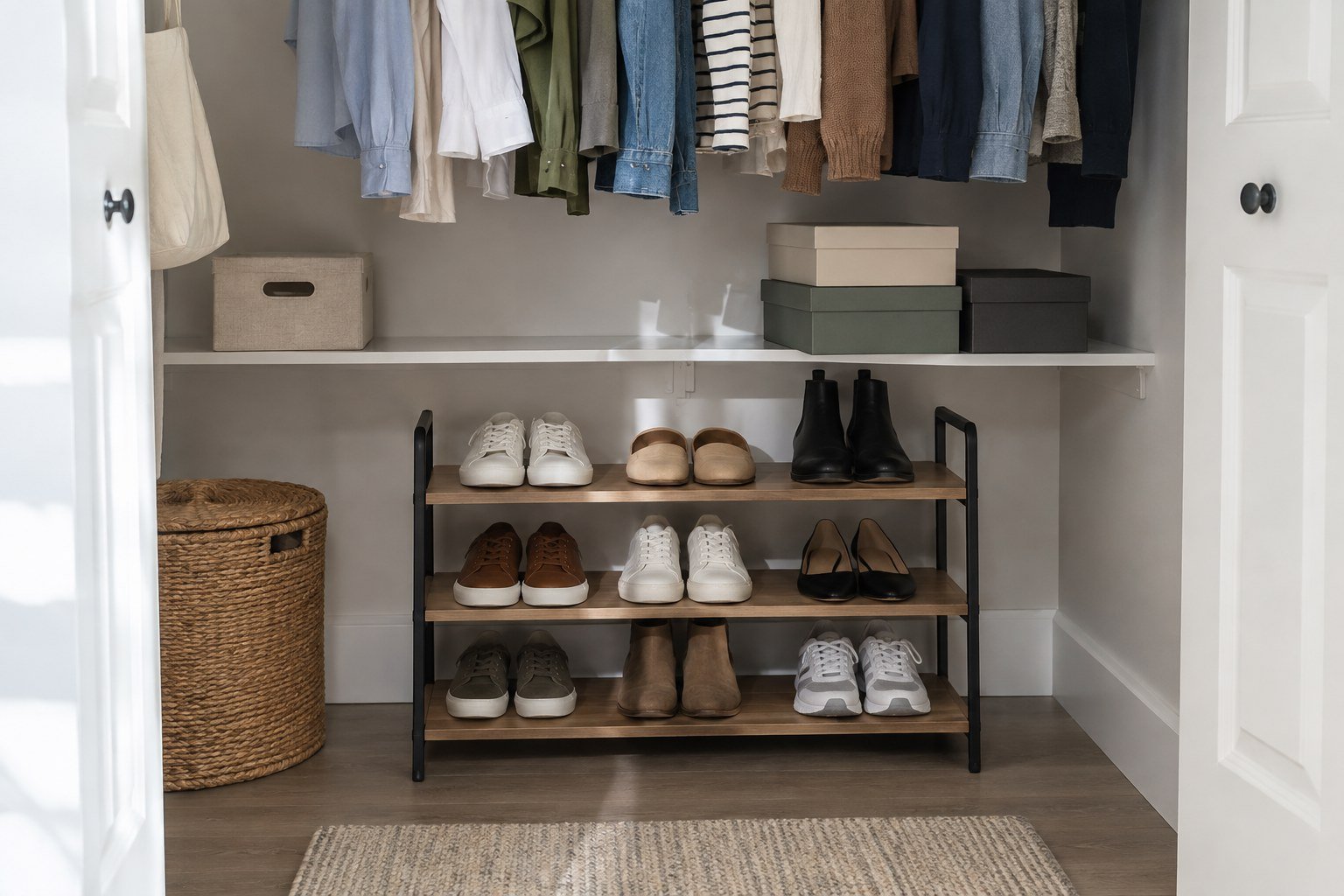
Shoe storage for small closets works best when the organizer fits the space you actually have, the shoes you actually wear, and the way you reach them every day. A rack, box, hanging organizer, or over-the-door system can save useful floor or shelf space, but only when its outside dimensions and access requirements suit the closet.
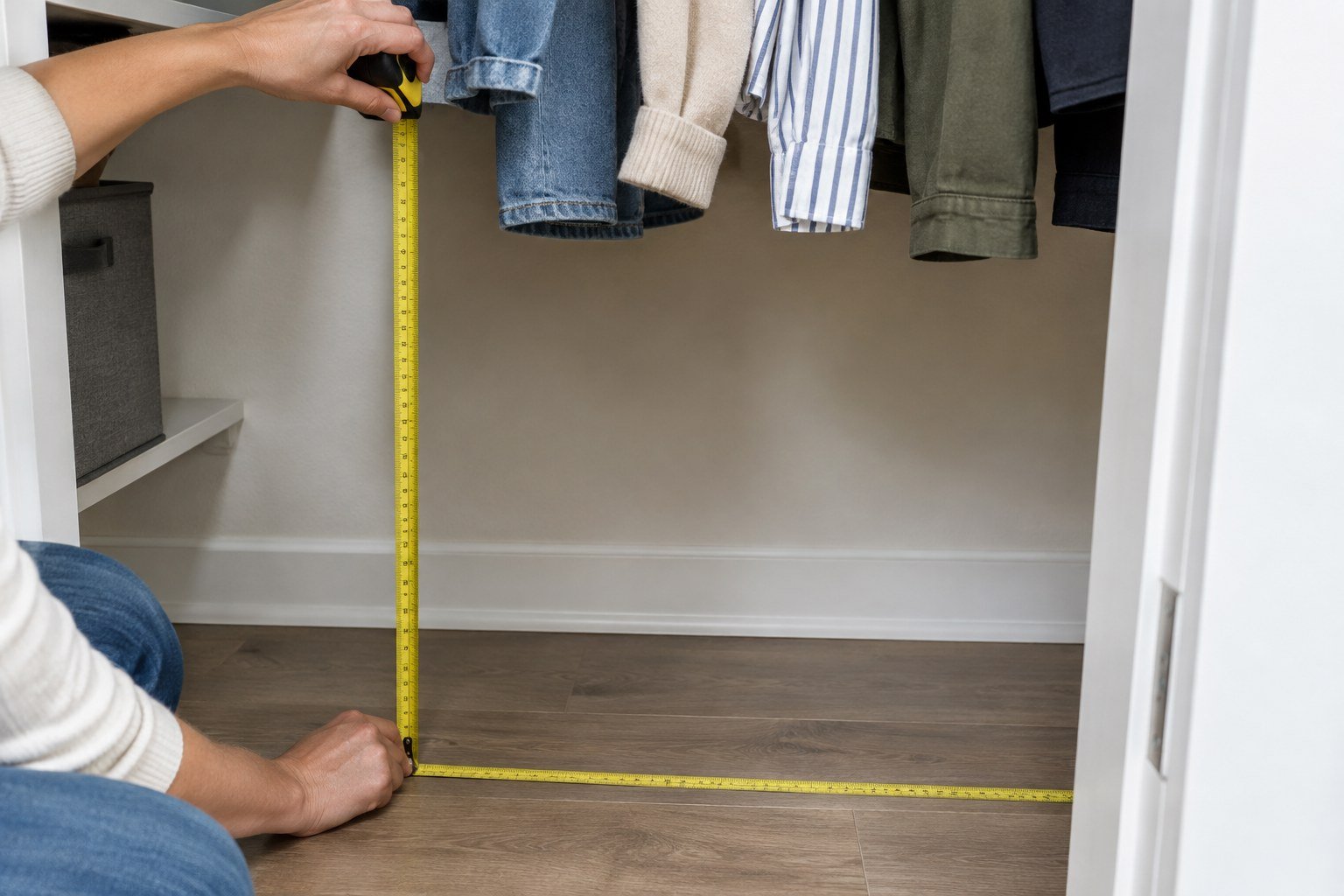
Before buying anything, measure the closet floor, shelves, door opening, and the clearance below hanging clothes. Then compare those measurements with the organizer’s exact dimensions and instructions rather than assuming a compact-looking design will fit.
Why Shoe Storage Fit Matters in a Small Closet
Small closets rarely have one large unused area. Their storage is divided between hanging clothes, shelves, doors, floor space, trim, and the path needed to reach everything. A shoe organizer can fit within the closet width yet still block a sliding door, crowd long garments, or make the lowest pairs difficult to remove.
Shoe size and style also change the space you need. Low-profile everyday shoes, boots, heels, and bulky athletic shoes do not occupy the same footprint or vertical clearance. Measure the largest pairs you plan to store instead of designing the whole setup around your smallest shoes.
What to Measure Before Buying Shoe Storage
Record the usable space rather than the closet’s approximate overall size. Doors, baseboards, shelf supports, hanging clothes, and trim can reduce what is actually available.
 Save
Save- Floor width: Measure the clear span available for a rack, boxes, or other freestanding storage.
- Floor depth: Check from the back wall to the point where the organizer could interfere with the closet opening or door.
- Vertical clearance: Measure below short and long hanging garments separately.
- Shelf width and depth: If shoes will sit on an existing shelf, record its usable surface rather than the nominal shelf size.
- Shelf height: Check the clearance above the intended shelf, especially for boots or boxes.
- Closet-opening width: Make sure the organizer can pass through the opening and remain accessible once installed.
- Door movement: Account for hinged, sliding, or bifold doors and their full travel path.
- Largest shoe footprint: Measure a representative large pair from your collection rather than relying on shoe size alone.
- Organizer outside dimensions: Use the manufacturer’s full assembled dimensions, including frames, handles, hooks, or projections.
- Retrieval space: Leave enough room to lift, pull, tilt, or open the organizer as intended.
- Number of pairs: Count what you genuinely plan to keep in the closet so you do not buy more storage than the space can support.
Renter warning: “No-drill” does not mean every organizer is suitable for every rental closet. Check door, shelf, floor, and attachment compatibility, follow the product instructions, and do not force a system into a space where it interferes with normal closet use.
7 Things to Check When Choosing Shoe Storage for Small Closets
1. Where the Organizer Will Sit
Start with location, not product style. A low rack may work under shirts but fail beneath dresses. Boxes may fit a deep shelf but be awkward on the floor behind sliding doors. An over-the-door organizer uses vertical door space but depends on door thickness, top clearance, swing, and hardware.
Choose the location that creates the least conflict with clothing, doors, drawers, and other storage you use more often.
2. Your Largest Shoes
Do not assume every compartment or shelf will suit every pair. Measure the shoes that take up the most room, including tall boots or shoes with projecting heels. Compare those measurements with the usable compartment dimensions given by the manufacturer.
3. Width and Depth
A narrow organizer can still be too deep for the closet, while a shallow rack can leave valuable width unused. Check both dimensions together and include any frame, lip, handle, or angled shelf that projects beyond the main structure.
If several modules will sit side by side, compare their combined outside width with the actual usable span. Leave enough room to remove or reposition them without wedging everything together.
4. Vertical Clearance
Vertical space matters beneath hanging clothes, between shelves, and above stacked shoe storage. Measure garments at their natural hanging length. Clothing should not rest on the organizer or hide the shoes so completely that access becomes inconvenient.
5. Open vs Enclosed Storage
Open racks and cubbies make pairs immediately visible and accessible. Boxes or bins contain each pair and may create a more uniform shelf, but they require room to open, pull out, or unstack. Neither approach is universally better; choose according to how often you use the shoes and how much handling the container requires.
6. How Often You Need Each Pair
When planning shoe storage for small closets, everyday shoes should usually be easier to reach than occasional pairs. If the only way to reach one pair is to move several boxes, shift hanging clothes, or unload another organizer, the layout may look efficient while being frustrating in daily use.
7. Stability and Product Instructions
Freestanding and stackable systems should remain stable during normal use. Do not assume units can be stacked, extended, or loaded in a particular way unless the exact product instructions allow it. If a unit requires wall anchoring for safe use, do not treat it as a renter-friendly no-drill solution unless that installation is permitted.
Which Type of Shoe Storage Fits a Small Rental Closet?
The best type depends on where your closet has usable space. These common approaches solve different problems.
Low freestanding shoe rack: Uses closet-floor space and can fit beneath shorter hanging clothes. Check footprint, stability, and garment clearance.
Stackable shoe shelves: Can use vertical floor space when the exact system is designed to stack. Confirm the manufacturer’s stacking instructions and keep frequently used pairs accessible.
Shoe boxes or bins: Useful when you prefer contained storage on a shelf or floor. If you already use closet storage bins, compare box height, depth, handles, and retrieval room in the same way.
Over-the-door shoe organizer: Keeps the closet floor open by using compatible door space. Before choosing one, review the measurements that affect over-the-door closet storage, including door thickness, top clearance, handle space, and swing.
Hanging shoe organizer: Uses part of the closet rod and can create vertical compartments. The tradeoff is reduced hanging width and additional load on the existing rod.
Existing shelf: A shelf can work for frequently used or lighter pairs when the shelf dimensions, access, and documented capacity are suitable. Avoid arranging shoes where they are difficult to lift down safely.
How to Plan Shoe Storage Below Hanging Clothes
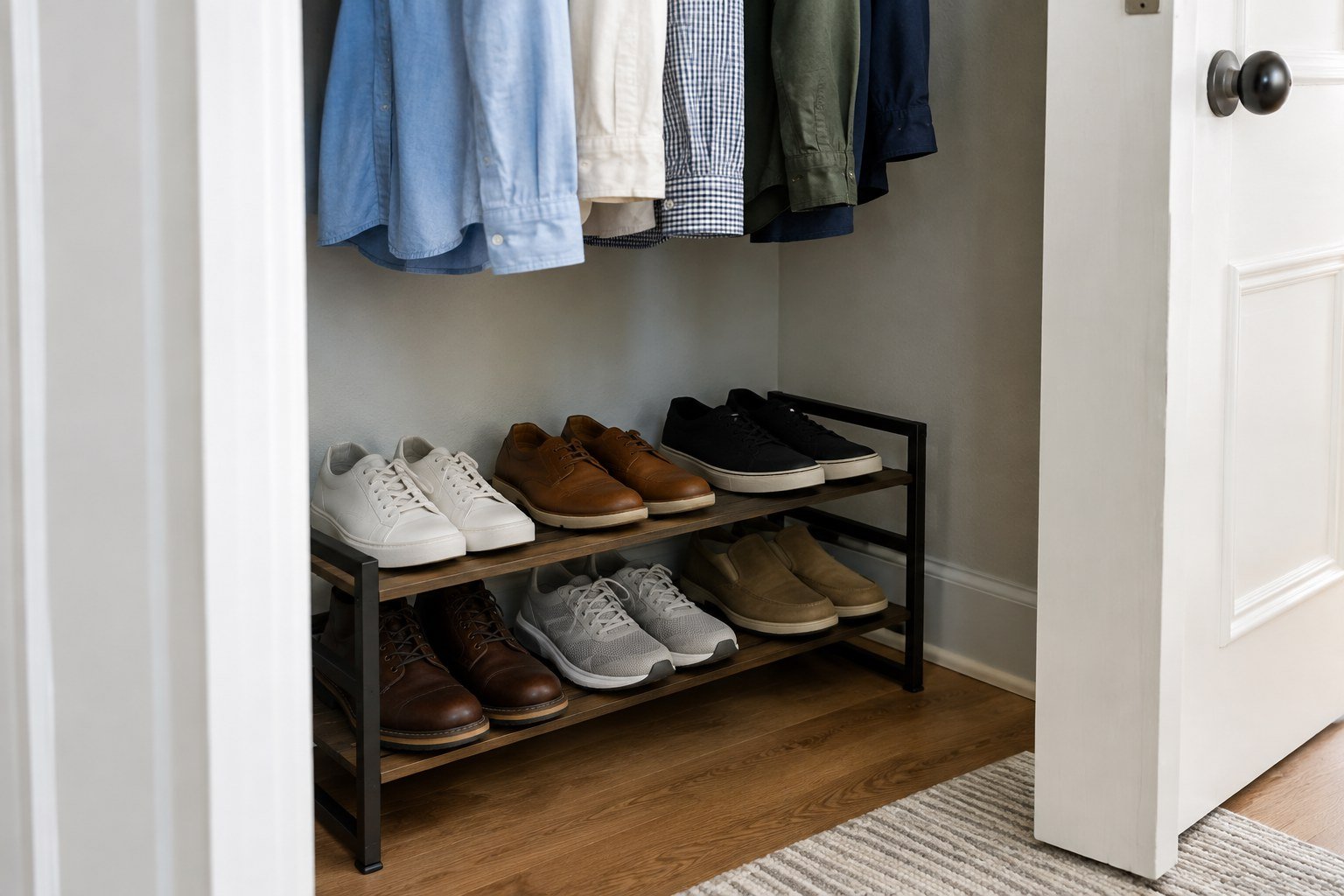
The floor below short garments is often one of the most useful areas for renter-friendly shoe storage. Separate the closet into short-hang and long-hang zones first. Shirts and folded trousers may leave substantially more usable floor clearance than dresses or coats.
 Save
SaveMeasure from the floor to the lowest point of the hanging garments, then compare that space with the full height of the proposed organizer and shoes. Keep enough clearance to remove the top pair without pushing clothing upward every time. The same measurements are useful when planning broader closet floor storage.
If the organizer sits close to sliding or bifold doors, check the door track and folding path. A rack that fits behind an open door may still interfere when the door moves.
How to Arrange Shoes for Easier Daily Access
- Remove shoes that do not need to live in this closet.
- Group the remaining pairs by how often you wear them.
- Measure the largest and tallest pairs in each group.
- Choose the closet zone that provides suitable width, depth, and height.
- Compare the organizer’s outside dimensions with that space.
- Place everyday pairs where they can be reached without moving other storage.
- Reserve less convenient shelf or upper positions for occasional pairs.
- Load the organizer gradually and follow its exact use instructions.
- Open and close the closet doors to confirm nothing interferes.
- Adjust the layout if one frequently used pair remains awkward to reach.
Shoe Racks vs Shoe Boxes in a Small Closet
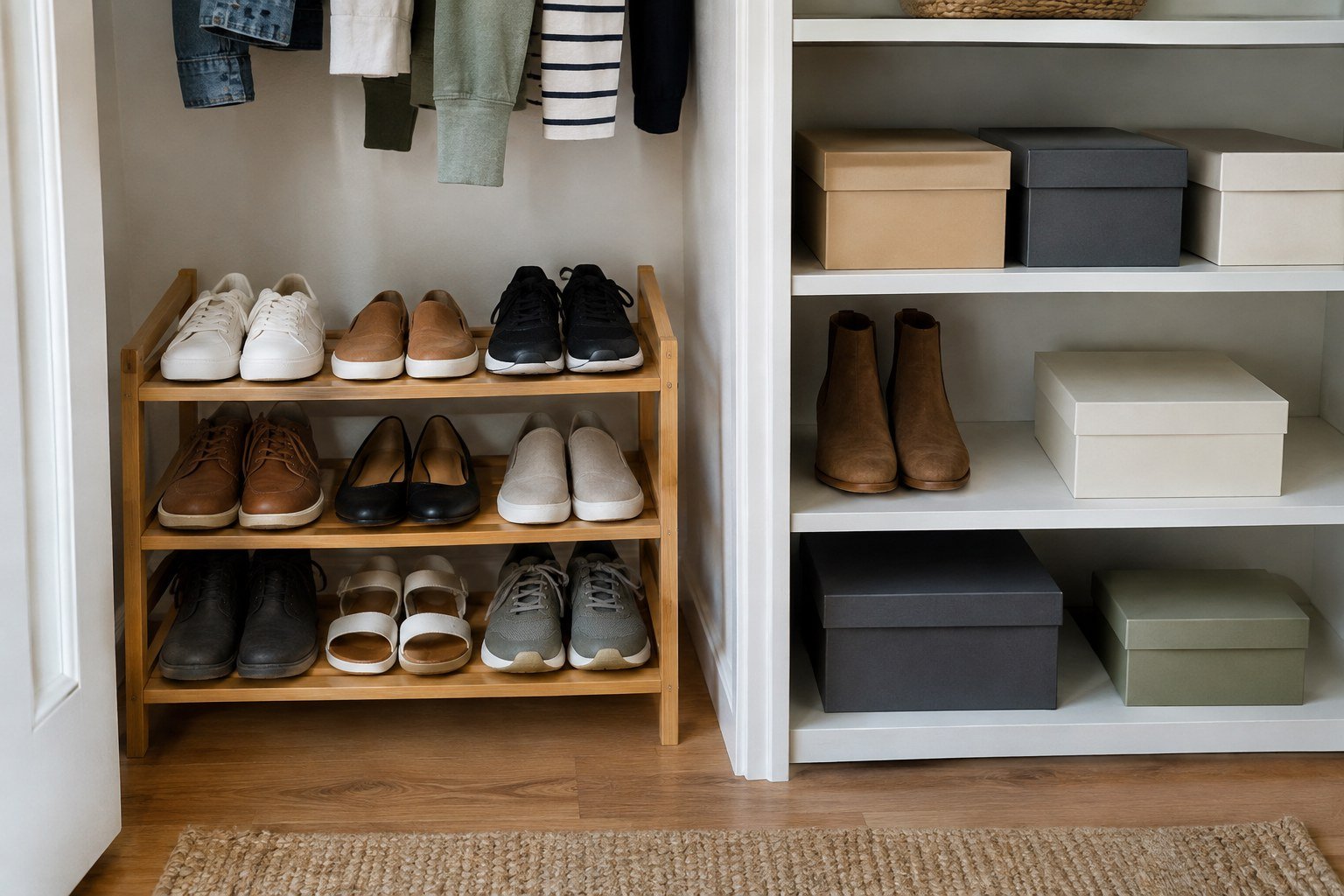
For shoe storage for small closets, a shoe rack can keep several pairs visible and make everyday access quick. It also exposes the shoes and uses a fixed footprint, so the rack needs to fit both the closet floor and the shoes placed on it.
 Save
SaveIndividual boxes separate pairs and can work on shelves or the floor. They may be easier to rearrange one at a time, but stacked boxes can make lower pairs harder to reach. If using boxes, confirm whether the exact design is intended for stacking and avoid building an unstable tower simply to maximize capacity.
Common Shoe Storage Mistakes in Rental Closets
- Buying a rack before measuring floor depth.
- Measuring the closet but not the largest shoes.
- Ignoring the length of hanging clothes above the organizer.
- Blocking sliding, bifold, or hinged-door movement.
- Assuming all shoe boxes or shelves are stackable.
- Choosing compartments that do not suit boots or bulky shoes.
- Putting frequently worn pairs behind several other containers.
- Using a tall freestanding unit without checking its required installation method.
- Filling every available inch and leaving no retrieval space.
- Assuming a no-drill organizer is automatically suitable for every rental surface or door.
Is No-Drill Shoe Storage Good for Renters?
No-drill shoe storage can be useful because many racks, boxes, shelf-based systems, and compatible hanging organizers can be positioned without permanent built-in work. They are also easier to rearrange when your shoe collection or closet layout changes.
The limitation is fit. A portable organizer can still block a door, crowd garments, overload a shelf or rod, or require an attachment method that does not suit the closet. Treat shoe storage as one part of your wider closet storage without drilling plan rather than adding a product simply because there is an empty-looking gap.
Frequently Asked Questions
What is the best shoe storage for a small closet?
The best option is the one that fits your usable floor, shelf, rod, or door space while keeping your most-used shoes easy to reach. There is no single organizer type that works for every closet.
How do I measure a small closet for shoe storage?
Measure usable width, depth, vertical clearance, door movement, and the space needed to remove the organizer. Also measure the largest shoes you plan to store.
Can I put a shoe rack under hanging clothes?
Yes, when the rack and shoes fit beneath the garments without contact and remain accessible. Measure short-hang and long-hang areas separately.
Are over-the-door shoe organizers good for renters?
They can be useful when the organizer is compatible with the door and does not interfere with closing, hinges, the frame, or surrounding storage. Check the exact product and door requirements.
Should I use shoe boxes or an open rack?
Open racks simplify visibility and access, while boxes contain individual pairs. Choose according to available space and how frequently you need each pair.
Can shoe boxes be stacked?
Only stack them when the exact product is designed and documented for that use. Check stability and keep lower pairs practical to retrieve.
How many pairs should I store in a small closet?
There is no universal number. Start with the pairs that genuinely need to be there and choose storage that preserves access instead of maximizing pair count at any cost.
Can I store boots in a small closet shoe organizer?
Only when the usable compartment height, width, and depth suit the boots. Measure the actual pair and compare it with the organizer specifications.
Where should everyday shoes go in a closet?
Keep them in a location you can reach without moving other boxes, clothing, or organizers. Less-used pairs can occupy less convenient positions.
Does no-drill shoe storage damage rental closets?
No-drill does not guarantee damage-free use. Suitability depends on the organizer, surfaces, door or shelf condition, attachment method, loading, and correct installation. Follow the exact instructions and stop using a setup that rubs, marks, slips, or interferes with the closet.
Final Thoughts
Good shoe storage for small closets starts with measurement, not maximum capacity. Check the closet floor, shelves, door movement, hanging-clothes clearance, and your largest shoes before buying. Choose a setup that keeps frequently worn pairs easy to reach, leaves normal closet movement intact, and follows the exact organizer instructions. In a rental, a smaller reversible setup that works comfortably is usually more useful than squeezing in one more level of storage.