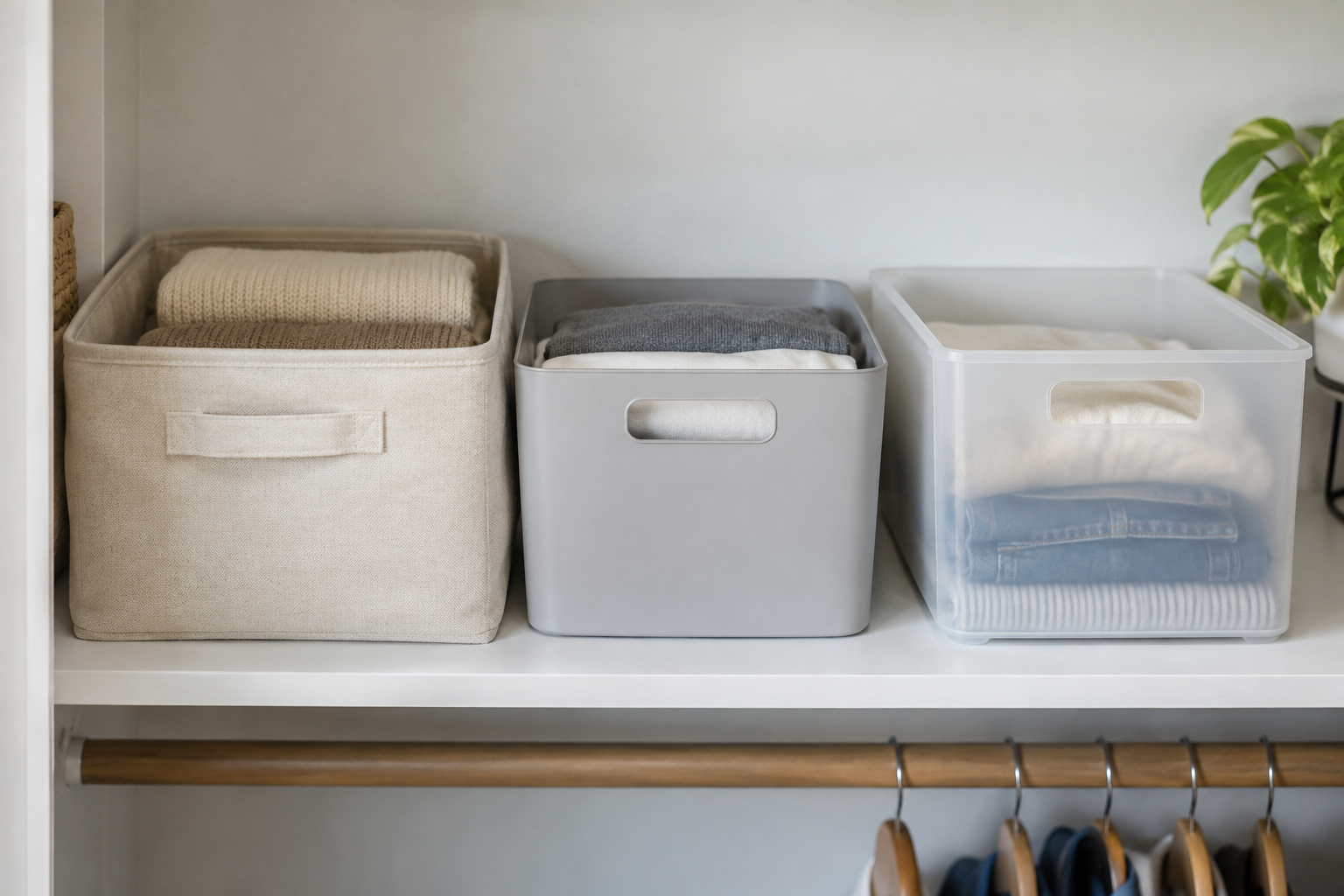
Closet storage bins can make an existing shelf easier to organize, but choosing by appearance alone can waste space. Shelf width, depth, and height matter alongside handles, lids, and room to retrieve each container. Measure before buying so you can choose a bin that works with your closet instead of trying to make an unsuitable one fit.
Why Fit Matters When Choosing Closet Storage Bins
Outside dimensions determine whether a container fits the shelf. Inside dimensions tell you what it can hold; tapered walls, thick sides, and recessed handles can make that usable space smaller than the exterior suggests.
A bin can also fit while sitting still yet be awkward to remove. A projecting handle may catch the door frame, or a lid may hit the shelf above. Plan the route from the shelf into your hands, not just the footprint.
What to Measure Before Buying Closet Storage Bins
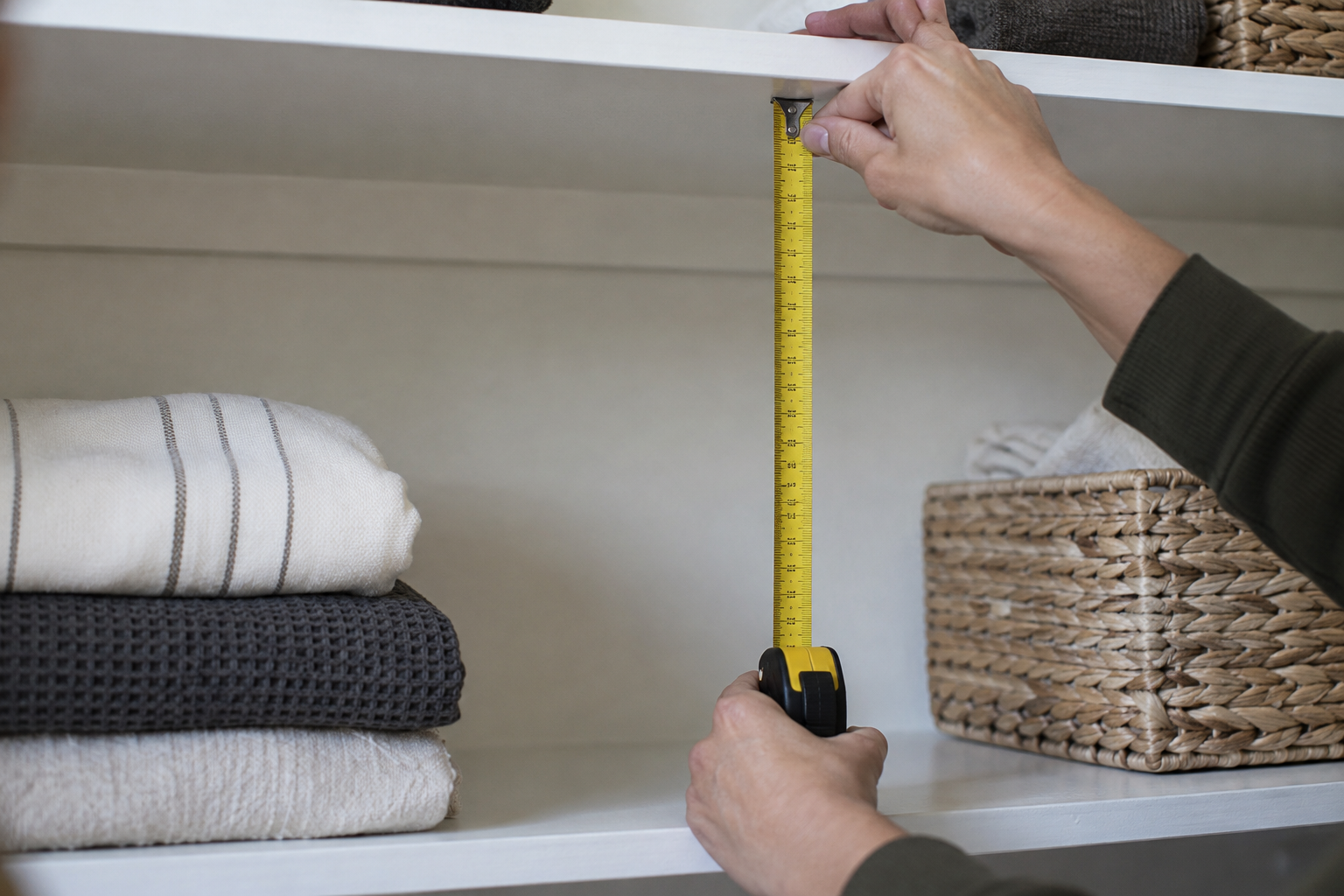
Record measurements for the actual shelf section you plan to use. Check obstructions and compare your notes with official manufacturer dimension drawings, including whether the listed measurements include lids and handles.
 Save
Save- Shelf width: Measure the usable span between walls, supports, or other obstructions.
- Shelf depth: Measure the supported surface from back to front.
- Usable vertical clearance: Check the space above the shelf, including brackets or a sloping ceiling.
- Closet-opening width: Measure the opening available with the doors in their usual position.
- Shelf-edge clearance: Note any lip or raised edge the bin must clear.
- Bin outside width: Use the widest exterior point, not the base alone.
- Bin outside depth: Include front-to-back projections shown in the product documentation.
- Bin outside height: Check the full assembled height with the intended lid.
- Handle projection: Allow for protruding handles and room for your fingers.
- Lid clearance: Consider lifting, tilting, or removing the lid.
- Retrieval space: Check the path for pulling out and holding the container.
- Number of bins planned: Compare their combined widths with the usable shelf span.
Renter warning: A storage bin can fit the shelf dimensions and still be difficult to use if its handles, lid, or surrounding clearance prevent easy removal. Measure the space needed to retrieve the bin, not just the shelf surface.
7 Things to Check When Choosing Closet Storage Bins
1. Bin Width
Compare the widest outside dimension with usable shelf width. For side-by-side bins, add their actual widths and then assess whether you can grasp and remove each one. A row that fills every inch may prevent access to side handles. There is no single spacing allowance that works for every container.
2. Bin Depth
Compare outside depth with the supported shelf surface. An overly deep bin may project beyond the edge or interfere with doors. Account for the back wall, shelf shape, and any trim rather than relying on a nominal shelf size.
A shallower bin can leave unused space behind it while making contents easier to reach. Decide whether that tradeoff suits the belongings you use most often.
3. Bin Height
Taller sides provide containment, but the container needs room beneath the shelf above. A lid may require additional space to lift or hinge open; otherwise, you may need to remove the whole bin first. Match height to the actual folded stack or item rather than choosing the tallest container available.
4. Handles and Retrieval
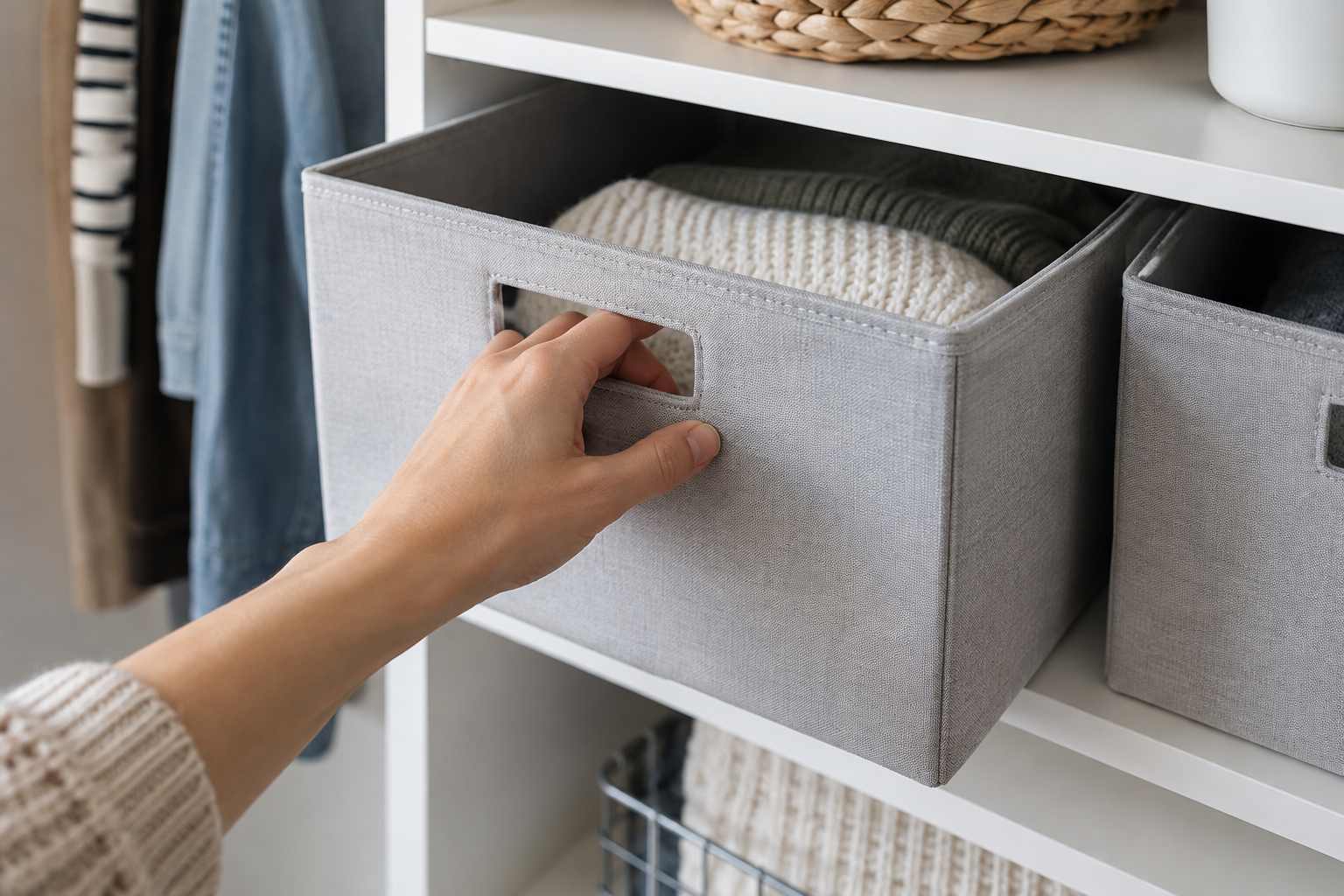
Built-in handles, cut-out handles, front pulls, and side handles change how you retrieve a bin. Check where your hands will go: side handles need room beside the container, while a projecting front pull adds to the space needed toward the door.
 Save
SaveRecessed grips can reduce usable internal space. Bins without handles require a practical way to grip the sides or support the base. Test the removal motion with the intended contents; an empty container is easier to handle than one filled with jeans or linens. Follow documented handle and load limits.
5. Open-Top vs Lidded Design
Open-top bins offer faster access and need no lid-opening clearance. Their contents remain exposed and may be visible from above. They can suit categories you reach for daily.
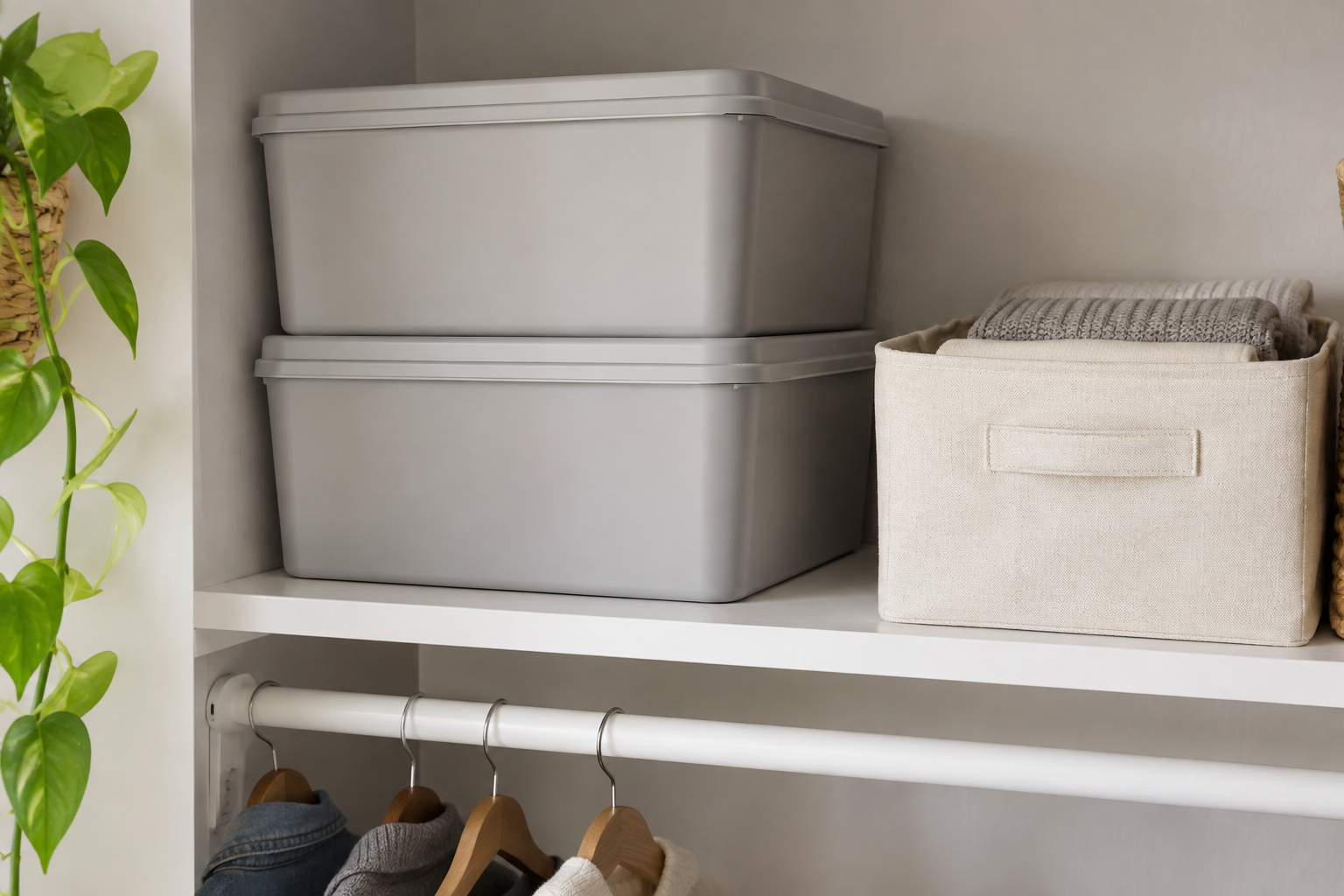
Lidded bins contain belongings and may suit less frequently used items, but you need access to the lid or room to remove the container. A lid alone does not mean a bin can support another bin. Follow the exact product instructions for stacking.
6. Transparent vs Opaque Storage
Transparent containers make it easier to identify contents visually and may save you from opening several bins. Opaque bins conceal mixed belongings and can create a quieter visual appearance. Neither is universally better: choose based on whether seeing the contents or concealing them helps your routine. Removable labels can help identify opaque bins.
7. Stackability and Access
Stacking can use vertical shelf space, but reaching a lower container may require moving everything above it. Do not assume every bin is designed to stack. Check the manufacturer’s instructions for the exact model, compatible lids, and any stacking restrictions.
 Save
SaveKeep frequently used categories independently accessible when possible. Assess the loaded arrangement against the shelf’s documented capacity as well as the container instructions. If you cannot confirm suitability, choose a different arrangement; maximum stack height is less useful than comfortable access.
How Many Storage Bins Should You Put on One Closet Shelf?
Start with usable shelf width and compare the actual external widths of your planned containers. Their combined width is only a first check: each bin must still pass through the closet opening and be removable without wedging against its neighbors.
Leave room for categories that need a larger footprint. Different-width bins can serve a mixed collection better than identical ones. Sketch the layout or use paper footprints to compare options, remembering that a flat template cannot test handles, height, or lifting. The maximum number that fits is not automatically the best arrangement.
How to Choose Bin Sizes for Different Closet Items
Group your belongings first and measure the groups in the way you intend to store them. One container size rarely suits every category.
Folded shirts: Match the interior footprint to your usual fold so shirts do not need to be crammed into narrow corners.
Sweaters: Check the space occupied by the actual folded garments. A bulky sweater group may need a different bin from lightweight shirts.
Jeans: Consider loaded weight as well as volume. A smaller group may be easier to remove than one large container of denim.
Linens: Group sets in a way that lets you retrieve the pieces together. Check the interior dimensions against your folded bundles.
Accessories: Use a container that keeps smaller belongings findable. An oversized deep bin can turn a simple category into a rummaging task.
Handbags: Compare internal height and width with the bags themselves, including handles. Avoid choosing a footprint that requires forcing them into place.
Seasonal items: Consider a lidded container if you prefer contained storage, but keep the filled bin manageable when it is time to swap seasons.
How to Arrange Closet Storage Bins Step by Step
- Clear enough of the shelf to measure accurately.
- Measure shelf width, depth, and usable height.
- Identify the categories you want to store.
- Decide which categories need frequent access.
- Compare shelf measurements with bin outside dimensions.
- Check handles, lids, and retrieval clearance.
- Test the planned arrangement before filling every bin.
- Place frequently used bins where they are easiest to reach.
- Add contents without overfilling.
- Confirm each bin can still be removed independently.
- Adjust the layout if access is awkward or space is wasted.
Closet Storage Bins vs Closet Shelf Dividers
Bins contain loose or grouped belongings within a defined footprint. They may conceal contents, but they also require room for removal. They are useful when you want to move a whole category together.
By comparison, closet shelf dividers separate open shelf space, keeping folded stacks visible and directly accessible. Their suitability depends on shelf compatibility. Choose according to whether your belongings need containment or simply separation; there is no universal winner.
Closet Storage Bins vs Hanging Closet Organizer
Bins use existing shelf or floor space and can be moved individually. For shelf storage, their usefulness depends on the shelf dimensions and access route. A hanging closet organizer hangs from the rod to create shelf-like compartments, reducing the width available for hanging clothes. Consider which space your closet can spare before choosing either approach.
Common Closet Storage Bin Mistakes
- Buying bins before measuring.
- Measuring only shelf width.
- Ignoring shelf depth.
- Ignoring usable height.
- Forgetting handle clearance.
- Forgetting lid-opening clearance.
- Choosing bins that cannot be removed independently.
- Overfilling bins.
- Stacking bins not designed for stacking.
- Using too many identical bins for different categories.
- Blocking other closet storage.
- Prioritizing appearance over accessibility.
Are Closet Storage Bins Good for Renters?
Freestanding bins need no drilling and offer reversible, portable organization on existing shelves. They can hold different categories and move with you, although a new closet may require a different arrangement.
They still consume shelf or floor space. Poor fit wastes room, deep containers can hide belongings, and stacking can reduce access. Exact suitability depends on your shelf and the product dimensions. For other ways to use existing closet space, explore closet storage without drilling.
Frequently Asked Questions
What size closet storage bins should I buy?
Choose outside dimensions that fit the shelf and retrieval route, then check that the interior holds your actual belongings.
How do I measure a closet shelf for storage bins?
Measure usable width, depth, and vertical clearance. Include the door opening, shelf lip, and any supports or trim that restrict movement.
Should closet storage bins have lids?
Choose lids when contained storage suits your routine. Open-top bins simplify frequent access; lids require opening or removal room.
Are clear storage bins better for closets?
Clear bins help you identify contents. Opaque bins conceal them. Choose the option that makes your categories easiest to manage.
Can I stack closet storage bins?
Only stack according to the exact manufacturer instructions, while checking shelf suitability and keeping the containers accessible.
How much space should I leave around a storage bin?
Enough for its handles, lid, and removal motion. The amount depends on the bin and closet; there is no universal clearance.
Are fabric bins good for closet shelves?
They can be useful if their dimensions, structure, and intended use suit your contents. Check official care, handle, and load guidance rather than assuming all fabric bins perform alike.
Can I use storage bins on the top closet shelf?
For broader top shelf closet organization, check shelf capacity and whether you can retrieve the filled container comfortably. Avoid placing a bin where you cannot manage its removal.
How many storage bins fit on one closet shelf?
Compare usable shelf width with combined outside widths, then check depth, height, and independent removal. The answer varies by arrangement.
Are closet storage bins better than shelf dividers?
Bins contain categories; dividers separate visible stacks. Choose based on your belongings, shelf compatibility, and preferred access.
Final Thoughts
Choose closet storage bins by measuring first and comparing outside dimensions with the space you can actually use. Account for handles and lids, preserve retrieval room, and match container size to the contents. Avoid excessive stacking, prioritize usable access, and follow exact product instructions wherever fit, loading, or stacking depends on the design.