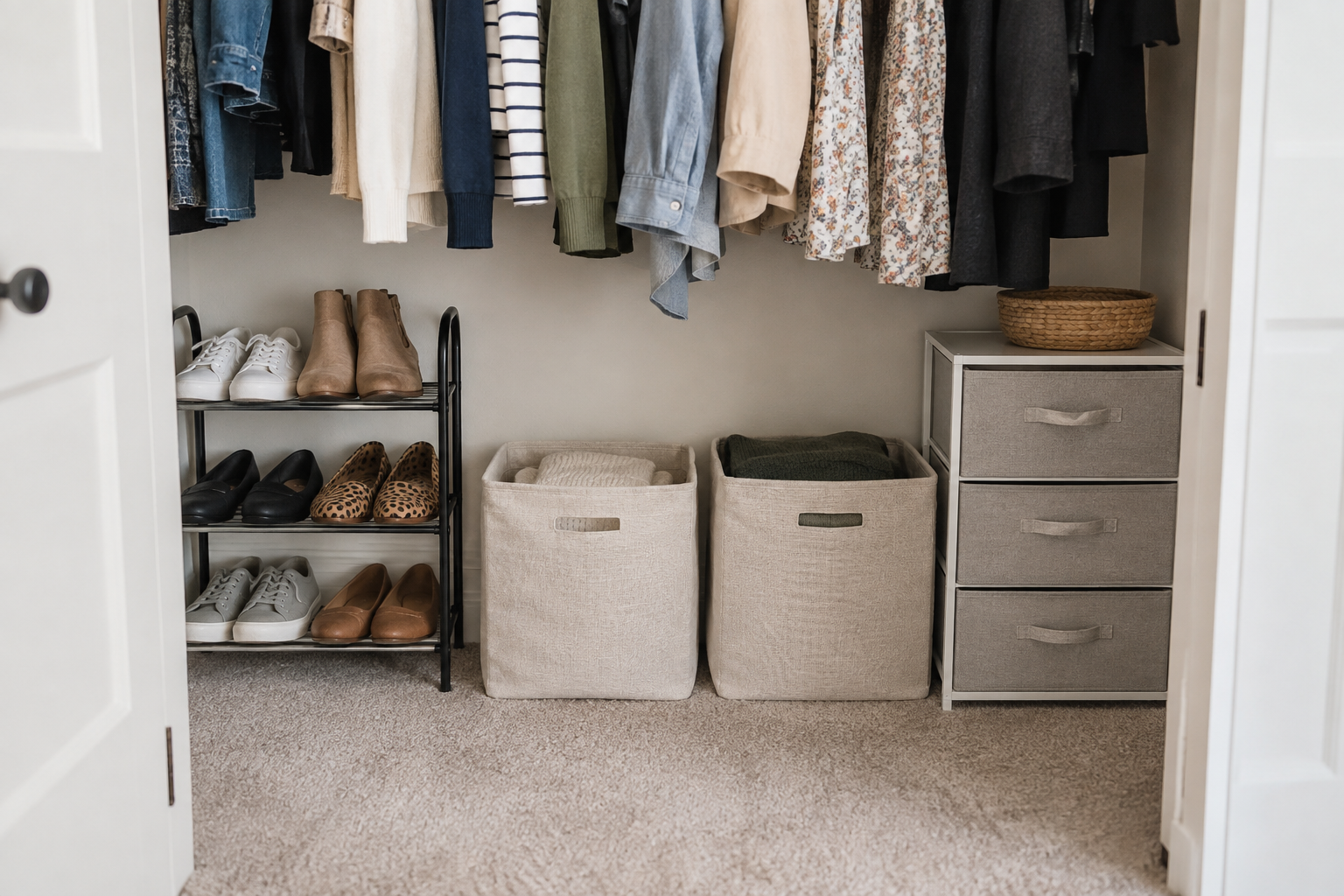
Closet floor storage can make useful space out of the area below hanging clothes without drilling or adding permanent built-ins. For renters, the best setup is usually one that fits beneath the actual garments, stays clear of the closet doors, and can be removed or rearranged easily.
The floor may look empty when the closet is partly cleared, but clothing length, door tracks, baseboards, vents, shelf supports, and retrieval space can quickly reduce what is usable. Measure the space while the closet is functioning normally, then choose storage that solves a specific problem instead of filling every available inch.
Why the Space Below Hanging Clothes Is Easy to Waste
Many rental closets have one rod positioned high enough to leave open floor area below shirts, folded trousers, skirts, and other shorter garments. That unused vertical space can hold low drawers, shoe racks, baskets, bins, or a compact freestanding closet shelf. The challenge is that the same solution may not fit beneath dresses, coats, or other long garments.
A useful layout starts by separating short-hang and long-hang zones. This prevents a floor organizer that fits perfectly under shirts from causing dresses to bunch up or hide stored items. It also makes it easier to decide where a second hanging level, shoe storage, or low drawer unit could genuinely help.
What to Measure Before Adding Closet Floor Storage
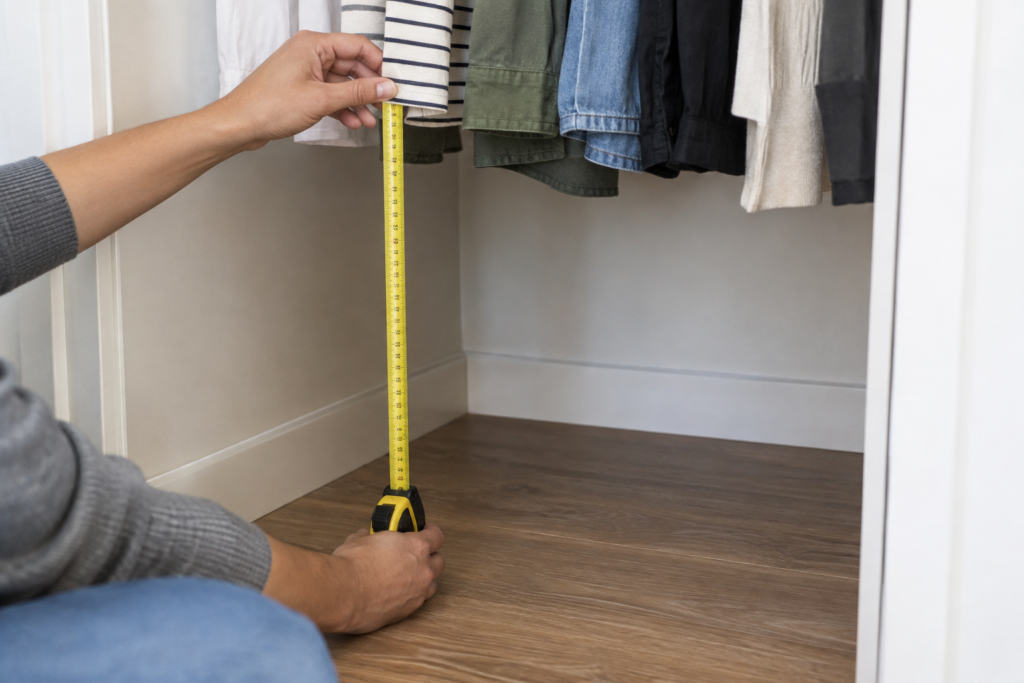
Measure the space with clothing hanging naturally and the doors in their normal operating position. Record the usable area rather than the closet’s approximate dimensions.
- Usable floor width: Measure between walls, baseboards, door tracks, and any fixed supports.
- Usable floor depth: Check from the back wall to the point where storage could interfere with the closet opening or door movement.
- Clearance below short garments: Measure from the floor to the lowest point of shirts, skirts, or other short-hang clothing.
- Clearance below long garments: Measure dresses, coats, and other longer items separately.
- Closet-opening width: Make sure the organizer can pass through the opening and remain accessible after placement.
- Door swing or track clearance: Include hinged doors, sliding tracks, and bifold-door movement.
- Drawer pull-out space: If you are considering drawers, measure the clear space needed in front of them.
- Bin retrieval space: Check whether a container can be lifted or pulled forward without pushing clothing aside.
- Baseboard and trim: A unit may sit away from the wall if the baseboard projects into its footprint.
- Floor condition: Note slopes, carpet pile, thresholds, or uneven areas that could affect stability.
- Access points: Keep vents, outlets, service panels, or other areas that need access unobstructed.
Renter warning: A freestanding organizer can be removable and still be a poor fit. Do not block door tracks, vents, outlets, access panels, or normal closet movement, and do not treat a unit that requires wall anchoring as a no-drill solution unless that installation is permitted.
7 Things to Check When Planning Closet Floor Storage
1. Garment Length Above the Storage
The organizer should fit beneath the clothes you actually hang in that zone. Measure the longest garment that will remain there and leave enough room so fabric does not rest heavily on drawers, bins, or shoes. If long garments share the same section, floor storage may work better in another part of the closet.
2. Organizer Height
A taller unit can use more vertical space, but height only helps if the top remains accessible and clothing above stays clear. Compare the full assembled height with the actual vertical clearance, including any items you intend to place on top.
If you are considering a second hanging level instead of a floor unit, a double-hang closet rod uses the same vertical zone differently. Choose the approach that better matches the length and quantity of the garments you hang.
3. Width and Depth
Check both dimensions together. A narrow unit can still project too far toward the closet door, while a shallow unit may leave useful floor depth behind it. Include handles, drawer fronts, frames, feet, and other projections shown in the product dimensions.
4. Door and Drawer Clearance
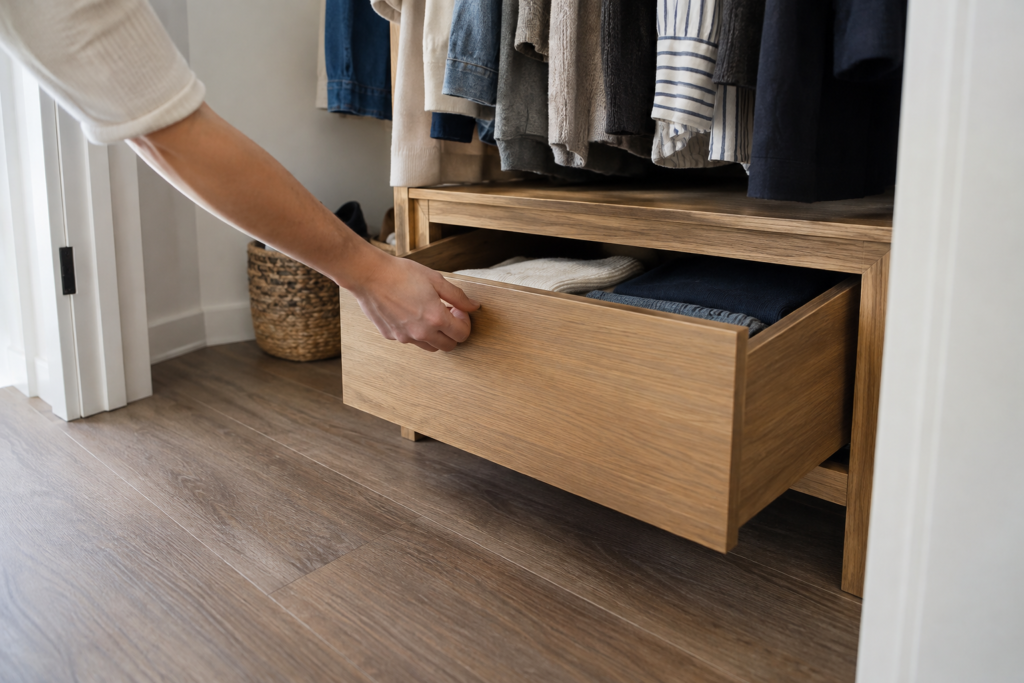
Storage is only useful if you can open it. Pull-out drawers need clear space in front, and baskets or bins need a path to move toward you. Sliding and bifold doors can make this more restrictive because part of the closet opening may remain covered even when the door is open.
5. Stability on the Closet Floor
Check whether the floor is level and whether carpet, thresholds, or trim affect how a freestanding organizer sits. A unit should remain stable during normal loading and retrieval. Follow the exact manufacturer instructions, including any anchoring requirement. For general furniture tip-over safety, the U.S. Consumer Product Safety Commission recommends following manufacturer instructions and securing top-heavy furniture appropriately.
6. What You Plan to Store
Match the organizer to the category. Shoes may need open access and enough depth for the largest pairs. Folded clothes may suit drawers or bins. Bags may need more height but less internal structure. Avoid choosing a container first and then forcing unrelated belongings into it.
7. Everyday Access
Frequently used belongings should be reachable without moving several other items. A layout that maximizes theoretical capacity but requires repeated unloading is unlikely to stay organized. Leave enough open space for normal retrieval and return.
What Can You Store on a Closet Floor?
The best categories are those that fit the available height and remain easy to reach. Depending on your closet and organizer, possibilities include:
- Shoes on a suitable low rack or in compatible containers.
- Folded clothing in shallow drawers or bins.
- Handbags or soft accessories in baskets.
- Small linens or seasonal accessories in removable containers.
- Laundry items in a compact basket where the closet layout allows.
- Occasional-use items that remain light and easy to retrieve.
For shoes specifically, see our guide to shoe storage for small closets, which compares racks, boxes, over-the-door systems, and other renter-friendly options.
Low Drawers vs Bins vs Shoe Racks
Low drawers keep categories contained and allow access without lifting the whole organizer, but they need clear pull-out space in front.
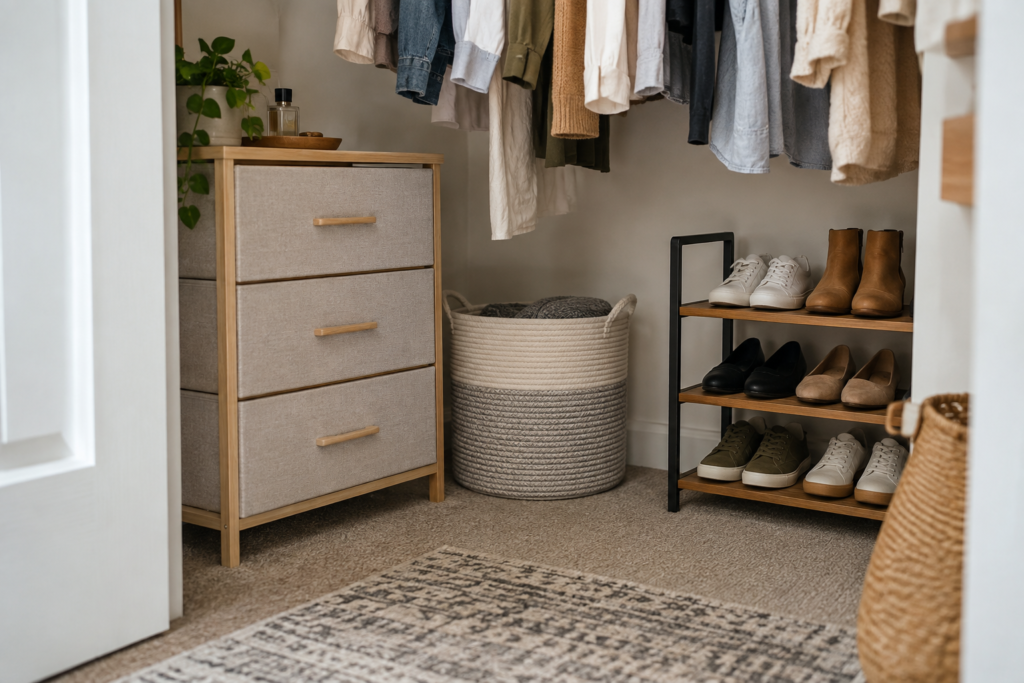
Bins and baskets can be moved individually and work for mixed categories, but they require lifting or pulling clearance. Deep containers may hide smaller items if they are overfilled.
Shoe racks keep pairs visible and can use the floor beneath short garments efficiently. Their footprint must suit both the closet and the largest shoes you plan to store.
There is no universal winner. Choose according to what you store, how often you use it, and how the closet doors and hanging clothes affect access.
How to Arrange the Space Below Hanging Clothes Step by Step
- Separate the closet into short-hang and long-hang zones.
- Remove enough items to see and measure the floor clearly.
- Measure usable width, depth, and garment clearance.
- Open and close the closet doors and note the clear access path.
- Decide which belongings genuinely need floor-level storage.
- Compare organizer dimensions with the measured space.
- Check drawer, bin, or basket retrieval clearance.
- Place the organizer without blocking vents, tracks, or service access.
- Load a small amount first and test everyday access.
- Confirm hanging clothes remain clear and easy to browse.
- Adjust the arrangement before filling every compartment.
Closet Floor Storage vs Top Shelf Storage
Floor-level storage is usually easier to reach and can suit heavier or frequently used categories, provided doors and hanging clothes remain clear. Its main limitation is that it uses the closet footprint and can quickly make the lower area feel crowded.
Top shelves preserve floor area and can suit light, less frequently used belongings, but retrieval becomes more important. If your closet has usable high space, compare this approach with top shelf closet organization before deciding where each category belongs.
Common Closet Floor Storage Mistakes
- Buying an organizer before measuring beneath the actual garments.
- Ignoring the depth needed for doors to open normally.
- Forgetting drawer pull-out or bin retrieval space.
- Putting a tall unit beneath long dresses or coats.
- Blocking sliding or bifold-door tracks.
- Covering vents, outlets, or service access.
- Choosing a unit that is unstable on carpet or an uneven floor.
- Treating furniture that requires anchoring as automatically renter-friendly.
- Overfilling deep bins until everyday items are difficult to find.
- Using every inch of floor space and leaving no room to move or retrieve items.
Is Closet Floor Storage Good for Renters?
Yes, when the organizer is freestanding or otherwise suitable for the rental and fits the existing closet without permanent alteration. Low racks, removable bins, baskets, and compatible drawer units can all be rearranged or taken with you when you move.
The tradeoff is footprint. Floor storage can reduce open space and interfere with doors or long garments if it is poorly planned. Treat it as one part of your wider closet storage without drilling strategy rather than filling the entire lower closet automatically.
Frequently Asked Questions
What is the best closet floor storage for renters?
The best option fits the usable width, depth, and garment clearance while keeping doors and stored items easy to access. There is no single organizer type that suits every rental closet.
What can I put under hanging clothes?
Low drawers, shoe racks, baskets, bins, or a compact shelf may fit beneath shorter garments. Measure the longest clothing in that zone before choosing a unit.
How tall should a closet floor organizer be?
There is no universal height. Measure from the floor to the lowest hanging garment and compare that clearance with the organizer’s full assembled height.
Can I put drawers on a closet floor?
Yes, when the unit is suitable for the location, sits stably, and has enough clear space in front for the drawers to open fully.
Can I use bins below hanging clothes?
Yes. Check the bin height, the garment clearance above it, and whether you can pull or lift the bin out without pushing clothing aside.
Should shoes go on the closet floor?
They can when the floor area is suitable and the shoes remain easy to access. A low rack can help separate pairs from other stored belongings.
Can floor storage block a sliding closet door?
Yes. Measure the door track, opening, and travel path before placing storage near the front or sides of the closet.
Is freestanding closet storage renter-friendly?
It can be, but check the product instructions. A freestanding appearance does not mean a unit is safe to use without required anchoring or other installation steps.
How do I keep closet floor storage from looking cluttered?
Use a limited number of categories, avoid overfilling, and leave enough open space to retrieve items. Matching containers are optional; practical access matters more than visual uniformity.
Does closet floor storage require drilling?
Not when you use suitable removable bins, baskets, racks, or other freestanding organizers. Follow any required installation instructions and your rental rules.
Final Thoughts
Good closet floor storage starts with the space below the clothing you actually hang. Measure width, depth, garment clearance, and door movement; choose storage that matches the belongings you use; and preserve enough room to open, pull, and remove everything comfortably. For renters, a smaller reversible setup that keeps the closet functional is usually more useful than filling every available inch.