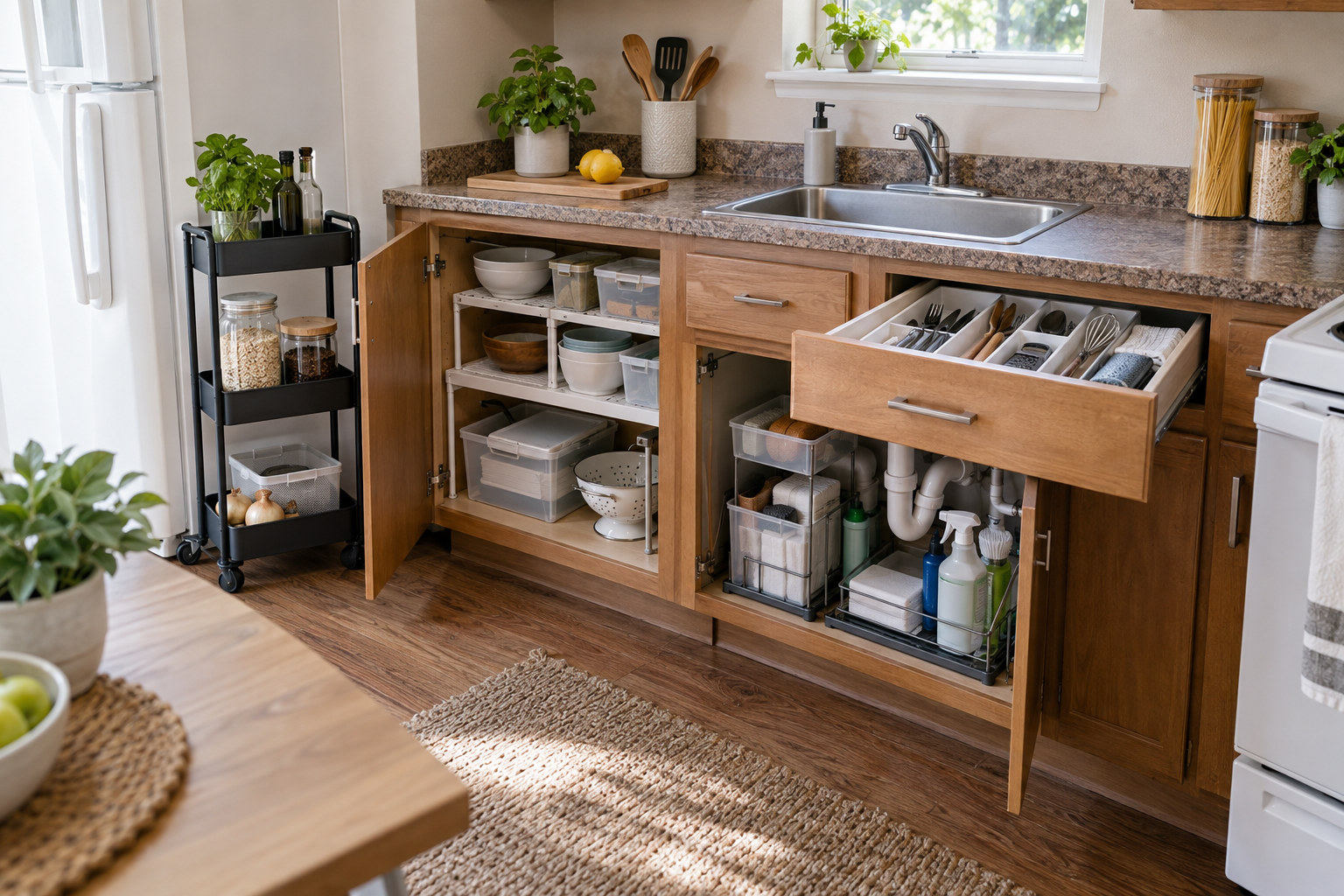
Creating more kitchen storage without drilling starts with using the space your rental already has. Cabinet height, cabinet doors, drawers, narrow floor gaps, counters, and freestanding areas can often hold much more when they are organized carefully.
Small rental kitchens are especially challenging because permanent shelves, wall rails, and cabinet alterations may not be allowed. The safest approach is usually to choose reversible storage that fits the kitchen rather than changing the kitchen to fit the organizer.
Measure first, keep ventilation and plumbing access clear, follow product-specific load limits, and avoid assuming that every adhesive, magnetic, over-door, or freestanding solution will work in every space.
Before Adding Kitchen Storage Without Drilling, Measure These Areas
Buying organizers before measuring is one of the easiest ways to waste money in a small kitchen. A shelf riser may be too tall for the cabinet, an over-door rack may stop the door from closing, or a slim cart may be just wide enough to block an appliance.
Measure the space while doors and drawers are operating normally. Record:
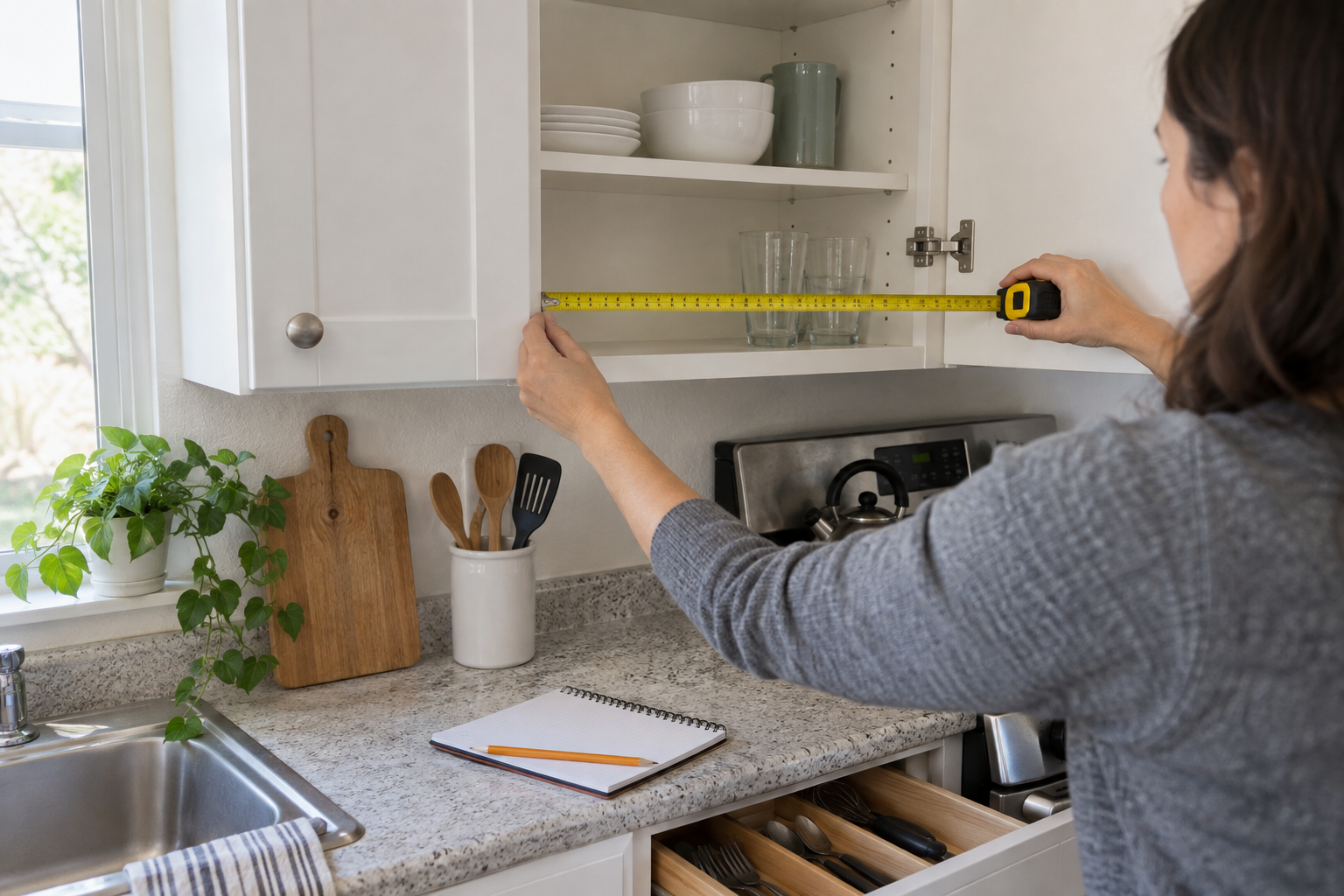
- Cabinet width, depth, and internal height: Measure the usable interior rather than the outside of the cabinet.
- Shelf-to-shelf clearance: Check how much unused height is available for risers or stackable organizers.
- Drawer width, depth, and height: Interior dimensions determine whether adjustable dividers or trays will fit.
- Cabinet-door thickness and top clearance: Important for over-the-door storage.
- Under-sink dimensions: Measure around pipes, valves, disposal units, and other plumbing.
- Narrow gaps: Check spaces beside the refrigerator, cabinets, or counters for a slim cart.
- Walkway clearance: Make sure freestanding storage does not make the kitchen difficult to move through.
- Appliance clearance: Leave room for refrigerator, oven, dishwasher, and cabinet doors to open fully.
Renter warning: No-drill does not automatically mean damage-free. Poor fit, excessive weight, adhesive on an unsuitable surface, or unstable furniture can still mark finishes or damage fixtures.
12 Renter-Friendly Kitchen Storage Ideas Without Drilling
1. Add Shelf Risers Inside Cabinets
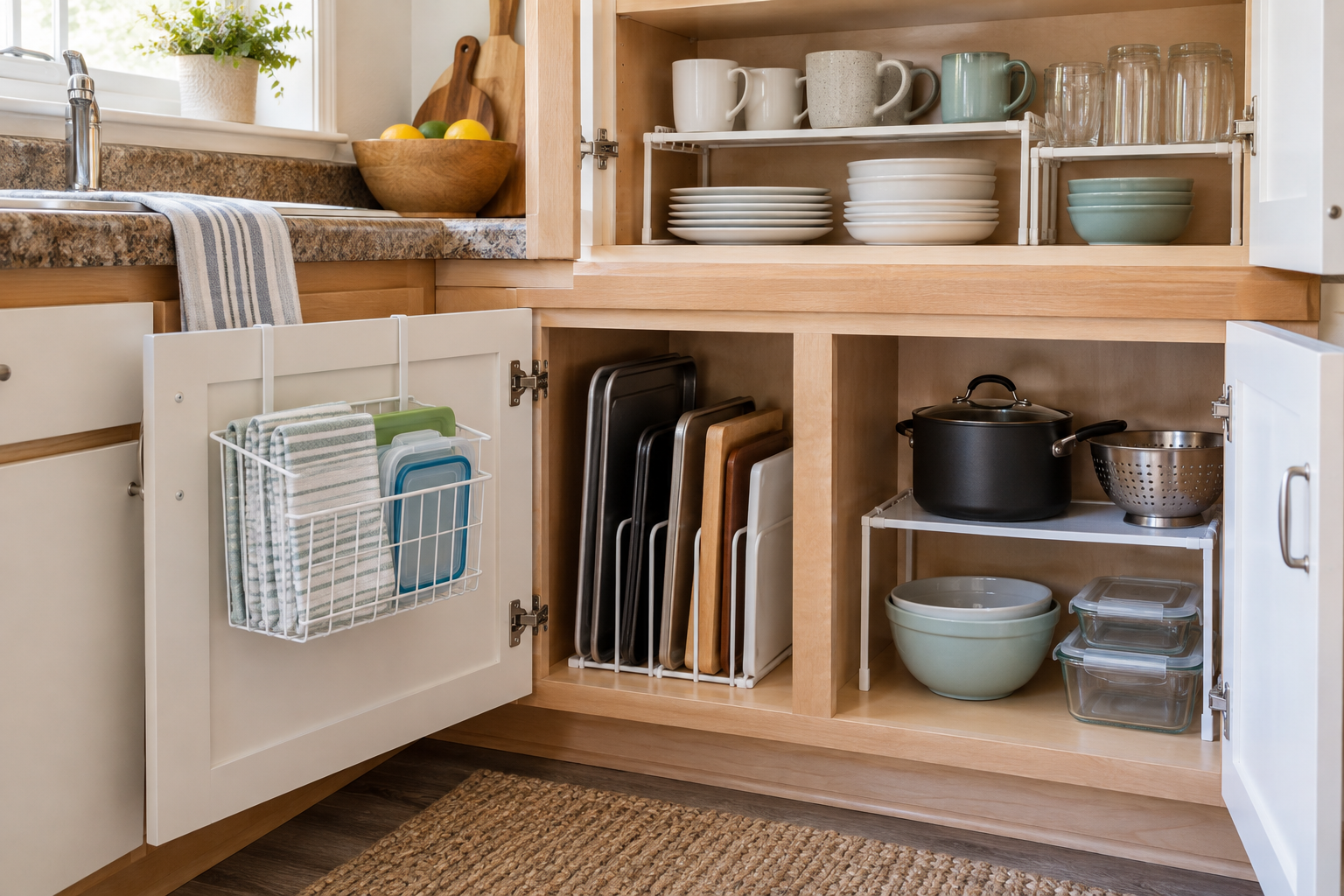
Many kitchen cabinets waste vertical space. A shelf riser creates a second level without adding screws or changing the cabinet. For more cabinet-specific options, see our kitchen cabinet storage without drilling guide.
They work well for plates, bowls, mugs, canned food, pantry containers, and lightweight cookware. Measure the shelf height first and make sure the riser leaves enough room to remove items comfortably.
Check the organizer’s stated capacity and keep heavier items lower where possible. A lightweight riser intended for cups should not be treated as a platform for heavy appliances.
2. Use Freestanding Vertical Dividers
Baking sheets, chopping boards, trays, pot lids, and shallow pans can consume a surprising amount of cabinet space when stacked horizontally.
A freestanding vertical divider lets these items stand upright so individual pieces are easier to remove. Choose a base that remains stable when one item is pulled out and make sure the divider fits the cabinet depth.
3. Add an Over-the-Door Cabinet Organizer
Cabinet doors can provide useful storage for lightweight items such as food-storage accessories, wraps, cleaning cloths, small packets, and suitable kitchen tools.
Measure door thickness and check the gap between the top of the door and cabinet frame. The organizer should not prevent the door from closing or collide with shelves inside the cabinet. Our guide to over-the-door kitchen storage for renters explains how to check fit and loading.
Keep loads moderate. Heavy bottles or cookware may place unnecessary stress on lightweight cabinet doors and hinges.
4. Organize the Space Under the Kitchen Sink
The under-sink cabinet often looks large until pipes, drains, disposal equipment, and valves divide the usable area. Instead of forcing a standard rectangular shelf into the space, organize around the plumbing. See our under-sink kitchen storage for renters guide for more ideas that work around pipes and valves.
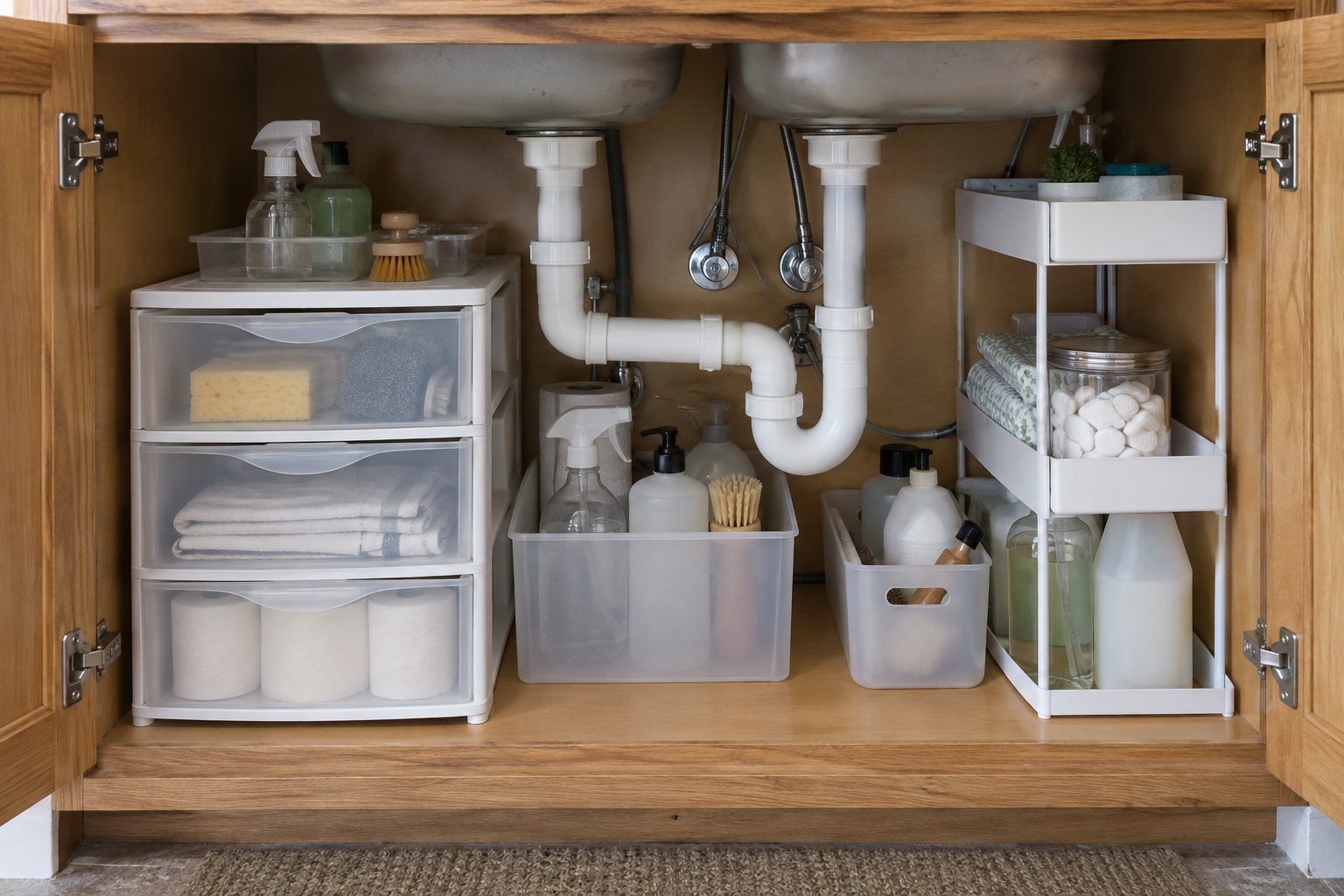
Freestanding baskets, narrow drawers, small bins, or L-shaped organizers can make better use of the remaining area. Keep plumbing connections and shut-off valves accessible, and avoid packing the cabinet so tightly that a leak would be difficult to notice.
Store frequently used items toward the front and avoid placing absorbent cardboard directly on the cabinet base where moisture could damage it.
5. Use Drawer Dividers Before Buying More Furniture
Sometimes a kitchen appears to lack storage when the real problem is poor organization inside existing drawers.
Expandable dividers or fitted trays can separate cutlery, cooking utensils, reusable bags, food-storage accessories, and other small items. Measure the drawer interior rather than relying on the outside dimensions.
Keep the arrangement simple enough that items can be returned to their place quickly. An organizer that creates too many tiny compartments can make a drawer harder, not easier, to use.
6. Use a Slim Rolling Cart in an Awkward Gap
A narrow rolling cart can turn unused floor space beside a refrigerator, cabinet, or counter into portable storage.
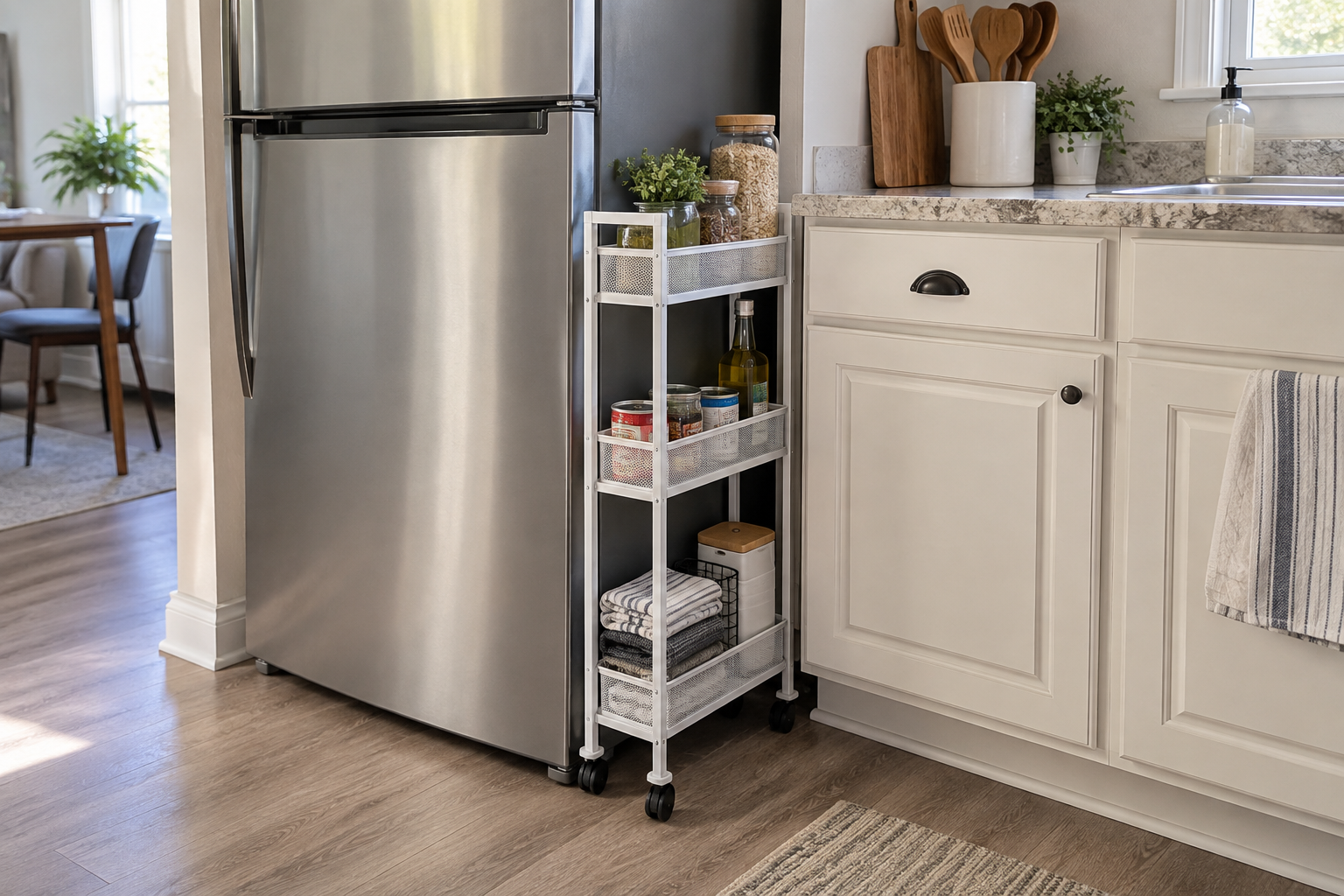
It can hold pantry goods, towels, utensils, cleaning supplies, or small kitchen accessories. Measure the gap carefully and allow enough clearance to pull the cart out without scraping cabinets or appliances.
If the cart has wheels, check whether they roll smoothly on the kitchen floor and whether locking casters are available when stability matters.
7. Use Removable Adhesive Hooks for Lightweight Items
Removable adhesive hooks may help store lightweight items such as measuring spoons, oven mitts, small utensils, or towels when the surface and product are compatible.
Do not assume that “removable” means suitable for every finish. Follow the manufacturer’s surface preparation, installation, removal, and weight-limit guidance. Command’s product guidance, for example, emphasizes clean, dry, suitable surfaces and product-specific limits.
Avoid using lightweight adhesive systems for heavy cookware, glass, knives, or anything that could cause injury or significant damage if it falls.
8. Use Magnetic Storage Where the Appliance Allows It
If a refrigerator or other appliance has a suitable magnetic exterior, magnetic organizers can provide temporary storage without drilling or adhesive.
Possible uses include lightweight spice containers, towels, notes, or small utensils. Test the surface first because not every stainless-steel-looking appliance is magnetic. For additional options, explore our no-drill spice rack ideas.
Do not cover ventilation openings, controls, labels, or areas that need airflow. Position organizers where they will not interfere with door movement or normal appliance use.
9. Add a Compact Countertop Riser
A small freestanding countertop riser can create a second level for frequently used items without attaching anything to the wall.
This can be useful for coffee supplies, spices, mugs, or small pantry items. Keep enough clear working surface for food preparation rather than filling every available inch with organizers.
Place the riser away from unstable edges, heat sources, and areas where it could be knocked during cooking.
10. Use Tension-Based Storage Only Where It Fits
Tension systems can create temporary hanging or shelf-like storage between suitable opposing surfaces. A tension rod inside a cabinet may help organize lightweight cleaning cloths or suitable spray bottles, while larger systems may work in specific layouts.
Stability depends on the span, contact surfaces, mechanism, installation, and rated use. Do not improvise with a lightweight tension rod for heavy pans or items that could fall onto someone.
11. Add Freestanding Shelving Where Floor Space Allows
A freestanding shelf can add substantial storage for pantry goods, cookware, serving pieces, or small appliances when the kitchen has an unused wall or corner. Our freestanding kitchen shelving for renters guide covers shelf types and stability considerations.
Measure the unit’s footprint and the remaining walkway. In a narrow kitchen, a shelf may increase storage while making movement less comfortable.
Follow the manufacturer’s stability and loading instructions. If a unit requires wall anchoring for safe use, do not treat it as a no-drill solution simply because it can physically stand without anchors. The U.S. Consumer Product Safety Commission provides general information on furniture stability and tip-over prevention.
12. Create Kitchen Zones Instead of Adding More Organizers
Good kitchen organization is not only about fitting more items into the room. Grouping items by where they are used can make a small kitchen work better without adding any hardware.
Keep everyday cooking tools near the preparation area, frequently used cookware near the stove where practical, cleaning supplies around the sink, and pantry items grouped so similar foods are easy to see.
If a zone repeatedly overflows, address that specific problem before buying another general-purpose organizer.
Which No-Drill Kitchen Storage Idea Is Best for Your Space?
Use this comparison as a starting point. Exact compatibility and capacity depend on the kitchen, the organizer, and the items being stored.
| Storage Method | Best For | Uses Existing | Main Limitation | What to Check |
|---|---|---|---|---|
| Shelf riser | Plates, mugs, pantry items | Cabinet shelf | Needs vertical clearance | Height, width, load rating |
| Vertical divider | Trays, boards, lids | Cabinet base or shelf | Needs stable footing | Depth, width, balance |
| Over-door organizer | Lightweight small items | Cabinet door | May affect closing or hinges | Door thickness, frame clearance, load |
| Under-sink organizer | Cleaning and utility items | Cabinet base | Plumbing interrupts space | Pipes, valves, leak visibility |
| Drawer dividers | Utensils and accessories | Existing drawer | Does not add total volume | Internal drawer dimensions |
| Slim rolling cart | Pantry and utility storage | Floor gap | Needs pull-out clearance | Width, wheels, appliance clearance |
| Adhesive hooks | Very light accessories | Suitable smooth surface | Surface-dependent | Finish, load limit, removal instructions |
| Freestanding shelving | Bulk storage and appliances | Floor area | Takes up walkway space | Footprint, stability, anchoring guidance |
How to Organize a Small Rental Kitchen Step by Step
- Remove expired, duplicate, or rarely used items that do not need to stay in the kitchen.
- Group remaining items by use: cooking, baking, pantry, cleaning, food storage, and daily essentials.
- Measure cabinets, drawers, doors, under-sink space, gaps, and walkways.
- Identify unused vertical space before adding more floor storage.
- Keep frequently used items easiest to reach.
- Choose one or two storage additions that solve the biggest problems first.
- Install or position each organizer according to its instructions.
- Load gradually and stay within stated limits.
- Use the setup for several days before adding more organizers.
- Rearrange zones if daily movement still feels inefficient.
Common Kitchen Storage Mistakes Renters Should Avoid
- Buying organizers before measuring the actual space
- Blocking refrigerator, oven, dishwasher, cabinet, or drawer movement
- Covering appliance ventilation or controls
- Blocking plumbing valves or making leaks difficult to notice
- Overloading cabinet doors, shelves, carts, or adhesive products
- Using adhesives on unsuitable paint, tile, laminate, or textured surfaces
- Placing unstable freestanding furniture in narrow walkways
- Storing heavy or breakable items overhead
- Filling countertops until there is no usable preparation space
- Assuming a no-drill product is automatically suitable for a rental
How to Keep a No-Drill Kitchen Setup Renter-Friendly
Keep original cabinets, doors, shelves, hardware, and appliance clearances unchanged unless the property owner has approved a modification. Check your lease before using adhesives or any product that presses against a finished surface.
Protect delicate finishes from rough hooks, sharp edges, metal feet, and rubbing hardware. Recheck loaded organizers periodically for movement, loosening, moisture, or marks.
No storage method can guarantee protection from damage or a particular security-deposit outcome. Careful measurement, appropriate loading, and reversible placement can reduce avoidable problems.
Frequently Asked Questions
How can I add kitchen storage without drilling?
Use cabinet shelf risers, drawer dividers, freestanding organizers, suitable over-door storage, rolling carts, vertical dividers, and other reversible solutions that fit the existing kitchen.
What is the easiest way to add storage to a very small kitchen?
Start inside existing cabinets and drawers. Shelf risers, vertical dividers, and drawer organizers can increase usable capacity without taking up additional floor space.
Can renters use adhesive hooks in a kitchen?
They may be suitable when the lease permits them and the surface, item weight, installation, and removal method match the manufacturer’s instructions. Avoid using them for heavy or hazardous items.
How can I organize a kitchen with no pantry?
Use cabinet space efficiently first, then consider a narrow rolling cart or compact freestanding shelf if floor space allows. Group similar foods together so items remain visible and easy to rotate.
Are over-the-door organizers safe for kitchen cabinets?
They can be useful for lightweight items when the hooks fit the door, the door closes normally, and the added load is appropriate. Check hinge condition and avoid overloading lightweight doors.
What should I store under the kitchen sink?
Use the space for suitable household and cleaning items while keeping plumbing, valves, and potential leak areas visible and accessible. Avoid tightly packing the cabinet around pipes.
Final Thoughts
Effective kitchen storage without drilling begins with accurate measurements and a clear understanding of which areas are actually being wasted.
Use cabinet height, doors, drawers, floor gaps, and freestanding space only where the method fits and works with the kitchen’s normal operation. Check load limits, appliance clearances, plumbing access, door movement, surface compatibility, and stability before storing anything.
Start with a simple setup, use it for a while, and add more storage only when it solves a real remaining problem.
If you are organizing other rental spaces too, see our guides to closet storage without drilling and bathroom storage without drilling for additional reversible storage approaches.