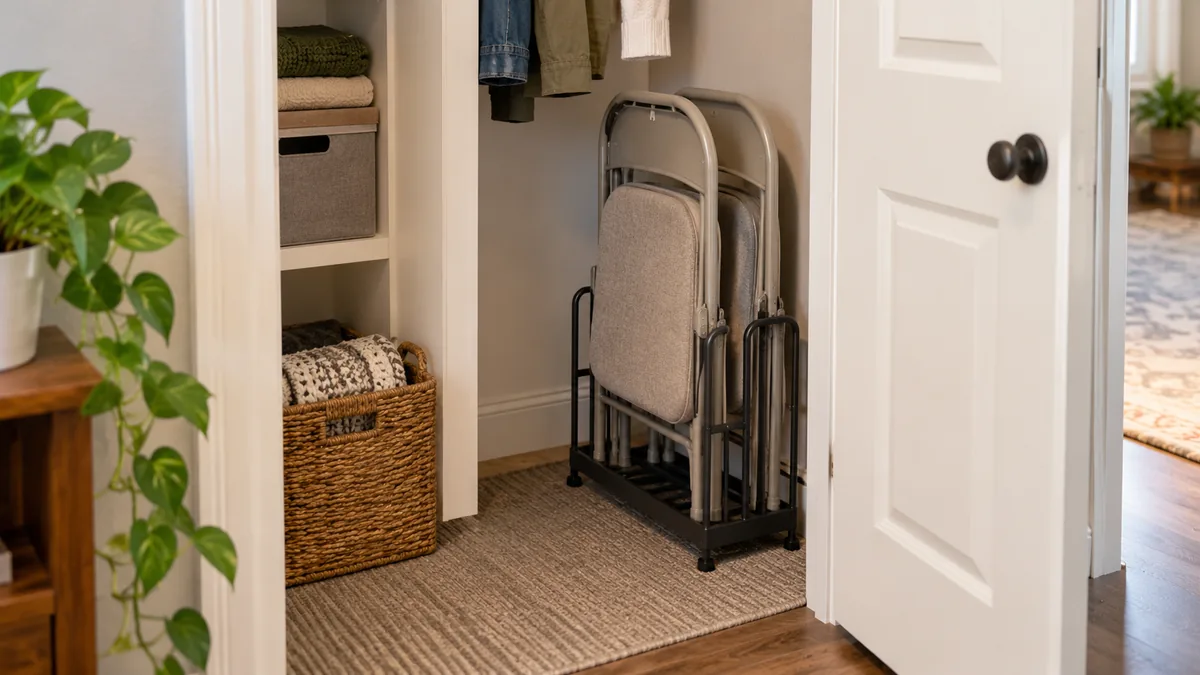
Folding chair storage ideas can help renters keep occasional guest seating without sacrificing everyday floor space. In a small apartment, the right no-drill solution may be as simple as measuring one closet corner, checking the chair’s folded dimensions and ensuring that its storage position is stable.
These 12 approaches cover closets, under-bed space, protective mats and freestanding organizers. Always follow the chair manufacturer’s instructions. The example below is illustrative, not a claim of personally testing products or visiting a specific apartment.
Plan a safe, measured folding chair storage zone
 Save
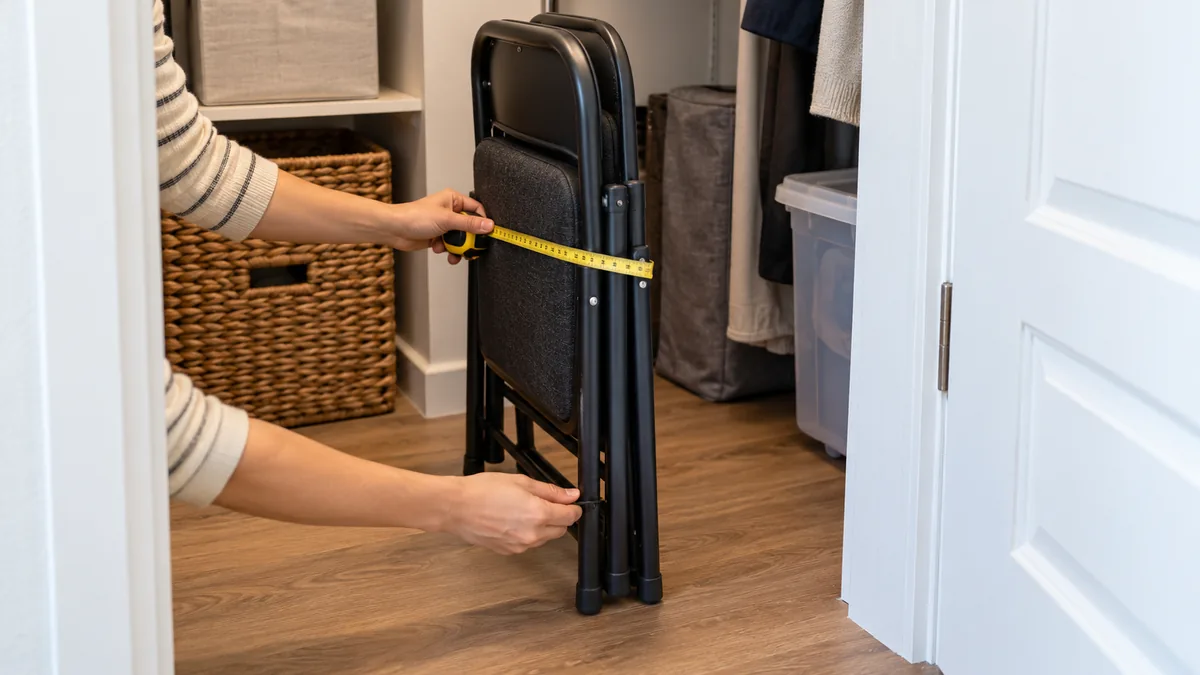
Before moving chairs into a closet, check how they fold, whether they latch shut and whether their manufacturer permits the planned storage orientation. Measure the folded thickness, height and weight, then test door clearance and how easily a single person can retrieve a chair. Good folding chair storage ideas preserve access and avoid unsecured leaning or unstable stacking.
Quick measurements and checks
- Measure the folded chair’s full dimensions, including feet and handles.
- Check the chair’s weight and whether one person can move it safely.
- Confirm approved storage positions and locking features.
- Allow cabinet and closet doors to open completely.
- Keep halls, emergency exits and heat sources clear.
12 folding chair storage ideas without drilling
1. Measure the folded chair first
Measure height, width, folded thickness and weight; include the space needed to lift it out.
Practical limitation: Leave clearance for closet doors and nearby furniture.
2. Choose a stable closet-floor spot
Keep one or two folded chairs standing securely only if their design allows it.
Practical limitation: Avoid an unstable leaning position that could tip.
3. Lay chairs flat under a suitable bed
Use under-bed floor space only when the chair’s dimensions fit and it can slide safely without damage.
Practical limitation: Do not force a heavy chair beneath a low frame or obstruct under-bed mechanisms.
4. Use a protected corner of an existing closet
Position folded chairs where the closet door closes fully and everyday items remain reachable.
Practical limitation: Keep exits and ventilation clear.
5. Protect walls and floors with a removable mat
 Save
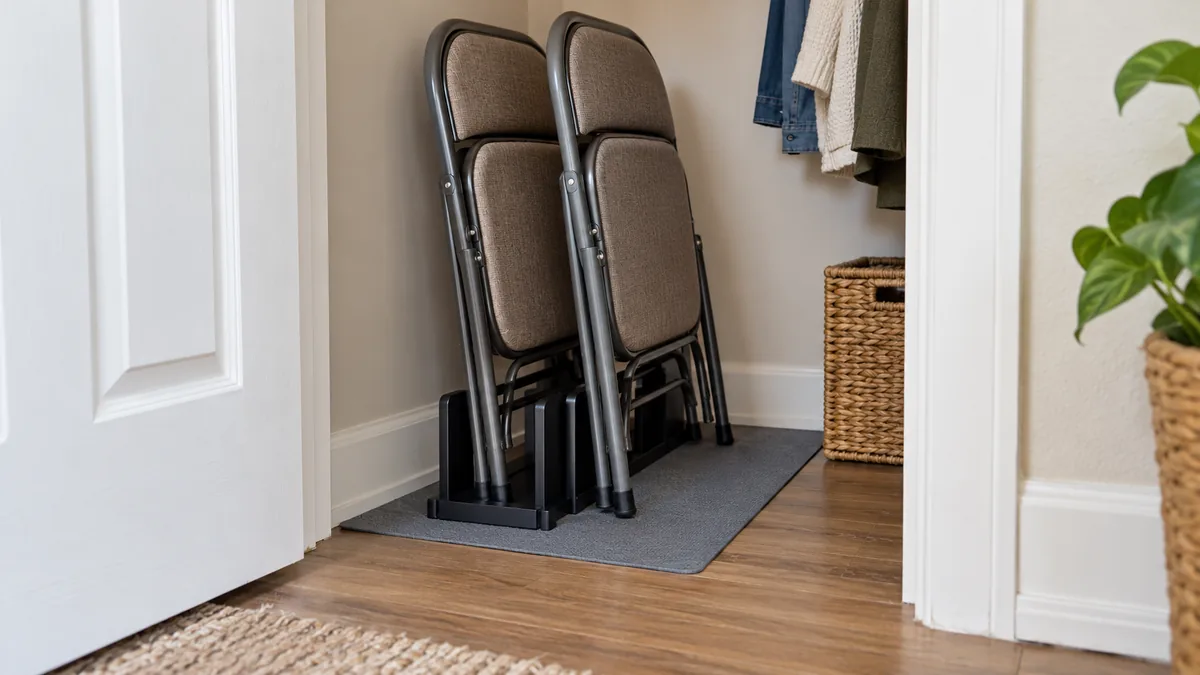
Set a non-slip protective mat under chair feet or hinges to reduce scuffs.
Practical limitation: Check that the mat does not create a trip hazard.
6. Keep chair legs secured as designed
Engage the chair’s built-in folding latch or locking mechanism if the instructions specify one.
Practical limitation: Do not tie a chair shut in a way that interferes with its safety mechanism.
7. Use a freestanding floor rack only if compatible
 Save
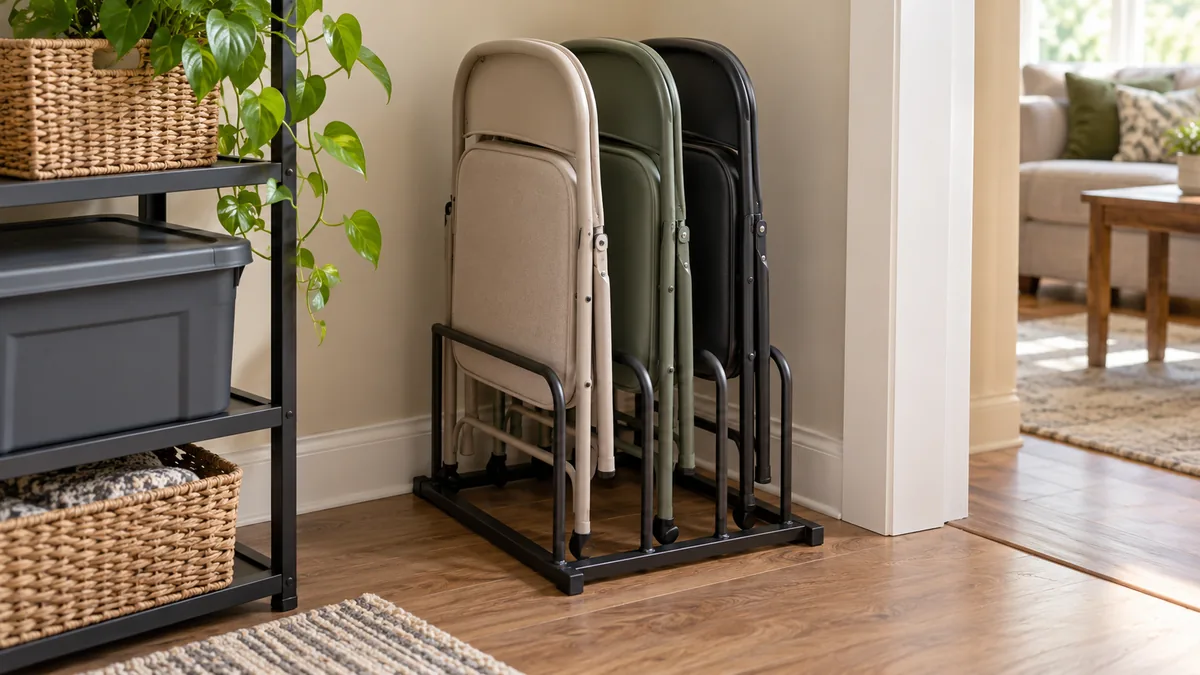
A purpose-built floor stand can help organize multiple folding chairs without drilling.
Practical limitation: Check its capacity and stability, especially around children and pets.
8. Separate metal chairs from delicate textiles
A cloth sleeve or suitable removable barrier can prevent scuffs against linens and coats.
Practical limitation: Do not enclose damp chairs where corrosion or odors may develop.
9. Keep outdoor chairs clean and dry
Wipe off dirt and moisture before indoor storage; let fabric seats dry fully.
Practical limitation: Inspect frames, joints and seat fabric for damage.
10. Store only manageable quantities
Keep the number of extra chairs proportionate to your actual guest needs.
Practical limitation: Do not pile chairs where retrieving one could cause the stack to fall.
11. Make retrieval easy for occasional guests
Store guest seating near the gathering area without blocking a regular route.
Practical limitation: Avoid overhead storage of heavy folding chairs.
12. Inspect and reset after each gathering
Check feet, hinges and locking parts, clean, dry and return chairs to their assigned location.
Practical limitation: Stop using chairs with bent frames, loose hinges or compromised locks.
Compare no-drill folding chair storage options
| Storage method | Best suited to | Main check |
|---|---|---|
| Closet floor | One or two compact chairs | Stable approved position |
| Under-bed floor area | Thin folded chairs | Clearance and safe retrieval |
| Protected closet corner | Occasional guest seating | Door swing and stability |
| Compatible freestanding rack | Several matching chairs | Rated capacity and tip resistance |
| Removable floor mat | Chairs with scuff-prone feet | No new trip hazard |
Illustrative example: guest chairs in a studio rental
Imagine a renter who hosts friends once or twice each month and owns two lightweight folding chairs. One blocks the hallway; the other leans unsecured against a bedroom wall. This is an illustrative scenario rather than a firsthand inspection. After measuring the chairs and checking the manufacturer’s storage instructions, the renter assigns an accessible closet-floor spot, protects the floor with a removable mat and arranges the chairs so they cannot slide into the closet door.
What improves: a clearer walkway and faster retrieval. What remains chair-specific: approved positioning, latches, weight and whether the chair safely stands folded.
A five-minute post-guest reset
- Wipe chair seats and legs as appropriate.
- Allow any moisture to dry.
- Check hinges, feet and locking hardware.
- Fold according to the manufacturer’s instructions.
- Return chairs to the stable assigned location without blocking doors.
Stability, weight and renter-friendly safety
Do not hang heavy folding chairs from adhesive hooks or place them overhead where they can fall. Avoid overloaded or unapproved freestanding racks. Keep chairs away from exits, heaters and electrical panels. For products subject to recalls or safety alerts, check the U.S. Consumer Product Safety Commission recall database. Manufacturer instructions govern safe loading, folding and storage; inspect chairs before each use, especially when children are around.
Other renter-friendly guidance includes tablecloth storage ideas and party decoration storage ideas. Verify internal link destinations and publication status before publishing this draft.
Common folding chair storage mistakes
Leaning chairs where they can fall: unstable storage risks injury. Stacking too many chairs: retrieval can destabilize the pile. Blocking a hallway: creates an obstacle during daily use or an emergency. Ignoring rust and loose hinges: can compromise safe use. Using adhesive wall hooks for heavy chairs: creates an unnecessary failure risk.
Frequently asked questions
Where can I store folding chairs in a small apartment?
A measured closet-floor location or safe under-bed area may work, provided the chairs fit and can be retrieved without tipping or obstruction.
Can folding chairs stand vertically in a closet?
Only if their design and manufacturer instructions allow that stable position. Otherwise use a supported flat arrangement.
Can I use adhesive hooks for folding chairs?
They are not a reliable choice for heavy guest chairs; use a stable approved floor-based solution instead.
How do I protect a rental floor?
Place a suitable removable mat beneath clean chair feet, ensuring it stays flat and does not become a trip hazard.
Final takeaway
Useful folding chair storage ideas begin with measurement and safety, not extra hardware. Select a stable reversible setup, protect rental surfaces and keep guest seating accessible when needed.