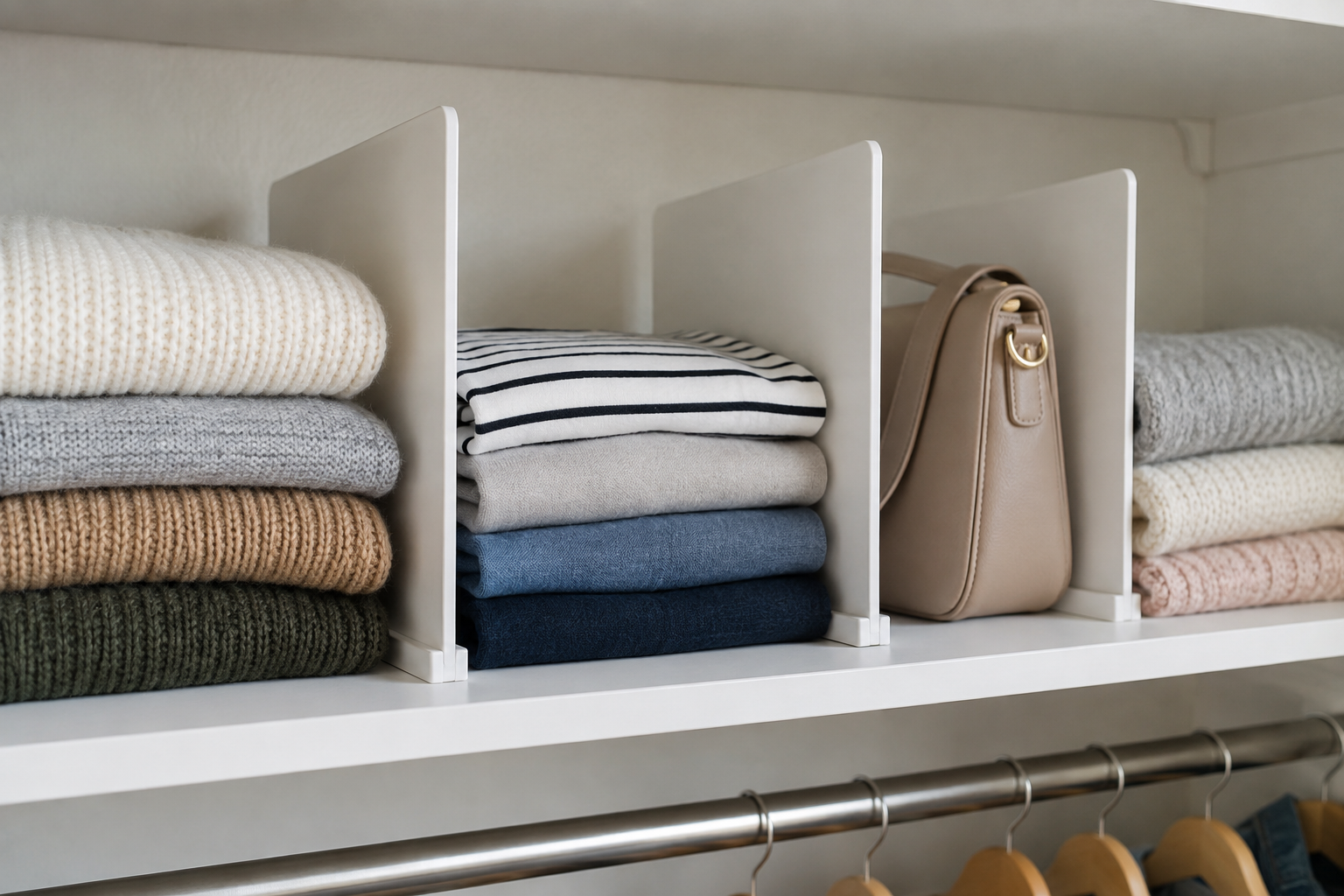
Closet shelf dividers can turn one wide rental-closet shelf into clearer sections for folded clothes, bags, linens, and accessories without adding permanent built-in storage.
Dividers help stop folded piles from spreading into one another, but fit depends on shelf thickness, depth, material, clearance, and attachment style. Measure your existing shelf before buying so the new boundaries make everyday storage easier to use.
What Are Closet Shelf Dividers?
Closet shelf dividers are upright separators that divide an existing shelf into vertical sections. They keep categories distinct and give folded stacks a boundary, but they do not create extra shelf area. Think of them as guides for the space you already have, rather than new shelving.
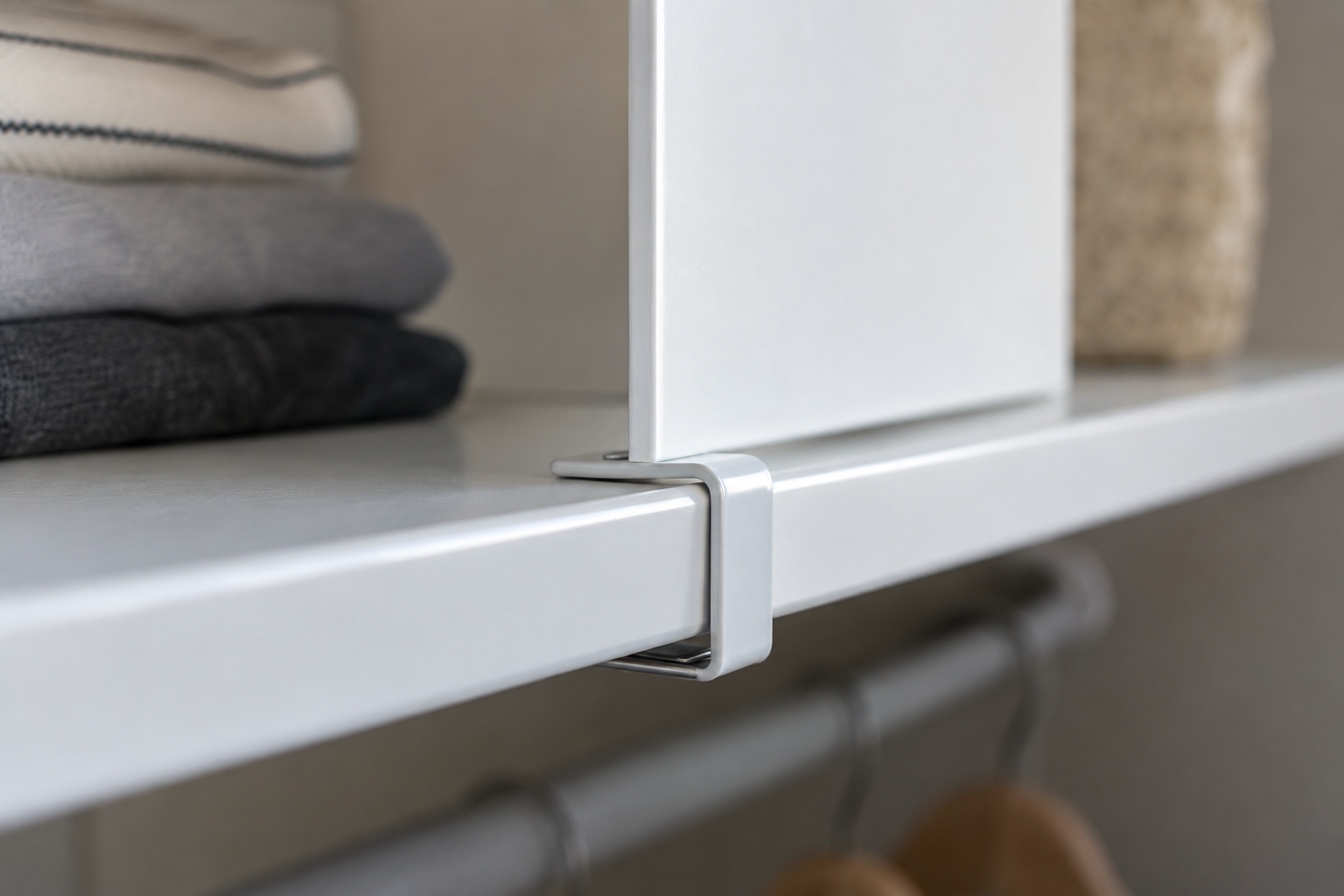
Some designs clip, slide, clamp, or hook onto a shelf; others use a different support arrangement. The exact attachment design varies by product. A divider that looks suitable in a photograph may need a particular shelf edge or clearance underneath it.
When Do Closet Shelf Dividers Make Sense?
Dividers can be useful when sweaters lean into T-shirts, jeans spread across a shared shelf, or towels and linens become mixed together. They can also separate handbags and keep small accessories grouped in compatible containers. Start with a category that regularly loses its place.
They may be less useful on very shallow shelves, shelves already filled with large bins, or edges with decorative lips and unusual profiles. An incompatible attachment can take up valuable room without providing a useful boundary. Damaged or unstable shelving needs attention before you add organizers.
What to Measure Before Buying Closet Shelf Dividers
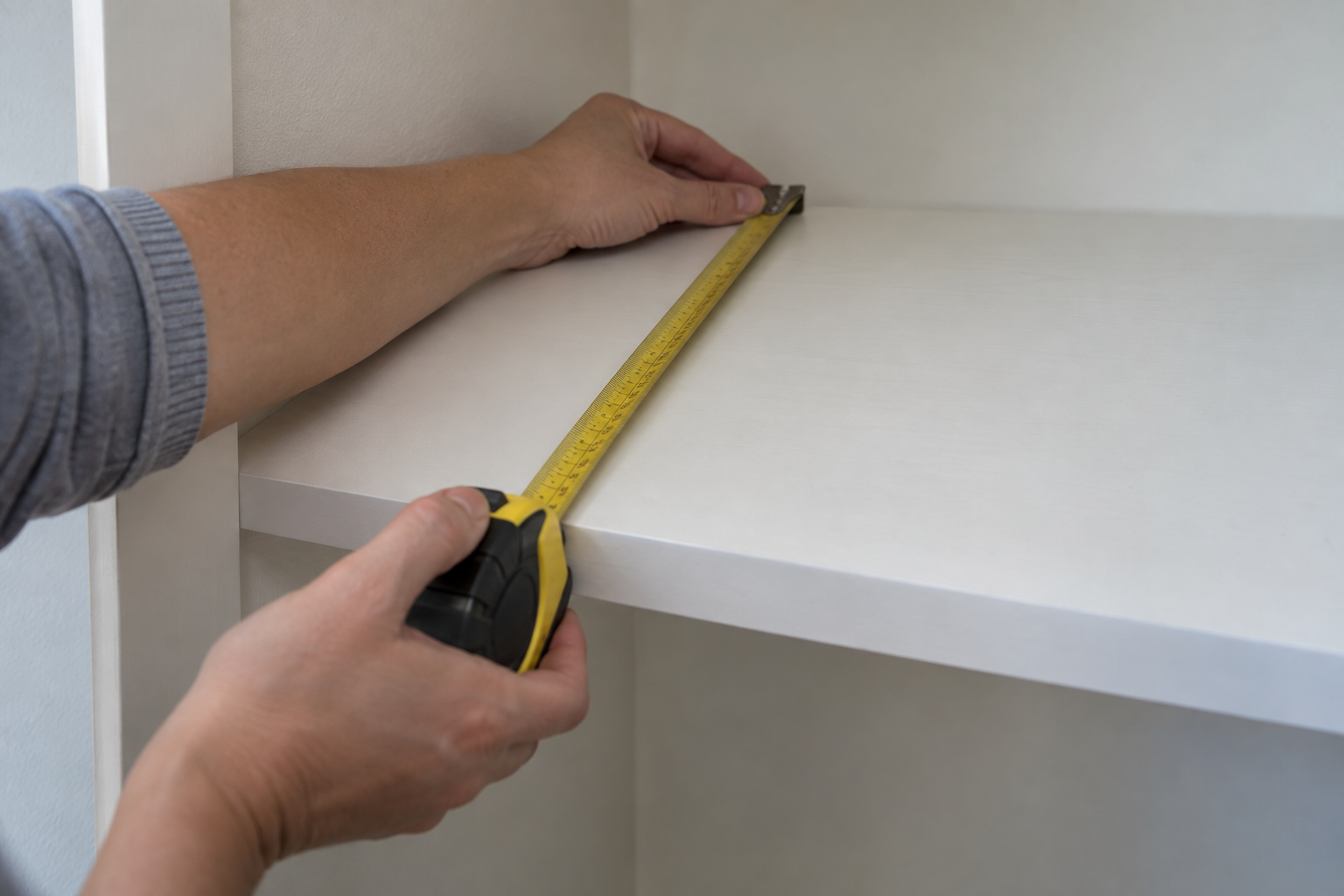
Record measurements for the actual shelf you intend to use, including the space around it. Compare these notes with the exact divider instructions and specifications; shelf appearance alone does not establish compatibility.
 Save
Save- Shelf thickness: Measure the edge where the attachment will sit.
- Shelf depth: Record the usable distance from front edge to back.
- Shelf width: Measure the available span for your categories.
- Usable shelf height: Check the space above the shelf and stacks.
- Front-edge shape: Note lips, rounded trim, or projecting profiles.
- Back-wall clearance: Allow for the wall or back panel behind the divider.
- Existing shelf supports: Locate brackets and fittings that could obstruct attachments.
- Nearby closet rod clearance: Check underneath for rods, hangers, and clothing.
- Intended stack width: Measure clothing folded the way you actually store it.
- Door or closet-opening clearance: Check both closing and retrieval space.
- Divider attachment fit: Compare all required contact points with your shelf.
- Number of sections needed: Count useful categories before choosing a pack size.
Renter warning: A shelf divider can fit the shelf surface and still be a poor match if its clip, clamp, or support does not suit the shelf edge. Check the exact attachment design before forcing a divider onto rental shelving.
7 Things to Check When Choosing Closet Shelf Dividers
1. Shelf Thickness
Measure the actual shelf edge, including any coating or trim at the attachment point. Compare it with the exact product requirements. An attachment that is too tight or too loose may not fit correctly; forcing it into position is not a substitute for compatibility.
2. Shelf Depth
Match the divider to usable shelf depth, allowing for the closet wall or back panel. An overly long design may project into the opening, while a short divider may leave part of a stack without a boundary. Exact fit is product-specific, including how far its base extends.
3. Divider Height
Taller dividers may provide a boundary for taller folded stacks, but they also require more vertical clearance. Account for the shelf above and the space your hands need to lift clothing out. Larger is not always better: choose around the stack you can comfortably maintain.
4. Attachment Method
Generic options include slide-on, clip-on, clamp-style, and hook-style dividers. Freestanding or tension-based shelf organizers may also be relevant where their design suits the available space. Each mechanism has its own requirements; these names do not establish whether a particular model fits your shelf.
 Save
SaveLook at how the attachment contacts the shelf and what space it needs underneath or behind it. Follow official instructions for placement and removal. Do not improvise a tighter fit by bending parts or adding packing unless the manufacturer specifically permits that approach.
5. Shelf Material and Edge Shape
A flat shelf edge, wire shelf, laminate or coated surface, and wood or engineered shelf present different fitting conditions. A decorative lip may obstruct a clip even when the main board thickness seems right. Check exact product instructions for the material and edge profile you have.
6. What You Plan to Store
Choose a divider around the actual category: folded clothing, towels, linens, handbags, lightweight accessories, or small compatible bins. A wide sweater stack needs a different section from a narrow pouch. The shelf still holds the stored items; a divider does not increase its capacity.
7. Access and Spacing
Leave enough room to remove and replace items without pulling neighboring piles apart. Overly narrow compartments can turn a tidy arrangement into daily friction. Put frequently used stacks where you can reach them and prioritize practical organization over the maximum number of sections.
How to Position Closet Shelf Dividers
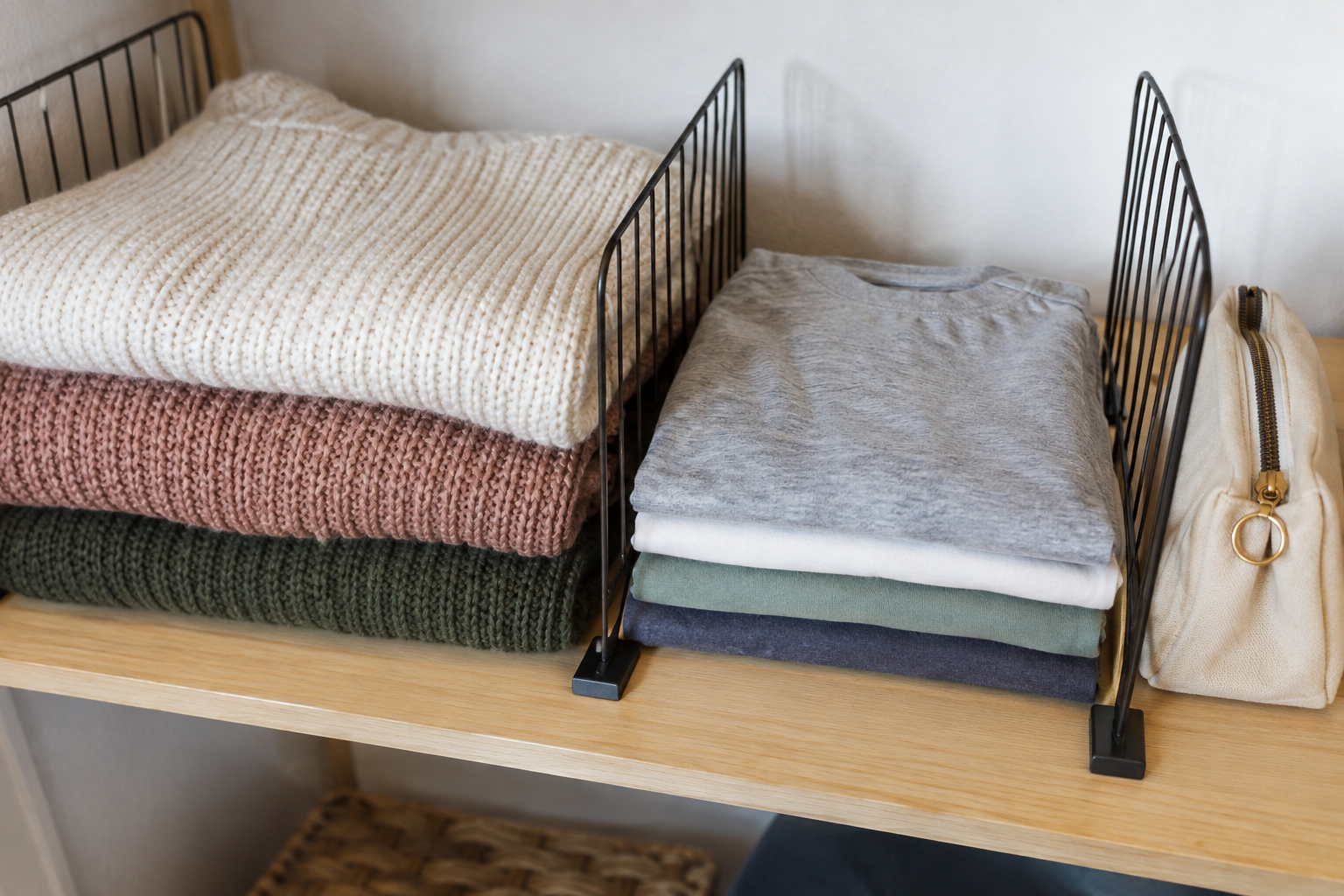
Equal sections can work for similarly folded shirts, while different widths may suit a mixed shelf. Plan a larger space for sweaters or bags and smaller spaces for shirts or accessories. Lay out the actual items first rather than assuming every category needs the same width.
 Save
SavePreserve access to shelf ends, especially behind a closet door or frame. If you use bins, leave room to grip and remove them without catching a divider. Try the layout with a typical laundry load; empty-shelf spacing can look generous until everything returns.
How to Set Up Closet Shelf Dividers Step by Step
- Clear enough of the shelf to work comfortably.
- Inspect the shelf for damage or instability.
- Measure shelf thickness, depth, and usable height.
- Decide what categories will occupy the shelf.
- Mark or visualize the approximate section widths.
- Compare the measurements with the divider specifications.
- Attach or position the divider according to official instructions.
- Confirm the divider sits securely without forcing the shelf.
- Add a small amount of clothing or storage first.
- Check access and spacing.
- Adjust divider positions if stacks are crowded or difficult to remove.
Use the manufacturer’s procedure for your particular attachment. Visualizing positions avoids unnecessary marks on rental shelving. If the divider will not sit as instructed, stop and reassess compatibility before filling the shelf.
What Can You Organize With Closet Shelf Dividers?
- Sweaters and folded shirts
- Jeans
- Towels and linens
- Handbags and hats
- Lightweight accessories
- Small bins where appropriate
Match each section to items that sit comfortably on the shelf. Do not force unstable, excessively heavy, or unsuitable items into narrow sections. A bag that needs squeezing to fit may be better stored elsewhere, and loose accessories often need a container within their section.
Closet Shelf Dividers vs Storage Bins
Shelf dividers keep items visible, preserve open-shelf access, and separate folded stacks. Their usefulness depends on shelf compatibility. They suit categories you want to see at a glance and retrieve individually without moving an entire container.
Closet storage bins contain loose items and can hide visual clutter, but each occupies a defined footprint and needs room for removal. Neither option wins everywhere. A mixed layout might use dividers for folded shirts and a small bin for accessories that will not stay in a pile.
Closet Shelf Dividers vs Hanging Closet Organizer
Shelf dividers use an existing shelf and preserve hanging-rod width while organizing folded stacks. A hanging closet organizer creates shelf-like storage from the rod, reducing available hanging width. It may help where built-in shelving is limited, provided the rod and organizer suit the intended use.
Choose around the space you already have. If a usable shelf simply needs clearer categories, dividers address that problem directly. If there is no suitable shelf, a divider cannot create one.
Common Closet Shelf Divider Mistakes
- Buying before measuring shelf thickness
- Ignoring shelf depth
- Choosing a divider that is too tall
- Forcing an incompatible attachment onto the shelf
- Ignoring shelf material or edge shape
- Creating sections that are too narrow
- Overstacking folded clothes
- Blocking bins or nearby closet accessories
- Assuming every divider works on every shelf
- Ignoring official product instructions
- Treating reversible as automatically damage-free
Are Closet Shelf Dividers Good for Renters?
They can be a useful option for renters when the exact design suits the shelf. Some require no drilling when used as designed and can be removed later. Using existing shelving to maintain categories can improve folded-clothing organization without adding a built-in unit.
However, reversible does not guarantee damage-free use. Attachment fit, surface condition, and removal instructions still matter. Tall dividers need clearance, and poor fit can make storage less useful. For broader options beyond shelf boundaries, explore our guide to closet storage without drilling.
Frequently Asked Questions
Do closet shelf dividers actually work?
They can help separate categories and keep folded piles from spreading together. Results depend on compatible fit, manageable stacks, and enough room to retrieve items.
How do I know if a shelf divider will fit?
Measure thickness, depth, height clearance, and edge shape. Compare the actual shelf and nearby obstructions with the exact product specifications and attachment instructions.
Can I use shelf dividers on wire shelving?
Only choose a design whose instructions support your wire shelving arrangement. A clip intended for a solid board should not be assumed to fit wire spacing or edges.
Can I use shelf dividers on wooden or laminate shelves?
Some designs may suit them, but check the exact material, thickness, surface, and edge requirements. A wood or laminate label alone does not confirm compatibility.
How tall should closet shelf dividers be?
Choose around your intended stack and the available overhead clearance. Leave room to lift items out; there is no universal ideal height.
Do shelf dividers damage rental shelving?
They may leave marks or damage a surface if the fit, contact, or removal is unsuitable. Follow official instructions and do not force an attachment.
Can I use shelf dividers for sweaters?
Yes, a compatible divider can separate folded sweaters. Allow room for their actual folded width and keep stacks manageable rather than filling every inch vertically.
Can shelf dividers hold handbags?
They can separate handbags resting on the shelf when the layout suits them. Avoid squeezing bags into narrow gaps or treating the divider as a hanging hook.
How many shelf dividers do I need?
Plan your categories and section widths first, then count the boundaries that need dividers. Shelf ends and existing bins may already define some sections.
Are shelf dividers better than storage bins?
Dividers favor visible folded stacks; bins contain loose items. Choose for your categories and retrieval space, or combine both where the shelf allows.
Final Thoughts
Choose closet shelf dividers by measuring first: check thickness, depth, edge shape, material, and usable clearance. Match divider size to what you store, preserve comfortable spacing, and follow the exact product instructions. Easy access matters more than fitting the greatest number of compartments onto a shelf.