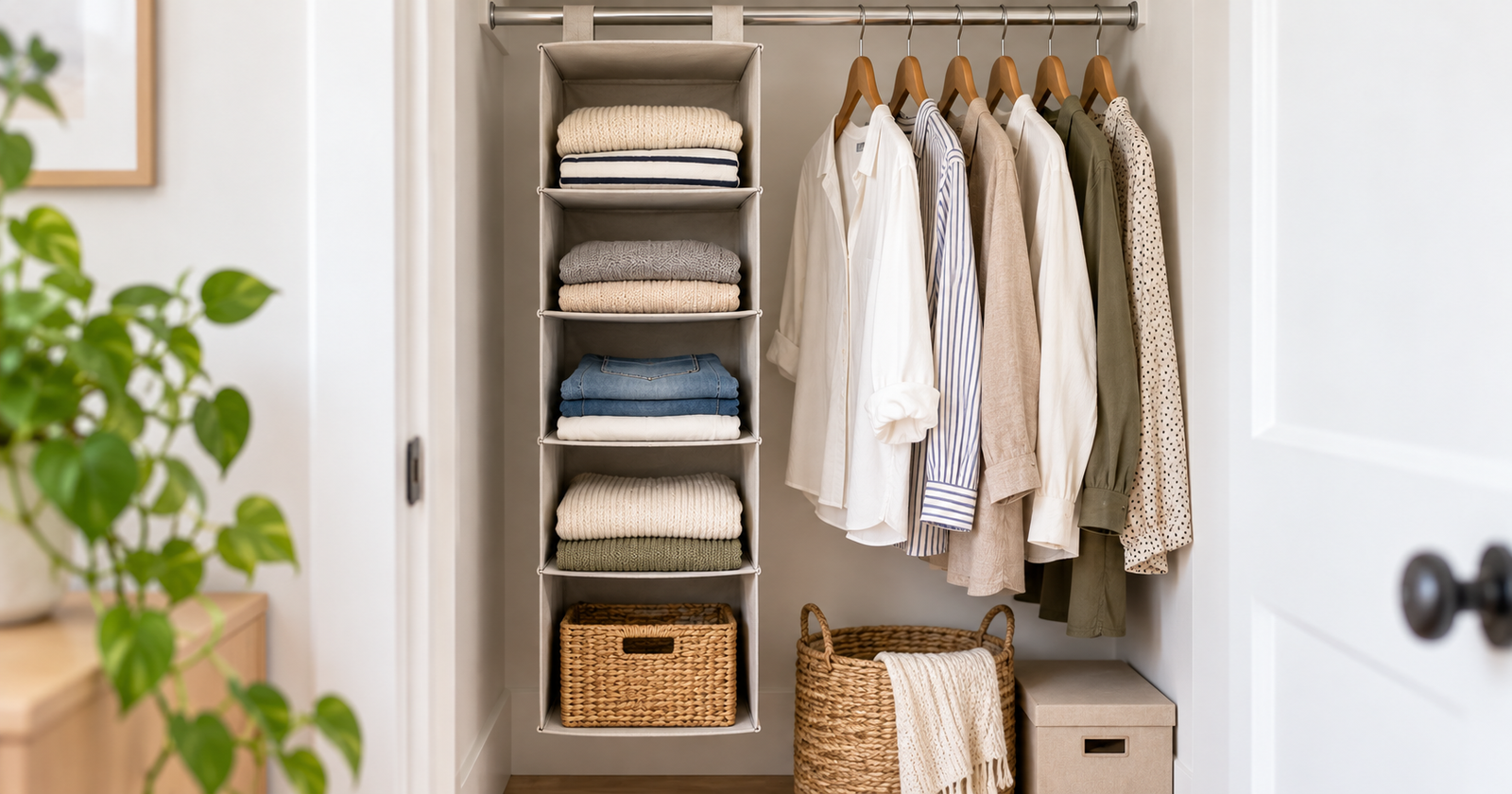
A hanging closet organizer adds shelf-like storage to an existing closet rod without drilling. It can give folded clothes, lightweight bags, and accessories a place when your rental closet has plenty of hanging space but few shelves.
Choosing by appearance alone can leave you with crowded garments, blocked floor storage, or too much added load on the rod. Measure first, then choose compartments that suit what you actually need to store.
What Is a Hanging Closet Organizer?
A hanging closet organizer attaches to an existing rod and provides vertical storage through fabric shelves, compartments, pockets, or a reinforced frame.
It uses space below the rod but does not create new structural capacity. Both the organizer and everything inside it add weight to the existing rod and its supports.
What to Measure Before Buying a Hanging Closet Organizer
Measure with your usual clothes and storage in place so the results reflect usable space.
- Available rod width: Measure the section you can spare without crowding hangers.
- Rod-to-floor clearance: Check the distance below the intended attachment point.
- Rod-to-lower-shelf clearance: Account for any fixed shelf or double-hang closet rod below.
- Organizer width: Compare its full outside width with your available space.
- Organizer length: Check whether listed dimensions include the hanging attachment.
- Clothing hanging beside it: Leave room to slide hangers and remove garments.
- Door clearance: Consider sliding panels, folding doors, and inward movement.
- Drawers or bins below: Allow space to open or lift them out.
- Longest nearby garments: Check where dresses and coats fall.
- Closet opening: Confirm that you can reach the organizer through the opening.
Renter warning: Measure both the closet and the organizer. A hanging unit that technically fits the rod can still block clothing, drawers, doors, or floor storage.
7 Things to Check When Choosing a Hanging Closet Organizer
1. Organizer Width
Wider hanging closet shelves offer more room for folded items, but they also consume more rod width. Compare that tradeoff with the garments you need to hang.
Leave enough space to move clothing beside the unit. An organizer that requires you to compress every hanger may create another access problem.
2. Organizer Length
A longer unit uses more vertical space, but its bottom should clear shoes, bins, drawers, and the closet floor.
Check nearby clothing too. A long organizer beside dresses or coats can make the lower area awkward to use, even when its own compartments fit.
3. Number and Size of Compartments
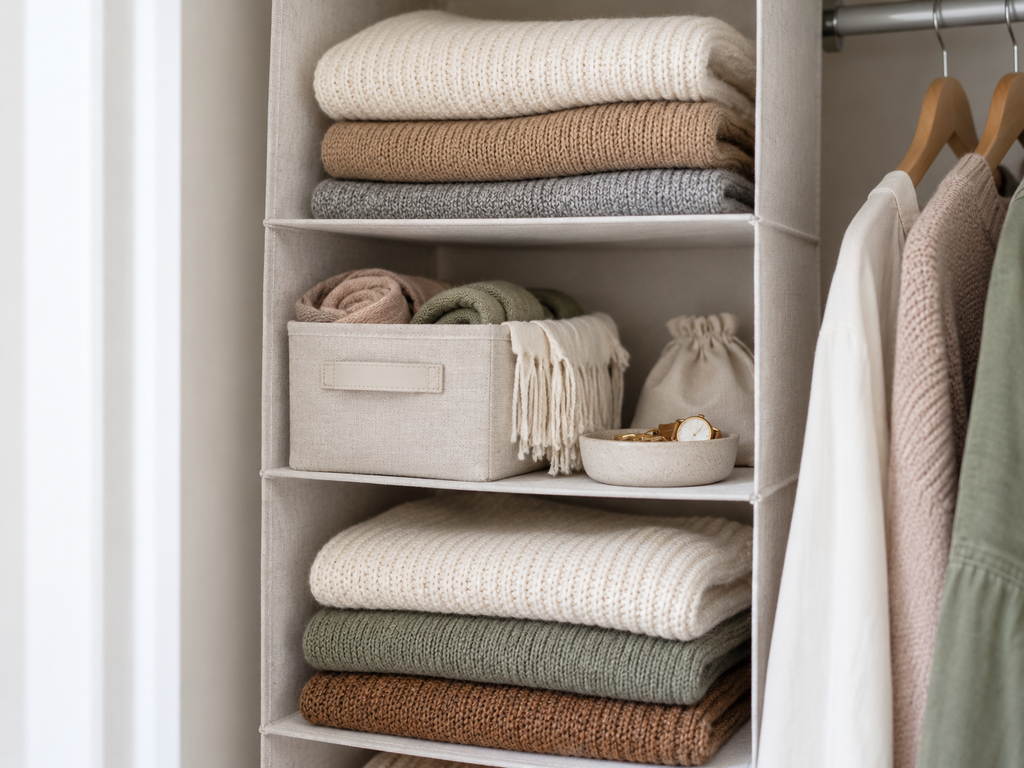
Several shallow shelves can separate folded shirts and accessories. Fewer tall compartments may suit sweaters, towels, or lightweight handbags. Small pockets provide a different kind of storage from open cubbies.
Compare usable internal dimensions with your belongings. If you plan to insert small bins, account for their handles and the space needed to pull them out.
 Save
Save4. What You Plan to Store
Choose the contents before choosing the organizer. Folded clothing, lightweight bags, accessories, linens, and small bins each need different amounts of space.
Do not assume a fabric hanging closet organizer can support very heavy objects. Check the exact technical documentation for intended use and capacity, including any individual compartment limits.
5. Existing Closet Rod Condition
The organizer transfers its own weight and stored contents to the rod. Look for looseness, bending, damage, questionable supports, or an already crowded load.
Do not add storage to an unstable rod. Ask your landlord or property manager about its condition and any needed repair. A visual check alone does not establish capacity.
6. Material and Structural Support
Compare fabric sides, reinforced shelves, internal panels, hanging straps, hook-and-loop closures, and metal hooks where applicable.
Softer shelves may sag under unsuitable loading; reinforced designs may hold their shape better, depending on construction and contents. Neither appearance nor reinforcement establishes a weight limit. Check the exact instructions and care requirements.
7. Access and Visibility
Open shelves make contents easy to see. Enclosed sections can separate small belongings but require room to open or pull them out.
Place everyday items where you can reach them comfortably. Usable storage matters more than the number of compartments, especially if reaching one section means pushing clothing aside every time.
Types of Hanging Closet Organizers
Fabric shelf organizer: Useful for folded clothing, with open access and a simple arrangement. Flexible shelves may change shape under unsuitable loads.
Hanging cubby organizer: Separates belongings into individual spaces, making categories easy to maintain. Fixed cubby dimensions may not suit bulky items.
Organizer with drawers: Contains small accessories that could otherwise become mixed together. Drawers need clearance in front and may require you to steady the unit.
Organizer with side pockets: Adds places for scarves or small accessories. Pockets may be difficult to reach when clothing presses against the sides.
Narrow hanging organizer: Preserves more rod width and may suit a small collection of folded items. Its compartments can limit how you fold or arrange belongings.
Wide hanging organizer: Offers broader shelves for larger folded items or grouped storage. It takes more space from hanging clothes.
Where Should You Place a Hanging Organizer in a Small Closet?
One end of the rod can keep shelves together and preserve a continuous clothing section. Check that the side wall or door does not obstruct access.
Placement between clothing groups may work when you want a visible divider. Leave room on both sides to move hangers.
A short-hang section is another possibility, provided the unit clears whatever sits below. Avoid crowding long dresses and coats. Open doors and drawers fully before settling on a position.
For small closet organization, the best location is one that preserves normal use of the closet while keeping frequently used items accessible.
How to Set Up a Hanging Closet Organizer Step by Step
 Save
Save- Empty enough of the closet to work comfortably. Move nearby clothing and floor items.
- Inspect the existing closet rod. Stop if it appears loose, bent, damaged, or unstable.
- Measure the available rod and vertical space. Include clearance around existing storage.
- Compare those measurements with the organizer. Check outside dimensions and attachment fit.
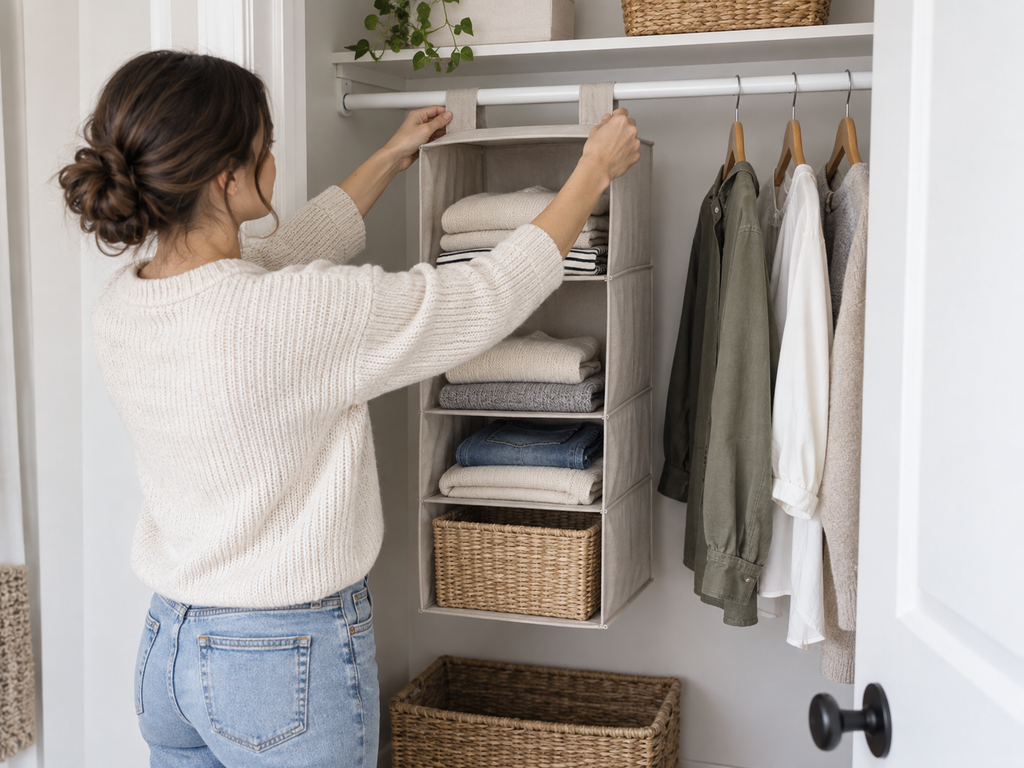
- Position the organizer before adding contents. Hold it in the proposed location to assess fit.
- Confirm that doors, clothing, bins, and drawers still move normally. Check their full movement.
- Install the organizer according to its instructions. Follow the exact attachment requirements.
- Add lightweight items first. Stay within the documented requirements throughout setup.
- Distribute contents evenly where the design permits. Follow any compartment-specific guidance.
- Check the rod and organizer for movement or sagging. Remove contents if either appears unstable.
- Adjust the setup if access or clearance is poor. Reduce contents or reconsider placement.
What Should You Store in a Hanging Closet Organizer?
Match belongings to the compartment dimensions, intended use, and documented capacity.
- Folded clothing: Sweaters, T-shirts, and lightweight jeans or casual clothing where suitable.
- Bags and accessories: Lightweight handbags, scarves, hats, and small accessories.
- Linens: Towels or other folded linens that fit without overstuffing.
- Contained small items: Lightweight closet storage bins that fit and can be removed easily.
Very heavy objects, leaking liquids, and unstable piles are less appropriate. Avoid anything that exceeds the instructions or distorts the organizer. Empty space is not an invitation to keep adding weight.
Common Hanging Closet Organizer Mistakes
- Buying before measuring.
- Choosing an organizer that is too wide.
- Letting the organizer drag on the floor.
- Blocking long garments.
- Overloading compartments.
- Ignoring the condition of the existing rod.
- Filling upper compartments with very heavy items.
- Blocking drawers or closet doors.
- Assuming fabric shelves stay perfectly rigid under every load.
- Using the organizer for items outside its intended purpose.
- Filling every compartment just because space exists.
Hanging Organizer vs Freestanding Closet Shelves
A hanging organizer uses the rod, can preserve floor area, and reduces the width available for hangers. It also adds load to the rod. It may suit a closet with spare hanging width and limited floor space.
Freestanding shelves use floor space and preserve rod width, but need a stable footprint and clearance from doors and clothing. They may suit a closet where hanging space is already full.
Check furniture instructions for any anchoring requirements before treating a freestanding unit as a no-drill option. Neither approach is the right choice for every closet.
Is a Hanging Closet Organizer Good for Renters?
A hanging closet organizer for renters can be useful when built-in shelving is limited. Used as designed, it can attach without drilling, provide shelf-like storage, and be removed when you move.
It is one option for closet storage without drilling, particularly when you have more rod space than shelf space.
The tradeoffs are reduced hanging width, added load, possible sagging, and interference with garments. Suitability depends on the closet dimensions, rod condition, organizer design, and contents. Reversible installation does not guarantee damage-free use.
Frequently Asked Questions
Are hanging closet organizers worth it?
They can be when you need folded-item storage and have rod space to spare. They offer less value if they crowd clothing or duplicate storage you already have.
How much weight can a hanging closet organizer hold?
Capacity varies by the exact organizer. Check official technical documentation for total and compartment limits. The existing closet rod, supports, and current clothing load must also be considered.
Will a hanging closet organizer damage the closet rod?
Damage is possible if the setup is unsuitable or overloaded. Check rod condition and attachment compatibility, follow the organizer’s instructions, and ask the property manager about uncertain rod capacity.
What size hanging closet organizer should I buy?
Choose one that fits your usable rod width and vertical clearance while leaving doors, clothing, and floor storage accessible. Compare internal compartment dimensions with your intended contents too.
Can I use a hanging organizer for jeans?
Possibly, if the exact organizer is intended for that use and the load remains suitable for both organizer and rod. Several pairs together may require more capacity than you expect.
Can I put storage bins inside a hanging closet organizer?
Yes, where the design and instructions permit. Check internal dimensions, handles, removal clearance, and the combined weight of each bin and its contents.
Do hanging closet organizers sag?
They can. Construction, shelf reinforcement, contents, and loading affect their shape. Do not assume fabric shelves will remain rigid. Follow the instructions and reassess contents if compartments distort.
Are hanging closet organizers good for small closets?
They can make use of vertical space, but they also take hanging width. A small closet hanging organizer is useful only if you can still reach and remove surrounding belongings.
How do I stop a hanging organizer from taking up too much closet space?
Choose a narrower or shorter unit that matches your actual needs. Store only the intended categories, preserve hanger movement, and reconsider placement if doors or garments become obstructed.
Final Thoughts
Measure before buying a hanging closet organizer. Match its width and length to usable space, choose compartments around your belongings, and consider the existing rod before adding load.
Keep clothes, drawers, floor storage, and doors accessible. The right organizer provides useful storage for what you own; it does not need the greatest possible number of compartments.
1 thought on “How to Choose a Hanging Closet Organizer for a Rental Closet”
Comments are closed.