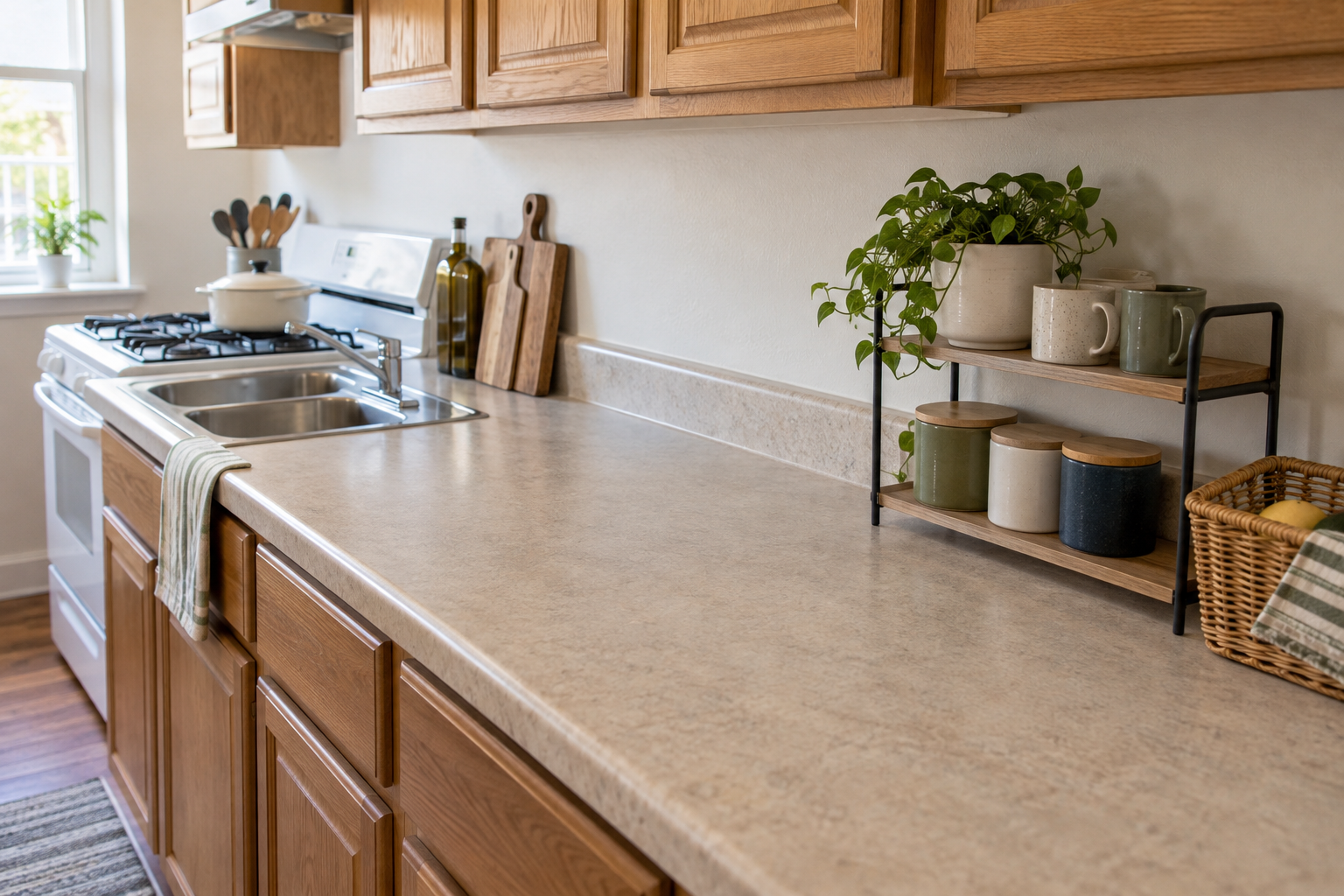
Small kitchen countertop storage works best when it protects usable prep space instead of simply adding more organizers to an already crowded surface. For renters, the most effective solutions are usually portable, freestanding, magnetic, or over-the-sink options that can be removed without drilling or altering the kitchen.
A counter can look organized and still be difficult to cook on. The useful question is not “How much can I store here?” but “Can I still chop, mix, plate food, open an appliance, and clean the surface easily?” That practical test is more important than how many baskets or racks fit along the backsplash.
This guide covers 10 renter-friendly countertop storage ideas, a simple counter-zone method, what to keep off the work surface, and the small details that often determine whether an organizer actually improves a tiny kitchen.
Start With a Countertop Audit Before Buying Organizers
Before adding storage, clear one section of the counter and identify how you actually use it. A practical setup usually needs at least one uninterrupted prep area, safe clearance around heat and water, and a place for the few items used every day.
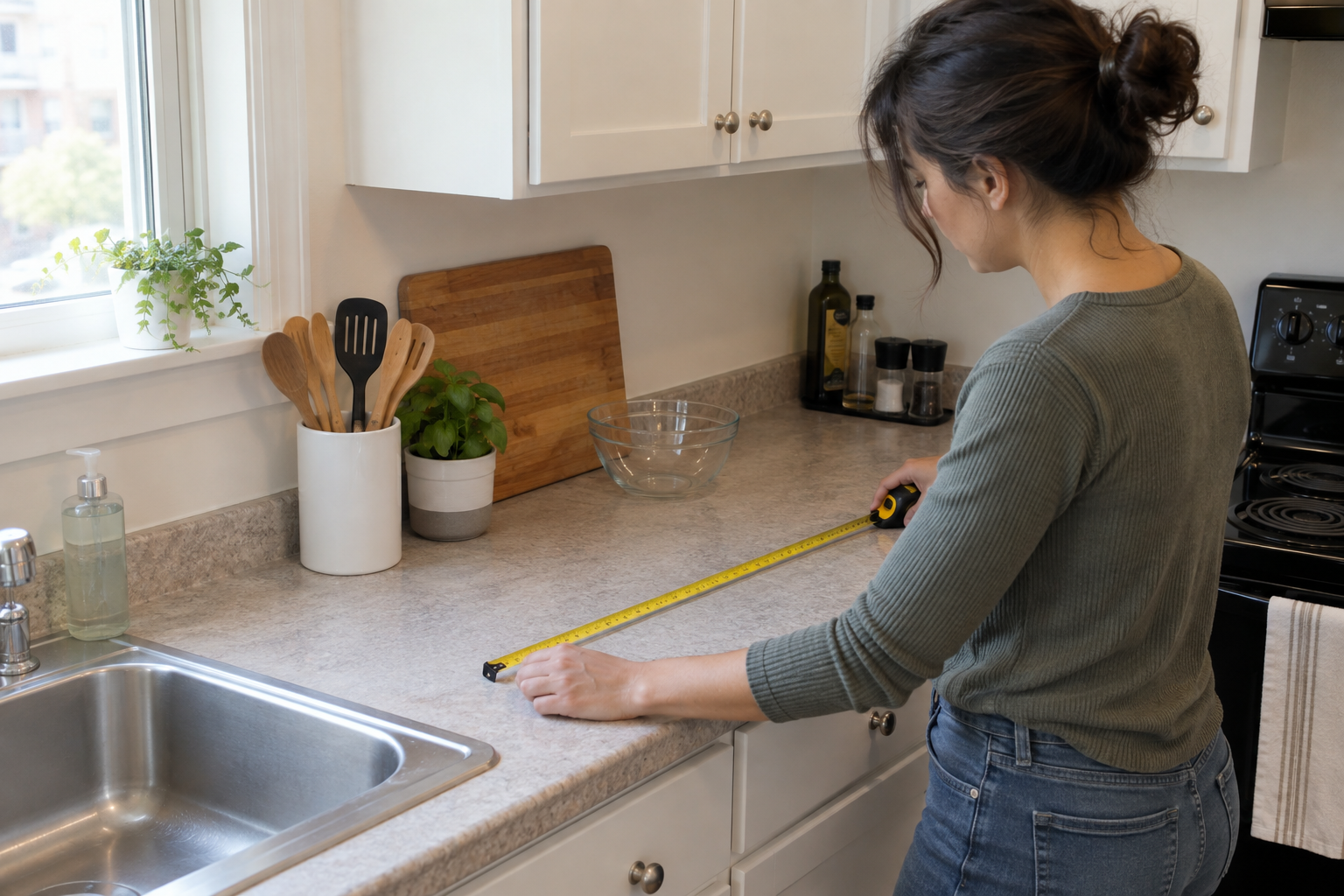
Use this quick audit:
- Prep zone: Reserve enough flat space for a cutting board or mixing bowl without moving several objects first.
- Wet zone: Keep electrical appliances and stored paper goods away from the sink and splash area.
- Hot zone: Keep combustible items, cords, and organizers away from burners and other hot surfaces.
- Daily-use zone: Keep only genuinely frequent items within easy reach.
- Relocation list: Move occasional appliances, duplicate utensils, and backup supplies into cabinets, shelves, or carts where possible.
RenterRefine practical rule: If an organizer saves storage space but forces you to move it every time you prepare food, it has probably created another obstacle rather than solving the counter problem.
10 Small Kitchen Countertop Storage Ideas for Renters
1. Use a Compact Two-Tier Counter Shelf
A small freestanding shelf can use vertical space for mugs, coffee supplies, jars, or lightweight pantry items while keeping the footprint smaller than several separate containers.
Measure the shelf depth carefully. A unit that is too deep can consume the prep space you are trying to recover. Keep the heaviest items on the lower level and avoid placing a tall shelf where it blocks an outlet or cabinet door.
2. Create a Small Coffee or Tea Station
If coffee or tea equipment is used every day, grouping it into one compact zone can reduce the number of items spread across the counter. Keep the machine, mugs, and a small amount of daily supplies together rather than storing the same category in several places.
Do not let a beverage station expand into the main prep area. Store backup pods, tea boxes, syrups, or rarely used accessories in a cabinet or nearby shelf instead of keeping every supply visible.
3. Use a Turntable for Oils and Everyday Condiments
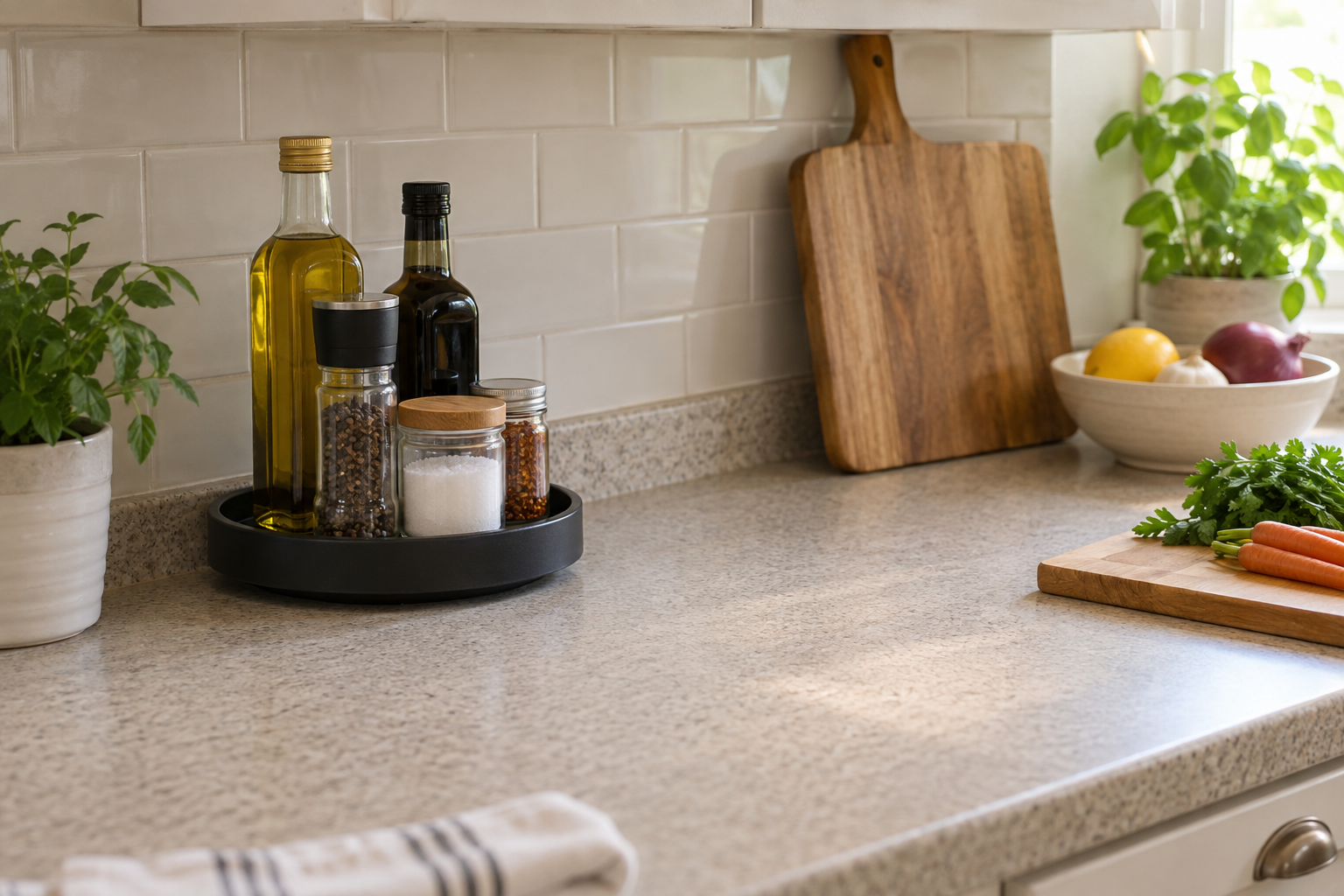
A compact turntable can keep a small group of frequently used bottles accessible without creating multiple rows along the backsplash.
Choose only the items you use often. A turntable filled with every sauce and seasoning quickly becomes another clutter zone. Keep it away from direct cooking heat and check that tall bottles remain stable when the tray rotates.
4. Replace a Large Utensil Crock With a Smaller Everyday Set
Utensil containers often grow because every spatula, spoon, whisk, and duplicate tool ends up in the same crock. Keep only the utensils used most frequently on the counter and move the rest to a drawer or bin.
This is one of the few countertop improvements that may require no new organizer at all. Reducing the number of visible tools can free space more effectively than buying a larger container.
5. Use an Over-the-Sink Drying Rack When Appropriate
An over-the-sink rack can move drying dishes, produce, or lightweight utensils off the counter and use the sink footprint temporarily instead.
Measure the sink width and faucet height before buying. The rack should remain stable, should not interfere with normal faucet movement, and should be easy to remove when you need full sink access.
6. Add a Small Countertop Basket for One Category Only
A basket can work well for fruit, bread, snacks, or one other high-turnover category. The key is giving it a single job rather than allowing it to become a mixed catch-all.
Choose a basket with a footprint that fits the counter depth and does not block outlets or cabinet doors. If the basket routinely overflows, the problem is usually excess volume rather than the basket size.
7. Move Spices Off the Counter
Spices are often stored on countertops because they are used frequently, but they can occupy valuable prep space and may be exposed to heat or sunlight. A cabinet shelf riser, drawer insert, magnetic refrigerator rack, or other removable system can keep them accessible without using the counter.
Our guide to no-drill spice rack ideas compares renter-friendly options for moving spices into cabinets, drawers, refrigerator-side storage, and portable organizers.
8. Move Occasional Appliances to Freestanding Storage
A blender, mixer, rice cooker, slow cooker, or other appliance does not need to occupy prime counter space if it is used only occasionally. A lower cabinet, rolling cart, or freestanding shelf may be a better storage location.
Use our freestanding kitchen shelving guide if you need portable storage outside the cabinets. Check the shelf’s load rating and the appliance manufacturer’s requirements before using a shelf as an operating station.
9. Use a Narrow Vertical Stand for Cutting Boards and Trays
If a few cutting boards or trays must stay close to the prep area, a narrow freestanding vertical rack can use less counter width than stacking them flat.
Keep the rack stable and avoid placing it where boards can tip into the sink, stovetop, or walkway. If there is cabinet space available, a freestanding divider inside the cabinet may be an even better use of space.
10. Create a Portable Prep Caddy
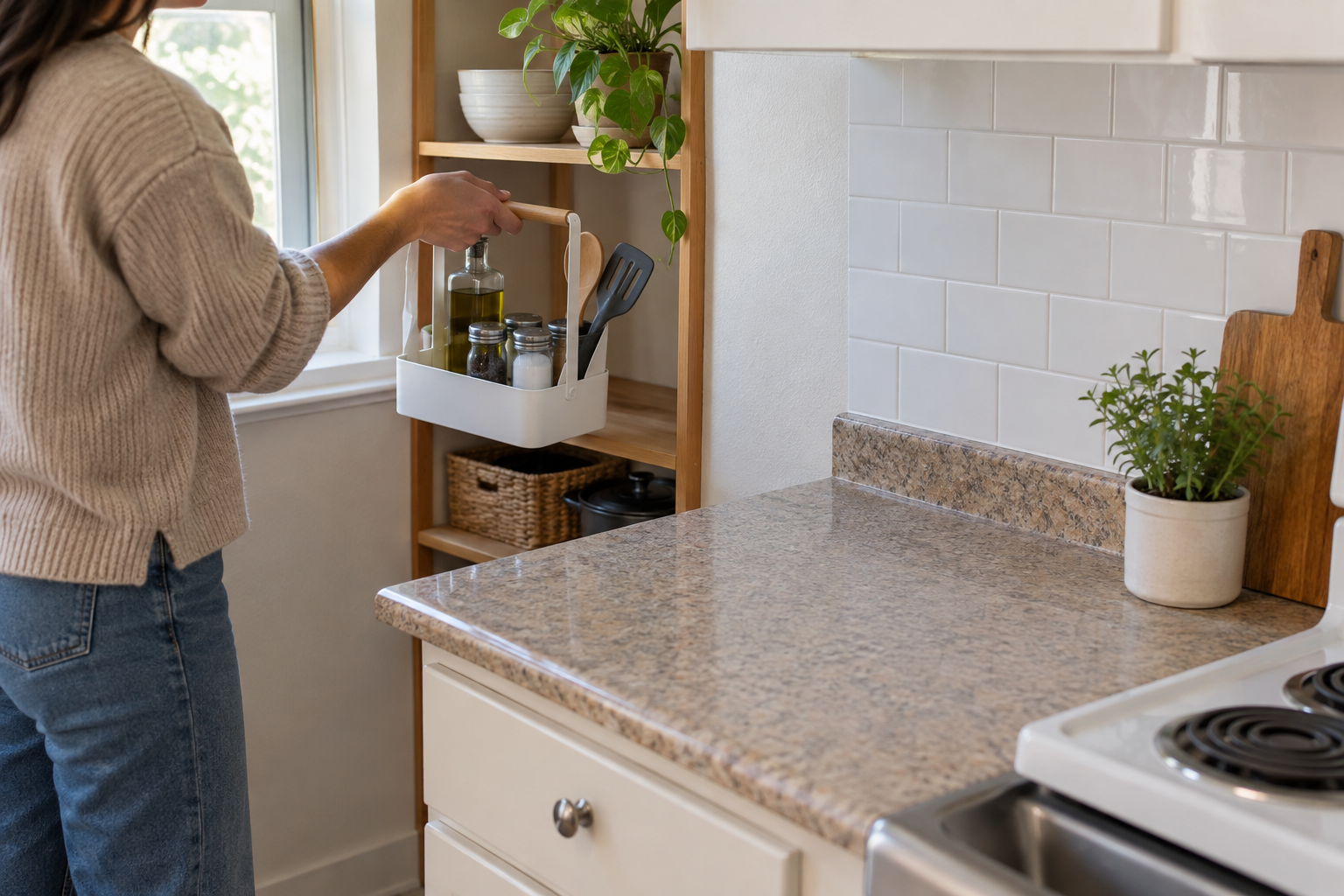
A small handled caddy can hold frequently used prep items such as salt, pepper, oil, or a few tools. Move the caddy onto the counter when cooking and store it in a cabinet or shelf afterward.
This works especially well in very small kitchens because storage does not have to occupy the work surface permanently. Keep liquids upright and avoid making the caddy so heavy that it becomes inconvenient to move.
What Should Stay on a Small Kitchen Counter?
A useful decision rule is frequency plus friction. An item deserves permanent counter space when you use it often enough that storing and retrieving it elsewhere would genuinely make daily cooking harder.
| Item | Usually Worth Counter Space? | Why |
|---|---|---|
| Daily coffee maker | Often yes | High-frequency use and awkward to move |
| Toaster used every few days | Maybe | Depends on cabinet access and counter size |
| Large mixer used monthly | Usually no | Large footprint for low-frequency use |
| Everyday utensil set | Yes, in a small quantity | Fast access during cooking |
| Backup pantry supplies | No | Better stored in cabinets or shelves |
| Spice collection | Usually no | Better protected from heat and frees prep space |
| Decorative items | Only if space allows | Should not displace essential work area |
Keep Storage Away From Heat, Water, and Unsafe Cord Paths
Counter organization should never reduce appliance safety. The U.S. Consumer Product Safety Commission’s home electrical safety checklist advises keeping countertop appliances away from the sink and keeping appliance cords away from hot surfaces. It also recommends unplugging countertop appliances when they are not in use. See the CPSC Home Electrical Safety Checklist.
The U.S. Fire Administration also recommends keeping combustible items such as paper towels, wooden utensils, food packaging, towels, and curtains away from the stovetop. In a tiny kitchen, this is one reason not to use every available strip of counter as storage. See the U.S. Fire Administration’s cooking fire safety guidance.
A Practical Three-Zone Counter Layout
For a small rental kitchen, dividing the countertop into three functional zones can be more useful than organizing by appearance alone:
- Prep zone: Keep this as clear as possible for cutting, mixing, and plating.
- Daily-use zone: Limit this to a compact group such as the coffee maker, utensil crock, or one small tray.
- Transition zone: Use a temporary area near the sink or refrigerator for groceries, dishes, or items waiting to be put away, but reset it regularly.
This layout gives each section a job. It also makes clutter easier to spot because an item that does not belong to any zone probably needs a different storage location.
Common Countertop Storage Mistakes
- Buying organizers before removing excess items: Containers cannot fix an overloaded counter by themselves.
- Using the backsplash edge as permanent storage: A long row of bottles and jars can consume most of the usable depth.
- Blocking outlets: A shelf or basket should not make plugs difficult to reach or force unsafe cord routing.
- Storing paper goods near the stovetop: Keep combustible materials away from cooking heat.
- Keeping occasional appliances visible: Counter space should generally favor high-frequency items.
- Ignoring cleaning access: If an organizer is difficult to move, crumbs and grease can accumulate behind it.
- Making every organizer multi-purpose: Single-purpose zones are usually easier to maintain.
How to Clear a Small Kitchen Counter Step by Step
- Remove everything from one section of the counter.
- Return only items used daily or almost daily.
- Move occasional appliances into cabinets or freestanding storage.
- Move spices and backup pantry supplies off the counter where possible.
- Protect one uninterrupted prep zone.
- Add one compact organizer only if it solves a specific remaining problem.
- Check heat, sink, outlet, and cabinet-door clearances.
- Use the kitchen for a week, then remove anything that repeatedly gets moved out of the way.
For the broader kitchen plan, see our main guide to kitchen storage without drilling. If your cabinets are the main limitation, see kitchen cabinet storage without drilling. If floor space is available, freestanding kitchen shelving can move occasional appliances and pantry overflow off the counter.
Frequently Asked Questions
How do I create more counter space in a small rental kitchen?
Start by removing low-frequency appliances and duplicate tools before buying organizers. Then use compact vertical storage, over-the-sink solutions, portable caddies, or nearby freestanding storage while preserving one clear prep zone.
What appliances should stay on the counter?
Keep appliances that you use frequently enough to justify the space and that are inconvenient to move. Store occasional appliances elsewhere when safe and practical. Always follow the appliance manufacturer’s storage and operating instructions.
Are countertop shelves renter-friendly?
Freestanding countertop shelves are usually renter-friendly because they do not require drilling or permanent attachment. Make sure the shelf is stable, does not block outlets or cabinet doors, and does not reduce the prep area more than it helps.
Should I keep spices on the counter?
Usually only a few frequently used seasonings need to stay within immediate reach. Larger spice collections often work better in a cabinet, drawer, magnetic rack, or another location away from cooking heat and direct sunlight.
How much counter should I leave empty?
There is no universal measurement because kitchens and cooking habits differ. The practical target is enough uninterrupted surface to perform your normal prep tasks without first moving several stored items out of the way.
Final Thoughts
Small kitchen countertop storage should make the counter easier to use, not simply make more objects look organized. In a rental, the strongest solutions are usually removable and portable: compact shelves, turntables, caddies, drying racks, baskets, and nearby cabinet or freestanding storage.
Protect a clear prep zone first. Then organize around daily use, move occasional items elsewhere, and keep storage away from heat, water, and unsafe cord paths.
If an item or organizer repeatedly has to be moved before you can cook, that is useful feedback: the counter is telling you it belongs somewhere else.