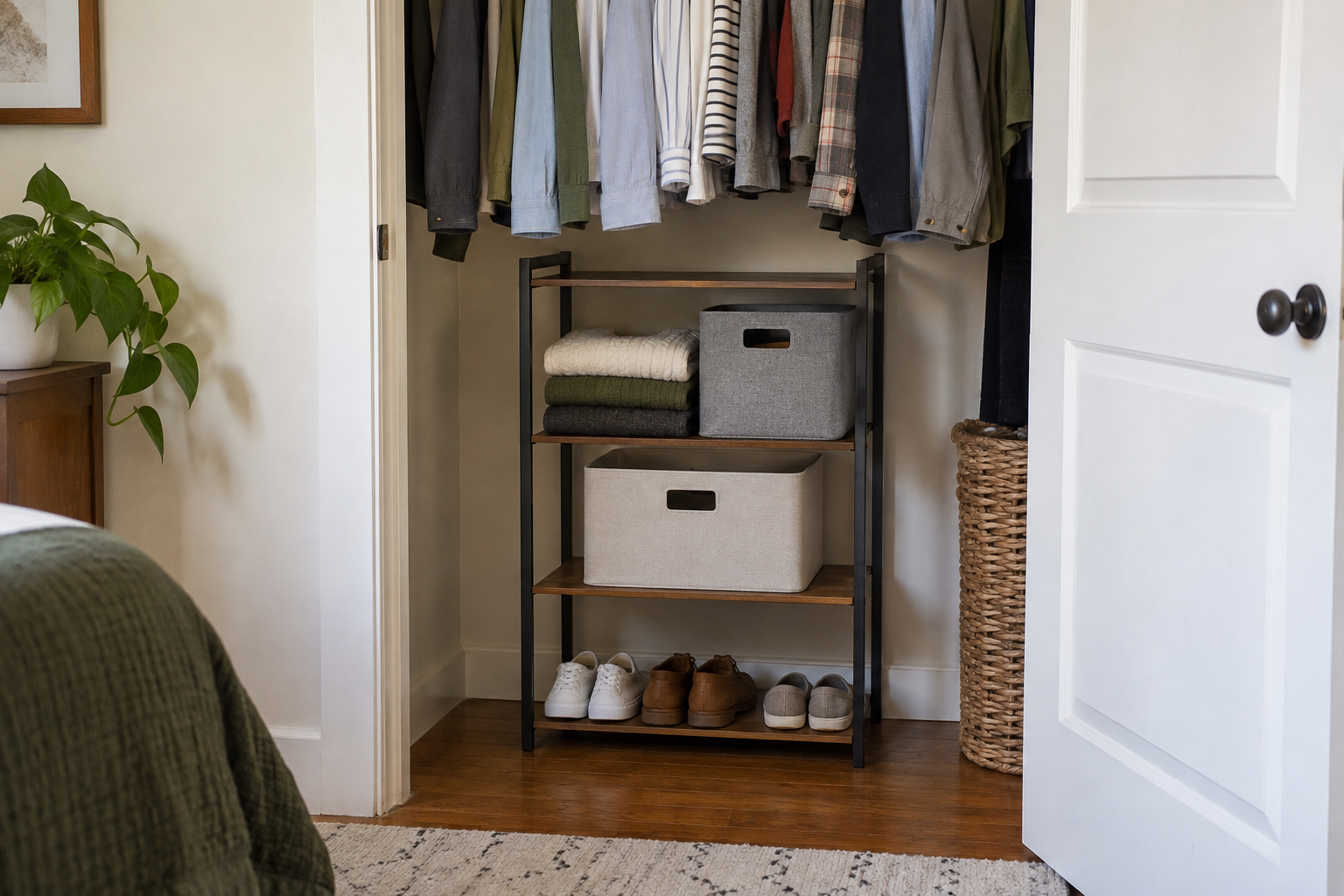
A freestanding closet shelf can add useful storage to a rental closet without drilling into walls or changing the existing closet system. The key is choosing a unit that fits the actual floor space, works around hanging clothes and doors, and remains stable during normal use.
Freestanding shelving is flexible because it can often move with you, but “freestanding” does not automatically mean “no-installation” or “renter-safe.” Some units require anchoring, some are too deep for a narrow closet, and others interfere with door tracks or long garments. Measure first, read the manufacturer instructions, and choose a unit that solves a specific storage problem rather than simply filling empty space.
Why Freestanding Shelving Can Work Well in a Rental Closet
A freestanding unit can create extra shelf levels without modifying the closet walls. Depending on the layout, it may hold folded clothes, bags, baskets, shoes, linens, or removable storage bins. It can also help separate categories that would otherwise end up stacked on the floor.
The main advantage is flexibility. You can reposition the unit when your storage needs change, and in many cases take it with you when you move. The limitation is footprint: every shelf unit uses floor width and depth, so it must earn its place by improving access rather than making the closet feel more crowded.
What to Measure Before Buying a Freestanding Closet Shelf
Measure the closet while it is functioning normally, with clothes hanging and the doors opening as they usually do. Record usable space rather than relying only on the closet’s overall dimensions.
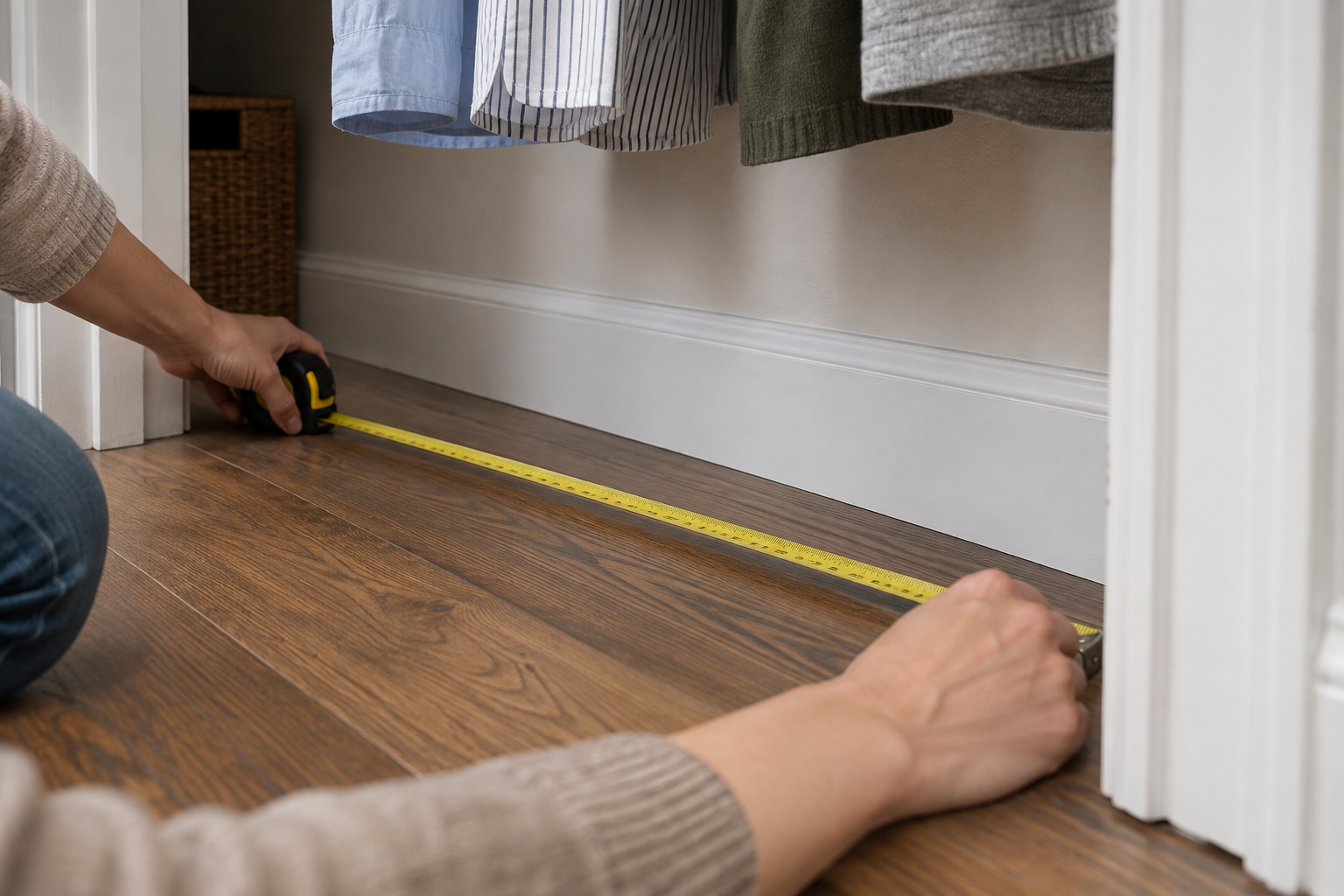
- Usable floor width: Measure between walls, trim, tracks, supports, and other fixed obstacles.
- Usable depth: Check from the back wall to the point where a shelf would interfere with the closet opening or door movement.
- Available height: Measure from the floor to the lowest hanging garment, existing shelf, rod, or ceiling obstruction.
- Closet-opening width: Make sure the packaged or assembled unit can physically enter the closet.
- Door clearance: Include sliding tracks, bifold doors, hinged doors, and any inward swing.
- Baseboard depth: A projecting baseboard can prevent a shelf unit from sitting flush against the wall.
- Garment clearance: Check whether shirts, trousers, dresses, or coats will touch the unit.
- Retrieval space: Leave enough room to remove bins, baskets, folded clothes, or shoes from each shelf.
- Floor condition: Note carpet pile, thresholds, slopes, or uneven surfaces that may affect stability.
- Access points: Keep vents, outlets, panels, and other areas that need access unobstructed.
Renter warning: Do not assume that every freestanding shelf can be used safely without attachment. Follow the exact manufacturer instructions, including any anchoring requirement, and check your rental rules before making holes or other permanent changes.
7 Things to Check When Choosing a Freestanding Closet Shelf
1. Overall Width and Depth
The unit must fit the closet footprint without blocking the door opening or forcing you to squeeze around it. Compare the full assembled dimensions with the usable width and depth you measured. Include feet, side frames, handles, and any part that extends beyond the shelf surface.
A narrow closet often benefits more from a shallower unit than from the widest shelf that can physically fit. Preserving an access path can make the storage more useful every day.
2. Height Under Hanging Clothes
Measure the lowest point of the clothing that will remain above the unit. A shelf that fits beneath short shirts may not work under dresses or coats. If the closet contains mixed garment lengths, place the unit beneath the short-hang section rather than treating the whole rod as one storage zone.
If the lower area is your main opportunity for storage, our guide to closet floor storage explains how to plan around hanging clothes, door movement, and retrieval space.
3. Shelf Spacing
Think about what will actually sit on each shelf. Folded clothing, shoes, handbags, and storage bins all need different vertical clearance. Fixed shelf spacing may work well for one category but waste space for another, while adjustable shelves can offer more flexibility when the design allows it.
Do not choose shelf spacing by appearance alone. Compare the available opening between shelves with the full height of the items or containers you plan to store.
4. Shelf Depth and Container Fit
A shelf should be deep enough to support the intended items without making them difficult to retrieve. If you plan to use closet storage bins, compare the bin’s full dimensions with the shelf surface and the clearance around it.
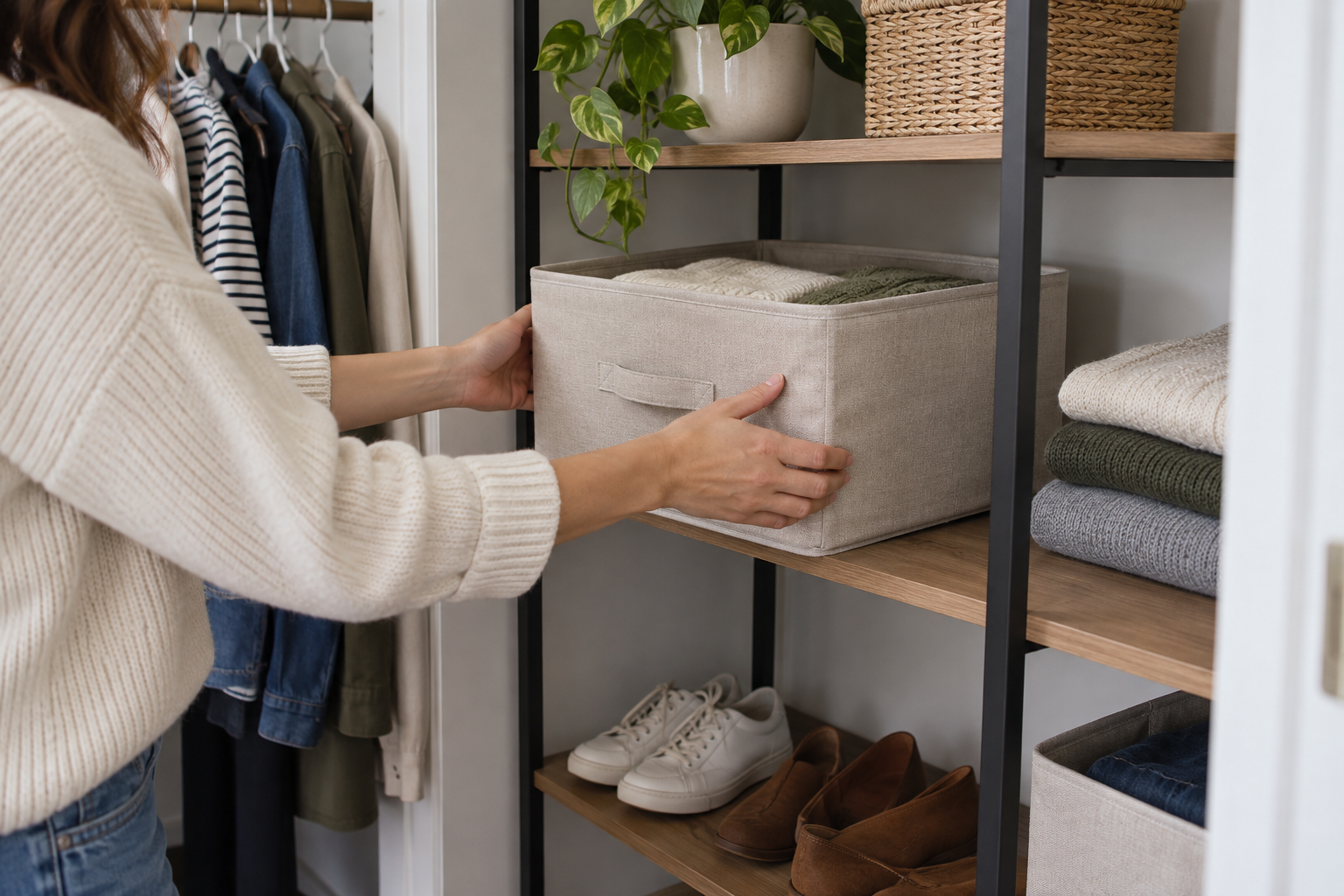
Very deep shelves can encourage items to disappear behind one another, especially in a narrow closet. When practical, choose a depth that lets you see and reach what is stored instead of creating a second hidden row.
5. Stability and Manufacturer Instructions
A freestanding unit should sit securely on the actual closet floor. Carpet, uneven flooring, thresholds, and baseboards can all affect how the unit stands. Test whether the location allows the shelf to sit as intended before loading it.
Most importantly, follow the manufacturer’s assembly and safety instructions. If the exact unit requires anchoring, do not ignore that requirement merely because you are renting. Either obtain permission for the required installation or choose a different solution that is designed for the way you intend to use it. For general furniture tip-over prevention, the U.S. Consumer Product Safety Commission’s Anchor It! guidance recommends following manufacturer instructions and securing top-heavy furniture appropriately.
6. Everyday Retrieval
The best shelf layout keeps frequently used belongings easy to remove and return. Check whether bins can slide out, shoes can be reached, and folded clothes can be taken from the middle of a stack without disturbing everything around them.
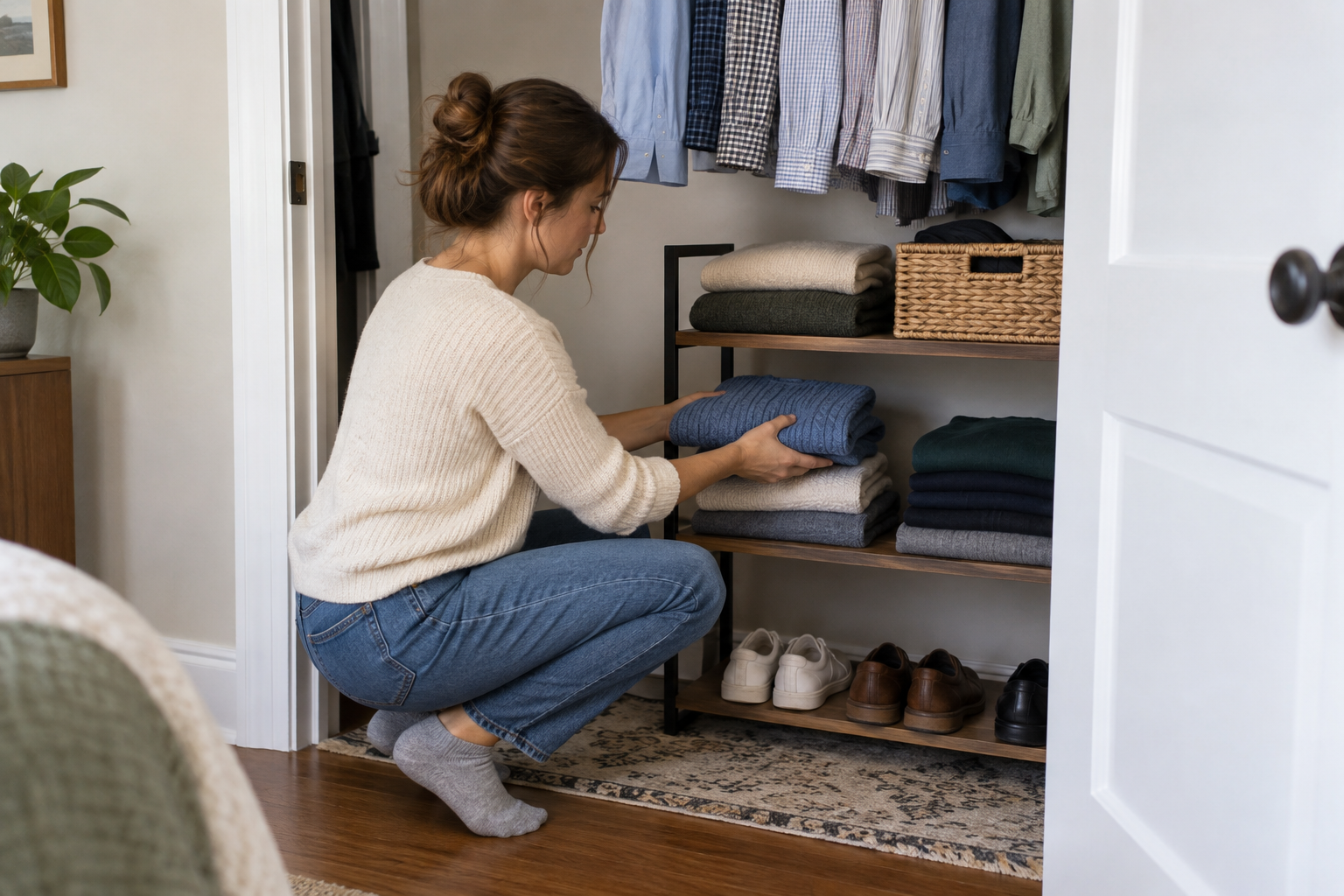
Also consider the closet door. A shelf may technically fit behind a sliding or bifold door but still be frustrating if half of it remains hidden whenever the door is open.
7. What Happens When You Move
Renters benefit from storage that can adapt to the next home. Before buying, consider whether the unit can be disassembled, carried through doorways, and reused in another closet, bedroom, laundry area, or entryway.
Portability should not override fit or safety, but it can make a simple freestanding unit more useful over time than a highly specific organizer designed for only one closet.
What Can You Store on a Freestanding Closet Shelf?
The most suitable categories depend on the shelf design and the available clearance, but common possibilities include:
- Folded shirts, sweaters, or jeans.
- Removable bins or baskets.
- Shoes on lower shelves.
- Handbags or lightweight accessories.
- Small linens or towels.
- Seasonal accessories that remain easy to retrieve.
Avoid treating the unit as a place for every miscellaneous item. Give each shelf a clear category so the added storage remains easy to use.
Freestanding Shelf vs Stackable Bins
A freestanding shelf creates fixed levels and can keep different categories separated without stacking containers directly on top of one another. It may be easier to access folded clothing, baskets, and shoes independently, but it uses more floor area and may require assembly or anchoring.
Stackable bins can be simpler and more portable. They work well for contained categories, but the lower container may become harder to access when several bins are stacked. Use only containers intended for the arrangement you plan, and make sure the stack remains manageable.
If the existing closet already has useful shelves, bins may be enough. If you need several new horizontal storage levels in an otherwise open lower section, a freestanding shelf may make better use of the space.
Freestanding Shelf vs Double-Hang Closet Rod
Both solutions can use the vertical space below short garments, but they solve different problems. A shelf is better for folded items, bins, bags, or shoes. A double-hang closet rod is designed to create more hanging capacity for shorter garments.
Look at what is currently overcrowded. If folded belongings are piled elsewhere, shelving may help. If shirts and trousers are tightly packed on one rod, a second hanging level may be more useful. Avoid combining both unless the closet has enough width, height, and retrieval space to remain functional.
How to Set Up a Freestanding Closet Shelf Step by Step
- Clear enough of the closet to see the usable floor area.
- Separate short-hang and long-hang clothing zones.
- Measure usable width, depth, and available height.
- Check door movement, tracks, baseboards, and access points.
- Decide what categories the shelf needs to hold.
- Compare the unit dimensions and shelf spacing with those items.
- Read the manufacturer instructions before assembly or placement.
- Place the unit where it remains stable and accessible.
- Load one shelf at a time and check retrieval.
- Confirm clothes, doors, and bins still move freely.
- Adjust the layout before filling every shelf.
Common Freestanding Closet Shelf Mistakes
- Buying a shelf before measuring the closet opening.
- Measuring empty rod height instead of the clearance below actual garments.
- Choosing a unit that is too deep for the door or access path.
- Ignoring baseboards, sliding tracks, or uneven flooring.
- Using containers that cannot be removed easily from the shelves.
- Overfilling the unit until the closet becomes harder to use.
- Blocking vents, outlets, or service access.
- Ignoring manufacturer anchoring or assembly instructions.
- Assuming a removable organizer is automatically suitable for every rental.
Is a Freestanding Closet Shelf Renter-Friendly?
It can be. A shelf that fits the existing closet, can be removed later, and does not require prohibited alterations can be a practical renter-friendly option. It works especially well when you need more horizontal storage but do not want to modify the existing wall-mounted system.
For a wider range of removable approaches, see our guide to closet storage without drilling. The right solution may be shelving, bins, hanging organizers, over-the-door storage, or a combination that fits the closet you actually have.
Frequently Asked Questions
Do freestanding closet shelves require drilling?
Not all do, but some units require anchoring or other installation for safe use. Always follow the manufacturer instructions for the exact shelf you choose.
How do I know if a freestanding shelf will fit my closet?
Measure usable width, depth, height, the closet opening, and door clearance. Compare those measurements with the unit’s full assembled dimensions.
Can I put a freestanding shelf under hanging clothes?
Yes, when there is enough clearance beneath the garments. Measure the longest clothing in that zone before choosing the shelf height.
What should I store on a closet shelf unit?
Folded clothing, bins, baskets, shoes, bags, and small linens can work when they fit the shelf design and remain easy to retrieve.
Are narrow shelves better for small closets?
Sometimes. A narrow or shallow unit can preserve more access space, but the best dimensions depend on the closet and the items you need to store.
Can I use storage bins on a freestanding closet shelf?
Yes, if the bins fit the shelf depth, width, and vertical opening and can be removed without obstruction.
Is a shelf unit better than stacking bins?
It depends on access and storage type. Shelves separate categories into levels, while stackable bins are often more portable but can make lower containers harder to reach.
Can a freestanding shelf block closet doors?
Yes. Always measure sliding tracks, bifold movement, or door swing before placing a unit near the closet opening.
What if the closet floor is carpeted?
Check whether the exact unit remains stable on the surface and follow its placement and safety instructions. Carpet can affect how some furniture sits.
Can I take a freestanding closet shelf when I move?
Often yes, which is one reason renters may prefer removable storage. Check whether the unit can be disassembled or moved safely through the next home.
Final Thoughts
A well-chosen freestanding closet shelf can add useful storage without changing the structure of a rental closet. Measure the real usable space, plan around hanging clothes and doors, match shelf spacing to what you store, and follow the manufacturer’s safety instructions. The best unit is not necessarily the largest one that fits—it is the one that improves storage while keeping the closet easy to use.