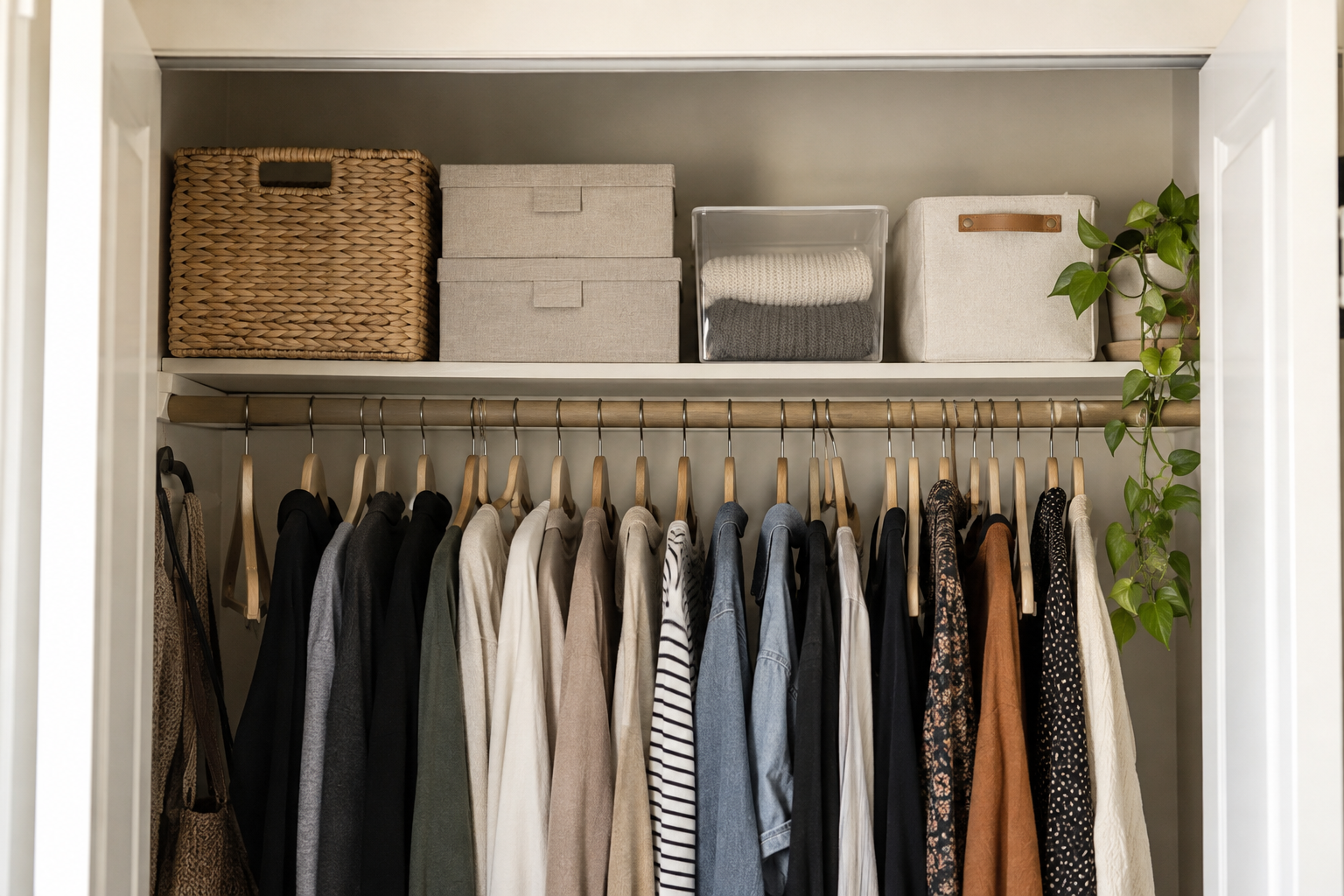
Top shelf closet organization can turn an awkward high shelf into useful storage without drilling or adding permanent built-ins. The key is to store the right items there, choose containers that fit the shelf and opening, and keep everything light enough to retrieve safely.
A high closet shelf is easy to overfill because it looks like unused space. But depth, ceiling clearance, door opening, shelf capacity, container handles, and the way you lift items down all affect whether the space is practical. Measure first and plan for access, not just maximum capacity.
Why the Top Closet Shelf Needs a Different Storage Plan
Storage at eye level can be reached directly, while a top shelf often requires lifting a container down before you can see or use what is inside. That changes what belongs there. Frequently used, heavy, awkward, fragile, or leaking items are usually poor candidates for difficult-to-reach storage.
The shelf itself also has limits. A high shelf may span wall supports, brackets, or closet framing, but its actual capacity depends on the shelf material, supports, installation, and condition. Do not infer strength from appearance alone. Follow the closet or shelf documentation where available and keep the arrangement conservative when capacity cannot be confirmed.
What to Measure Before Organizing a High Closet Shelf
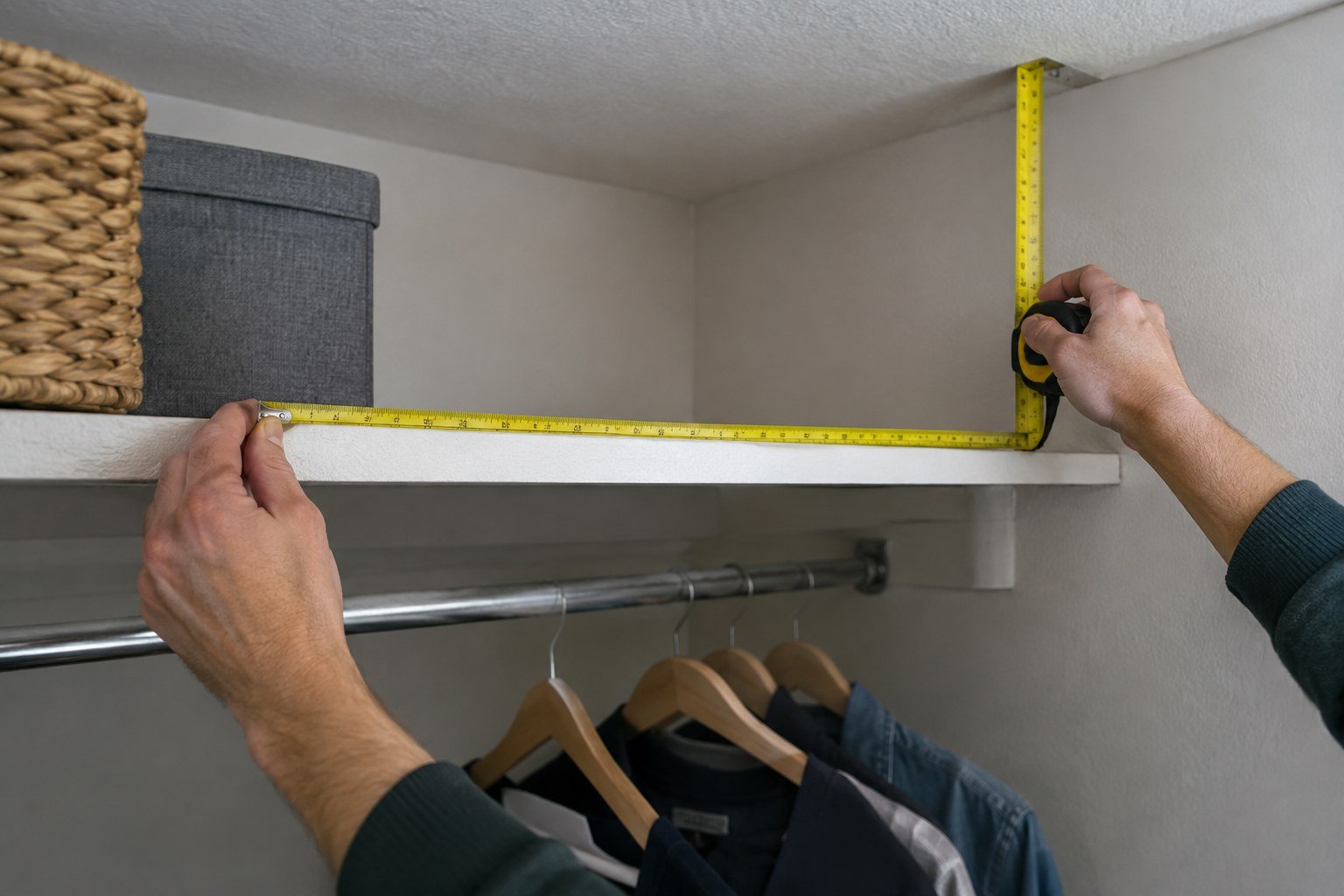
Measure the usable shelf area and the route each container must travel when you remove it. A bin can fit once it is sitting in place but still be too tall or awkward to lift through the closet opening.
 Save
Save- Shelf width: Measure the usable span between walls, supports, brackets, or other obstructions.
- Shelf depth: Measure the supported surface from the back wall to the front edge.
- Vertical clearance: Check from the shelf surface to the ceiling, shelf above, or sloping closet roof.
- Closet-opening width: Confirm a filled container can pass through the opening.
- Front-edge clearance: Note trim, lips, door tracks, or frames that a container must clear.
- Container outside width: Use the widest point, including projecting handles.
- Container outside depth: Include lids, handles, or tapered sides shown in the product dimensions.
- Container outside height: Measure the fully assembled height, including a lid if you plan to use one.
- Retrieval clearance: Allow enough space to tilt, lift, and bring the container toward you.
- Your reach: Consider whether you can control the container comfortably from the floor or whether you need a stable step stool used according to its instructions.
- Number of containers: Compare the combined outside dimensions rather than estimating by appearance.
Renter warning: A high shelf can hold a container without that container being easy or safe for you to retrieve. Keep overhead storage manageable, avoid overfilling, and do not place items where removal requires uncontrolled lifting or climbing on unsuitable furniture.
7 Things to Check for Better Top Shelf Closet Organization
1. What You Store Up High
Reserve the top shelf for belongings that are light, stable, and used less often. Spare linens, lightweight seasonal accessories, empty travel bags, or infrequently used clothing may be easier to manage than dense books, heavy shoes, liquid products, or breakable objects.
The goal is not to move every rarely used item upward. Choose only categories you can retrieve and return without losing control of the load.
2. Container Size
One oversized bin may use the shelf efficiently on paper but become difficult to lower when filled. Smaller containers can divide categories and reduce the amount you lift at one time. Compare their outside dimensions with the shelf, closet opening, and your retrieval path.
If you already use closet storage bins, apply the same checks for width, depth, height, handles, lids, and independent removal before moving them to a higher shelf.
3. Handles and Grip
Handles matter more overhead because you need a controlled grip while moving the container toward you. Front pulls may be easier to reach in some layouts, while side handles need enough clearance for your hands. Recessed grips can save exterior space but may be less convenient depending on shelf height and container weight.
Do not assume a decorative handle is designed for a loaded lift. Follow the exact product instructions and documented load guidance.
4. Clear vs Opaque Containers
Clear containers can help you identify contents from below, which reduces unnecessary lifting. Opaque containers can create a calmer visual appearance but may require labels or a simple category system so you know what is inside before taking the bin down.
Neither type is universally better. Choose the option that helps you identify a category with the least handling.
5. Lids and Opening Clearance
A lid can help keep a category contained, but a high shelf may not provide enough room to open it in place. In many closets, the entire container must be lowered before the lid can be removed. Check this motion before choosing a lidded design.
6. Shelf Capacity and Condition
Inspect the shelf for sagging, loose brackets, damaged edges, or movement. A visually wide shelf is not proof that it can support heavy storage. If you cannot confirm capacity, keep the load conservative and avoid concentrating dense items in one area.
7. Retrieval Method
Plan how each item will come down before you fill the shelf. If you need a step stool, use one that is stable and intended for the task. The CDC home fall-prevention checklist advises using a sturdy step stool rather than a chair when reaching higher storage.
Frequently used categories should stay lower if retrieving them from the top shelf becomes a repeated inconvenience.
What Belongs on the Top Shelf of a Small Closet?
Suitable categories depend on weight, size, frequency of use, and your ability to retrieve them. Common possibilities include:
- Spare lightweight linens.
- Seasonal hats, scarves, or gloves.
- Lightweight off-season clothing.
- Empty tote bags or soft travel bags.
- Occasional accessories grouped in a manageable container.
- Lightweight keepsakes that are not fragile or heat-sensitive.
Avoid putting a category on the top shelf simply because you rarely use it. If it is heavy, unstable, breakable, likely to spill, or difficult to control overhead, choose a lower location.
How to Arrange a High Closet Shelf Step by Step
- Remove enough items to see the full shelf and supports.
- Inspect the shelf for movement, sagging, or damage.
- Measure shelf width, depth, vertical clearance, and the closet opening.
- Group the belongings you are considering for high storage.
- Remove categories that are too heavy, awkward, fragile, or frequently used.
- Compare container outside dimensions with the shelf and retrieval path.
- Place the least-used lightweight categories toward less convenient areas.
- Keep easier-to-grip containers nearer the front where practical.
- Load containers lightly at first and test removal.
- Confirm doors, tracks, and nearby hanging storage still work normally.
- Adjust the layout if any container feels awkward to retrieve.
Top Shelf Storage vs Lower Closet Storage
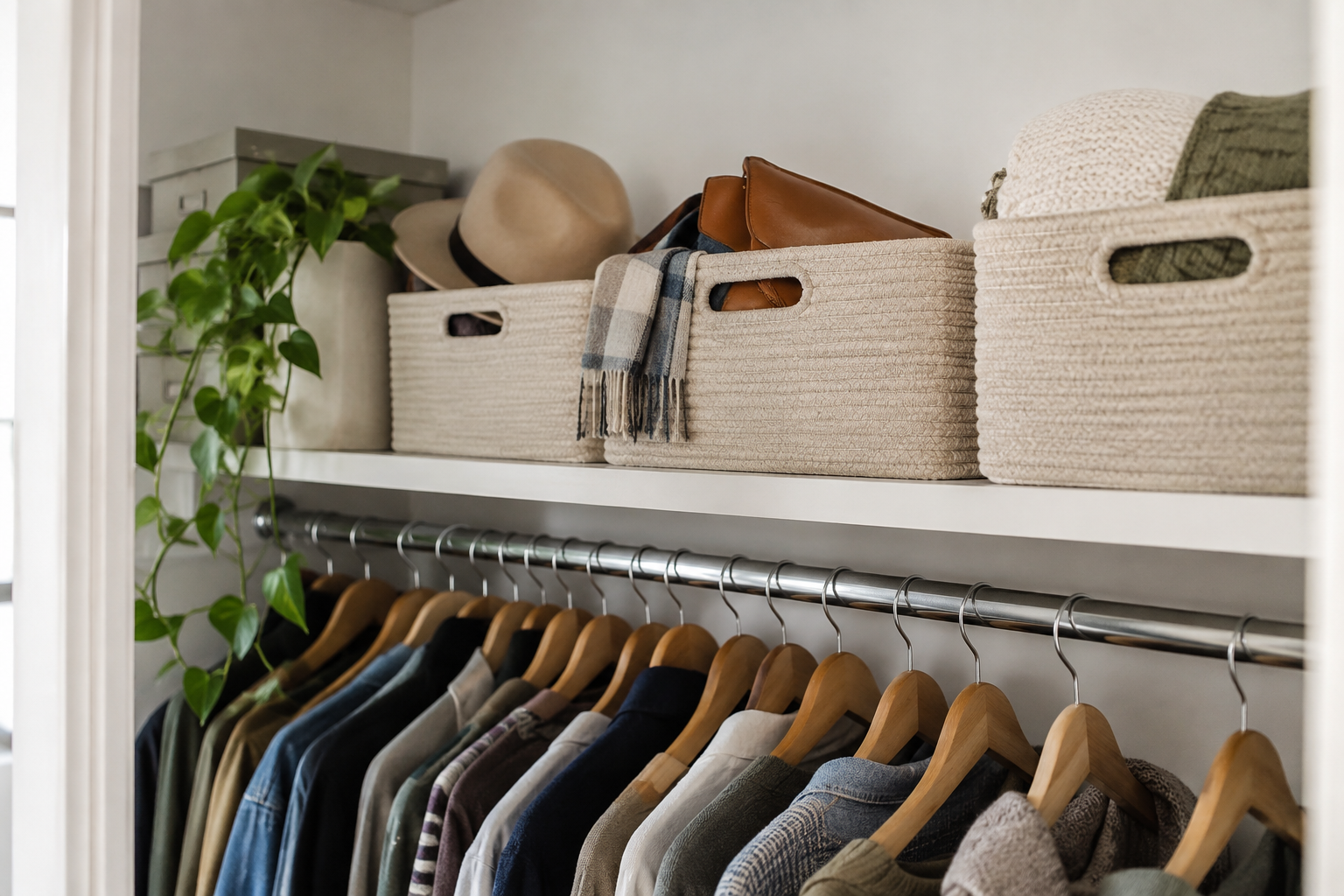
For practical top shelf closet organization, high shelves are most useful for light, infrequently used categories because they preserve easier-to-reach space for everyday belongings. Their main limitation is retrieval. The higher the item, the more important container size, grip, and your access method become.
 Save
SaveLower shelves and closet floors are better for heavier or frequently used items because you can reach them with less lifting. For a broader renter-friendly layout, combine high-shelf storage with closet storage without drilling rather than trying to make one shelf solve every storage problem.
Should You Stack Bins on a High Closet Shelf?
Stacking can use vertical clearance, but it also increases the amount you may need to move before reaching the lower container. Do not assume every bin is designed to stack, and do not create a tall arrangement simply because it physically fits.
Use only containers documented for the intended stacking arrangement, keep the loaded setup within the shelf’s supported use, and make sure the stack remains controllable when you remove one container. On a high shelf, easy retrieval is usually more useful than maximum stack height.
Common Top Shelf Closet Storage Mistakes
- Filling one oversized bin until it becomes difficult to lift.
- Measuring the shelf but not the closet opening.
- Ignoring ceiling or shelf-above clearance.
- Placing heavy or fragile belongings overhead.
- Using containers with no practical grip.
- Stacking containers without checking product instructions.
- Ignoring a shelf that already sags or moves.
- Storing everyday items where they require a step stool each time.
- Using unsuitable furniture as a climbing aid.
- Packing the shelf so tightly that containers cannot be removed independently.
Is Top Shelf Closet Storage Good for Renters?
Yes. Top shelf closet organization can work well for renters when the existing shelf is suitable and the arrangement remains reversible. Using an existing top shelf can improve storage without drilling, additional wall hardware, or permanent built-ins.
The main renter consideration is not whether the storage is permanent, but whether it fits and can be used without damaging or overloading the existing closet. Keep containers manageable, respect the shelf’s condition and documented limits, and avoid attachments that the rental does not permit.
Frequently Asked Questions
What should I store on the top shelf of a closet?
Choose light, stable, less frequently used belongings that you can retrieve safely, such as spare linens, seasonal accessories, or lightweight clothing.
What should I avoid storing on a high closet shelf?
Avoid heavy, fragile, unstable, leaking, or frequently used items when overhead retrieval would be difficult or unsafe.
Are clear bins good for top closet shelves?
They can be useful because contents are easier to identify from below. The bin still needs to fit the shelf, opening, and retrieval path.
Should top shelf bins have handles?
A practical grip can make retrieval easier, but check that the handle is designed for the intended use and that there is enough clearance for your hand.
Can I stack bins on the top closet shelf?
Only when the exact containers are designed for stacking and the shelf and retrieval method remain suitable. Do not assume stackability from appearance.
How do I reach a high closet shelf safely?
Use an appropriate stable step stool according to its instructions when needed. Do not climb on chairs, boxes, or other furniture not designed for that purpose.
How many bins should I put on a top closet shelf?
There is no universal number. Use only as many as fit with independent removal, manageable weight, and suitable shelf capacity.
Can I store shoes on the top closet shelf?
You can when the shelf, container, and retrieval method are suitable, but heavy or frequently worn shoes are often more convenient at a lower level.
Do I need labels on top shelf containers?
Labels are optional. They can help when containers are opaque or difficult to see into from below, reducing unnecessary lifting.
Does top shelf closet organization require drilling?
Not when you are organizing an existing suitable shelf with freestanding or compatible containers. Any added hardware should follow the rental rules and exact product instructions.
Final Thoughts
Effective top shelf closet organization is less about filling every inch and more about keeping high storage light, visible, and retrievable. Measure the shelf and closet opening, choose manageable containers, keep frequently used or heavy belongings lower, and follow exact product and shelf guidance. A simple high-shelf system that you can use comfortably is better than a tightly packed arrangement that is difficult to access.