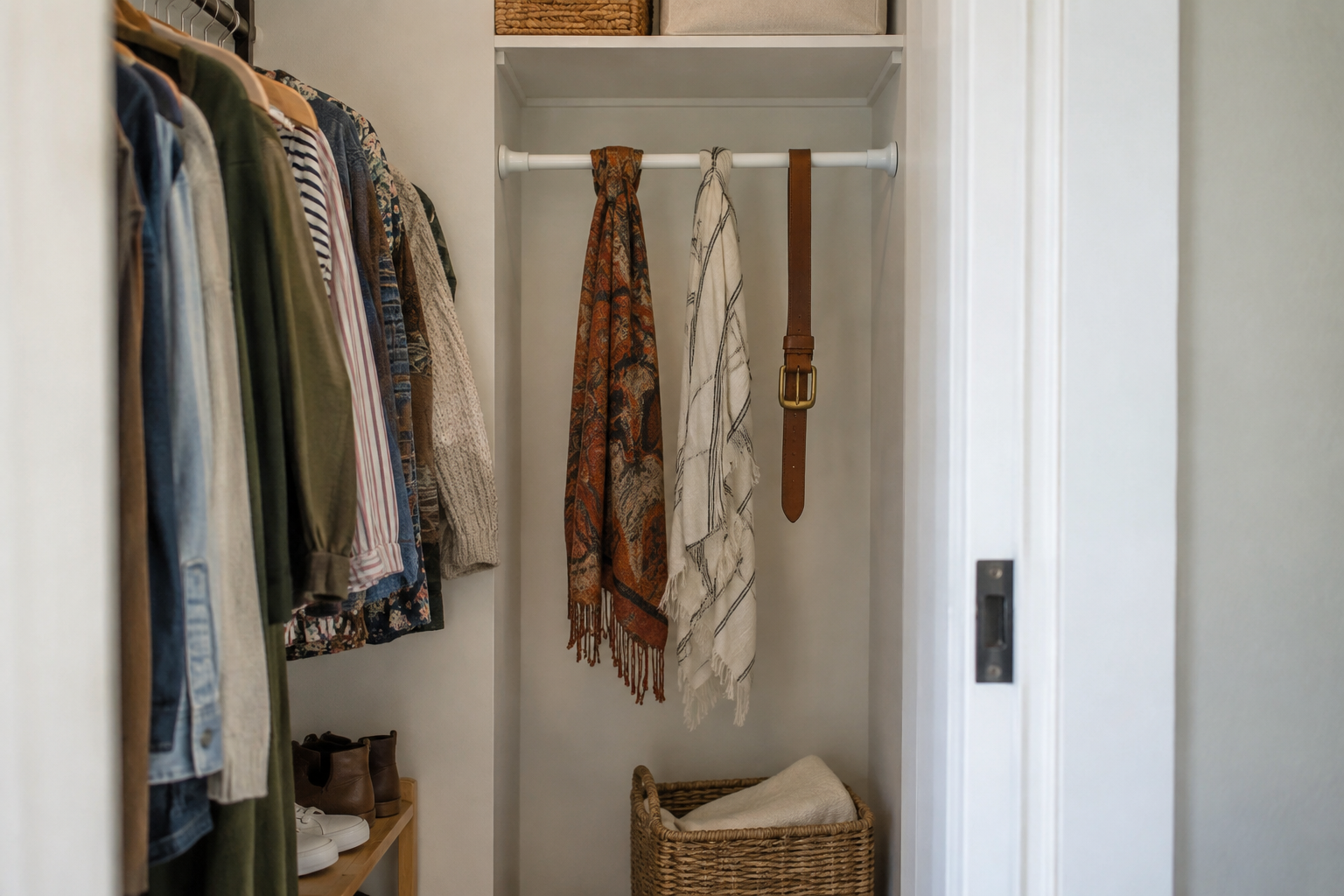
Tension rod closet storage can add a lightweight hanging point or divider inside a rental closet without drilling. It can be useful for accessories, small organizers, or limited lightweight storage, but only when the rod, span, contact surfaces, and intended load are suitable for the exact setup.
The main advantage is reversibility. A tension rod can often be installed between opposing surfaces and removed later without permanent hardware. The main limitation is that capacity varies by product and installation conditions. A rod that works for scarves or a light hanging organizer should not automatically be treated as a substitute for a permanent closet rod.
Why Tension Rod Closet Storage Can Be Useful for Renters
Rental closets often have unused gaps between walls, shelving units, or other compatible opposing surfaces. A tension rod can sometimes turn one of those gaps into a secondary storage point without changing the existing wall-mounted closet system.
Possible uses include lightweight accessories, a small hanging organizer, scarves, belts, or other items that suit the rod’s documented intended use. The goal is not to maximize weight. It is to create a practical secondary storage point that remains stable and easy to remove.
What to Measure Before Using a Tension Rod in a Closet
Measure the exact location where the rod will sit. Do not rely on the overall closet width because trim, shelving, uneven walls, or door hardware can reduce the usable span.
 Save
Save- Usable span: Measure the distance between the two opposing contact surfaces.
- Contact area: Check whether both ends of the rod will sit fully on stable, suitable surfaces.
- Vertical position: Confirm the rod will not interfere with existing shelves, rods, doors, or hanging clothes.
- Garment clearance: Measure the space below and around the rod if anything will hang from it.
- Door movement: Make sure sliding, bifold, or hinged doors can still operate normally.
- Retrieval space: Leave enough room to add and remove the items stored on the rod.
- Nearby surfaces: Check for delicate paint, wallpaper, trim, mirrors, or finishes that could be marked by pressure or movement.
Renter warning: A tension rod stays in place by pressure between surfaces. Do not over-tighten it against delicate finishes, and do not assume a rod is suitable for clothing or heavy storage unless the manufacturer specifically states that intended use.
7 Things to Check Before Using Tension Rod Closet Storage
1. The Required Span
Tension rods are designed to work within specified length ranges. Measure the intended span carefully and compare it with the exact product instructions. A rod that is extended close to the edge of its intended range may behave differently from the same rod used at a shorter span.
Do not improvise with a rod that is too short or too long for the space. Choose a size intended for the measured span.
2. The Contact Surfaces
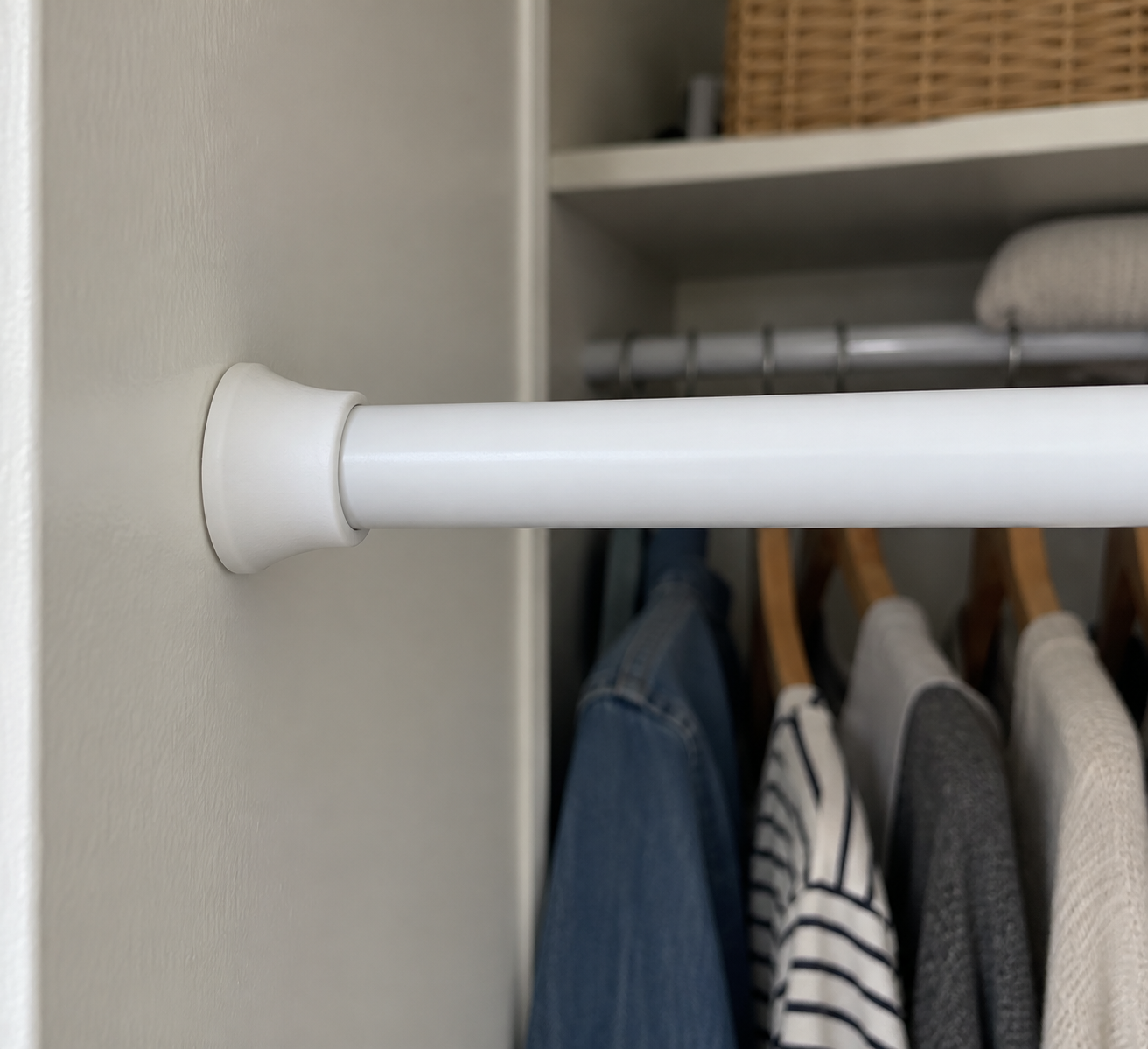
Both ends need compatible surfaces that can accept the rod’s pressure and remain stable during use. Smooth painted walls, tile, wood trim, shelving panels, and other finishes can behave differently, so follow the product guidance for permitted surfaces.
 Save
SaveAvoid placing the rod where one end rests partly on trim, an uneven joint, a loose panel, or another unstable edge. Full, even contact is more important than finding the most convenient-looking position.
3. The Rod’s Intended Use
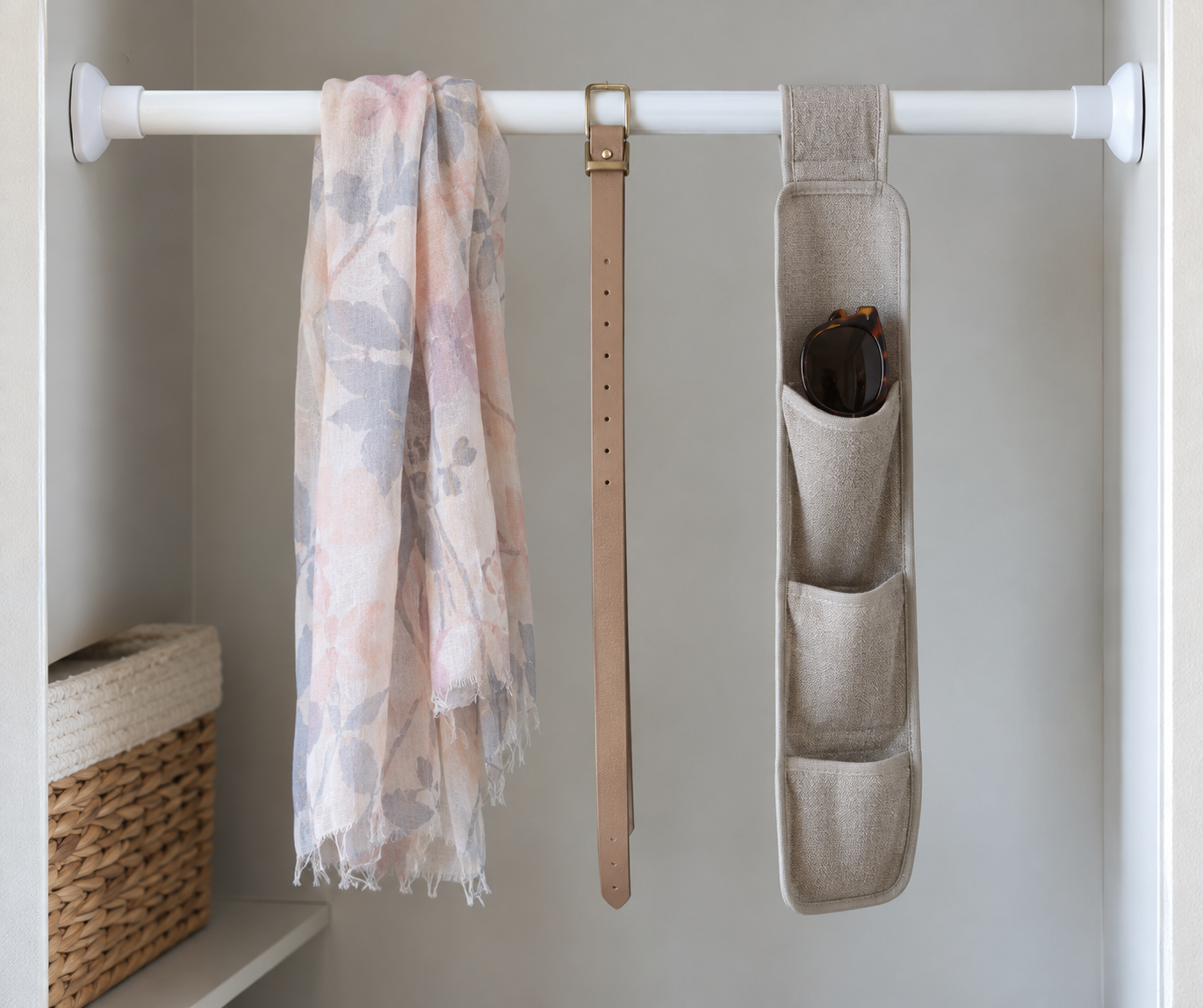
Not every tension rod is designed for the same purpose. Some are intended for lightweight curtains or accessories, while others are marketed for stronger storage applications. Use the exact rod only for the purpose and conditions described by its manufacturer.
 Save
SaveAvoid assuming that a thicker-looking rod can safely hold more. Appearance is not a substitute for product documentation.
4. What You Plan to Hang
Plan the storage category before installing the rod. Lightweight scarves, belts, empty hangers, or a small approved organizer may place very different demands on the rod than coats, denim, or a row of packed garments.
If your real problem is a shortage of hanging space for clothing, a double-hang closet rod designed for that purpose may be a better fit than adapting a lightweight tension rod.
5. Placement and Access
A rod can fit physically and still make the closet harder to use. Check whether stored items will block clothes behind them, interfere with drawers, or make the closet door difficult to open.
Place frequently used accessories where they can be reached without removing several other items. If the rod creates a narrow, awkward passage or hides existing storage, another solution may work better.
6. Movement and Slippage
After installation, test the rod gently before loading it fully. Check whether it twists, slides, shifts, or leaves visible marks at the contact points. Recheck it after the first few uses because adding and removing items can introduce movement.
If the rod repeatedly slips, requires excessive pressure to stay in position, or marks the surface, stop using that setup and choose another storage method.
7. Rental-Surface Protection
Renters need to consider the surface as well as the storage. Pressure, friction, repeated adjustment, or rubber end caps can sometimes leave marks depending on the finish and condition of the wall or panel.
Check your lease restrictions, inspect the contact points periodically, and avoid using a tension setup on a delicate or questionable surface simply because it does not require screws.
Good Uses for a Tension Rod in a Rental Closet
When the rod is appropriate for the span, surfaces, and intended load, it can be useful for lightweight categories such as:
- Scarves or lightweight fabric accessories.
- Belts or ties on suitable hooks or loops.
- Empty hangers.
- A small lightweight hanging organizer when permitted by the rod instructions.
- Light fabric dividers or category separators.
- Other lightweight accessories within the product’s stated intended use.
Keep the setup simple. A tension rod is most useful when it solves one small storage problem rather than becoming another overloaded closet rod.
Tension Rod vs Double-Hang Closet Rod
A tension rod usually presses between opposing surfaces and can create an independent hanging point. A double-hang rod typically suspends from an existing closet rod and is intended to create a second hanging level below it.
If you mainly need a lightweight accessory bar in an unused gap, a tension rod may be enough. If you need more hanging capacity for short garments, a purpose-designed double-hang system may be more appropriate.
Tension Rod vs Freestanding Closet Shelf
A tension rod uses vertical space and opposing surfaces but adds no shelf surface. A freestanding closet shelf uses floor space to create several horizontal levels for folded clothes, bins, shoes, or bags.
Choose according to what is overcrowded. Accessories may benefit from a small secondary rod, while folded items and containers usually need shelving. In very small closets, preserving access can matter more than adding the maximum possible storage.
How to Set Up Tension Rod Closet Storage Step by Step
- Decide exactly what lightweight category the rod will hold.
- Choose a location with two suitable opposing surfaces.
- Measure the usable span accurately.
- Compare the span and intended use with the product instructions.
- Check the contact surfaces for delicate finishes or instability.
- Install the rod according to the manufacturer instructions.
- Test gently for movement before adding stored items.
- Add a small amount of storage first.
- Check door, clothing, and retrieval clearance.
- Recheck the rod after several normal uses.
- Remove or reposition it if it slips, marks the surface, or becomes inconvenient.
Common Tension Rod Closet Storage Mistakes
- Using a rod outside its intended span.
- Assuming all tension rods have the same capacity.
- Loading heavy clothing onto a rod intended for light accessories.
- Installing against uneven, loose, or delicate contact surfaces.
- Over-tightening the rod against painted or fragile finishes.
- Blocking closet doors, drawers, or existing hanging clothes.
- Ignoring movement after the first installation.
- Using a tension rod where a shelf or purpose-designed hanging system would work better.
- Adding more hooks and accessories until the setup becomes difficult to use.
Is Tension Rod Closet Storage Renter-Friendly?
It can be renter-friendly when the exact rod is suitable for the location, the surfaces tolerate the pressure, and the setup follows the manufacturer instructions. Its main appeal is that it can often be removed without drilling.
However, no-drill does not automatically mean no-risk. Pressure and repeated movement can still affect finishes, and an overloaded rod can slip. For broader alternatives, see our guide to closet storage without drilling.
Frequently Asked Questions
Can tension rods be used for closet storage?
Yes, when the exact rod is intended for the span, surfaces, and load you plan to use. Do not assume every tension rod is suitable for hanging clothing.
Can a tension rod replace a closet rod?
Not automatically. A permanent closet rod and a tension rod may be designed for very different loads and installations. Use the exact product only for its documented purpose.
What can I hang from a tension rod in a closet?
Lightweight accessories, empty hangers, or a compatible lightweight organizer may work when allowed by the rod’s instructions.
Can a tension rod damage painted walls?
Pressure or movement can sometimes mark finishes. Check the product guidance, inspect the surface first, and avoid excessive pressure on delicate paint or trim.
Why does a closet tension rod keep slipping?
Possible causes include an unsuitable span, incompatible contact surfaces, incorrect installation, movement during use, or too much load. Recheck the manufacturer instructions rather than adding more pressure automatically.
Can I use a tension rod between closet shelving panels?
Only if the exact rod and surfaces are suitable for that installation. Do not apply pressure to loose, thin, or unsupported panels without confirming they can safely accept it.
Is a tension rod better than a freestanding shelf?
They solve different problems. Tension rods suit lightweight hanging uses, while freestanding shelves are better for folded items, bins, shoes, and other shelf-based storage.
Should I tighten a tension rod as much as possible?
No. Install it according to the product instructions. Excessive pressure can be unnecessary and may affect the contact surfaces.
Can tension rods work in very small closets?
They can when there is a suitable span and the rod does not block clothing, doors, or retrieval. In a tight closet, access may matter more than adding another storage point.
Is tension rod closet storage easy to remove when moving?
Often yes, which is one reason renters consider it. Remove it carefully, inspect the contact surfaces, and follow any product instructions for removal.
Final Thoughts
Tension rod closet storage can be a useful no-drill option when you need a lightweight secondary hanging point rather than a heavy-duty clothing rod. Measure the span, check the contact surfaces, follow the product instructions, and keep the intended load conservative. For renters, the best setup is one that adds useful access without slipping, marking finishes, or making the closet harder to use.