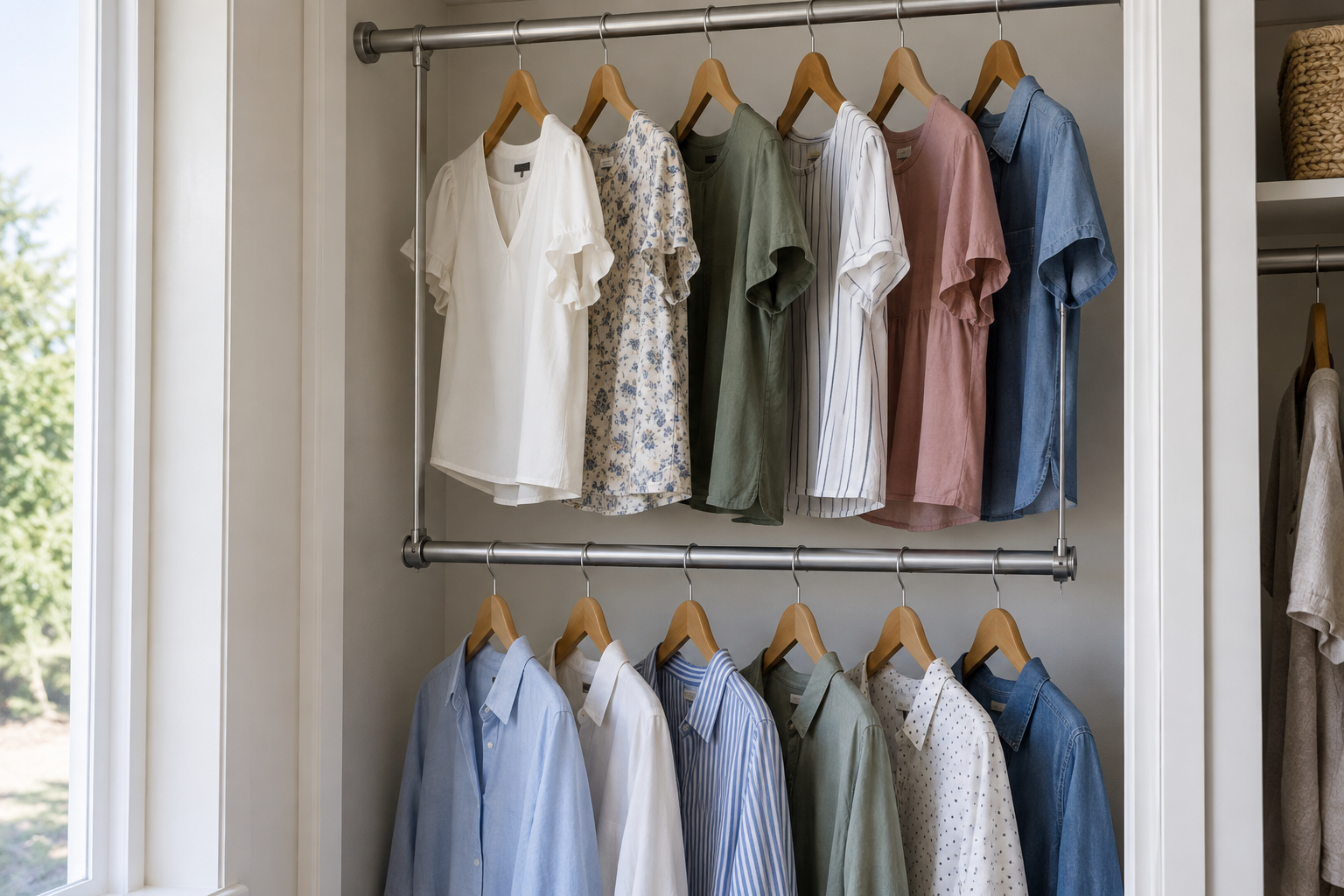
A double-hang closet rod can create a second level of hanging space in a rental closet without adding permanent built-in storage. It can be especially useful when shorter garments leave unused vertical space below the existing closet rod.
Before adding a second hanging level, measure the available vertical space, check the length of the garments you plan to hang, and consider the condition of the existing closet rod and supports.
What Is a Double-Hang Closet Rod?
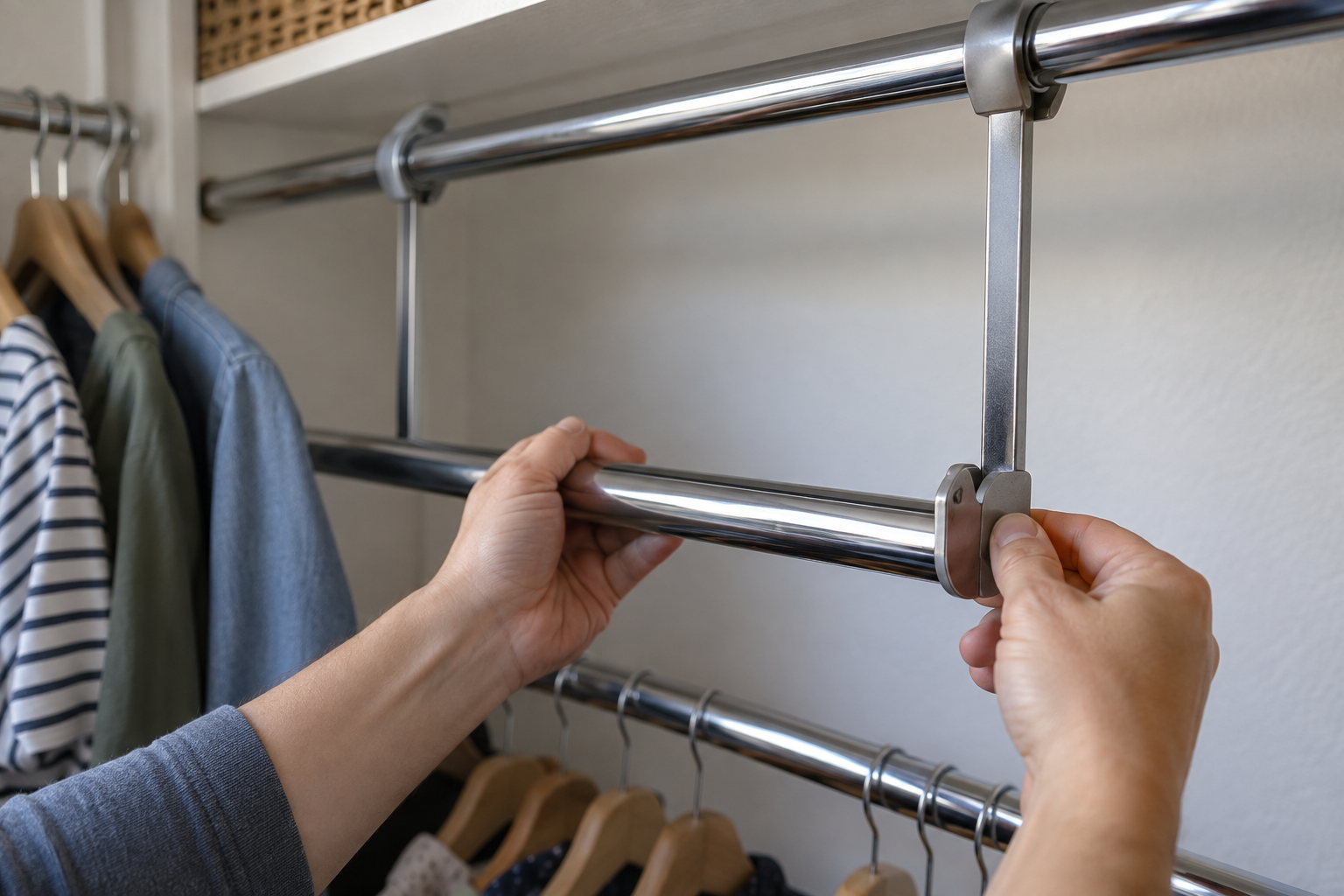
A double-hang closet rod adds a second hanging level below an existing closet rod. Instead of leaving the area beneath shorter clothes unused, it gives you another place to hang garments. Renter-friendly versions may hang from or attach to the original rod, although attachment methods vary between products. Some designs allow you to adjust the width or change the vertical position of the lower rod. Check the specific product instructions to understand which adjustments are available.
This arrangement uses vertical space already inside the closet rather than adding permanent built-in construction. It does not create new structural capacity: the existing rod and its supports still have to carry the items attached to them. A product’s stated load limit is not a rating for your closet as a whole. Exact adjustment ranges, attachment requirements, and load limits depend on the product, so check those details before choosing a model.
When Does a Double-Hang Closet Rod Make Sense?
A second hanging level may work well when much of your wardrobe consists of shorter garments. Shirts, blouses, children’s clothing, and trousers folded over hangers can leave open space beneath the original rod. Some skirts may also suit this arrangement, depending on their length and the hangers you use. Look at your actual clothes together rather than assuming everything in one category will fit. The aim is to create two usable hanging areas where garments remain easy to see and remove.
Long dresses, long coats, robes, and other longer pieces may need an uninterrupted drop. A lower rod can get in their way, while bins, baskets, and shoe storage can leave too little room for clothing on the second level. A questionable or unstable existing rod is also a reason to pause and ask the landlord or property manager to assess it before adding anything.
For a mixed wardrobe, consider a second rod across only part of the closet. That can preserve a long-hang section beside the shorter garments. Whether this works depends on the available width, the product’s design, and what already occupies the space below.
What to Measure Before Adding a Double-Hang Closet Rod
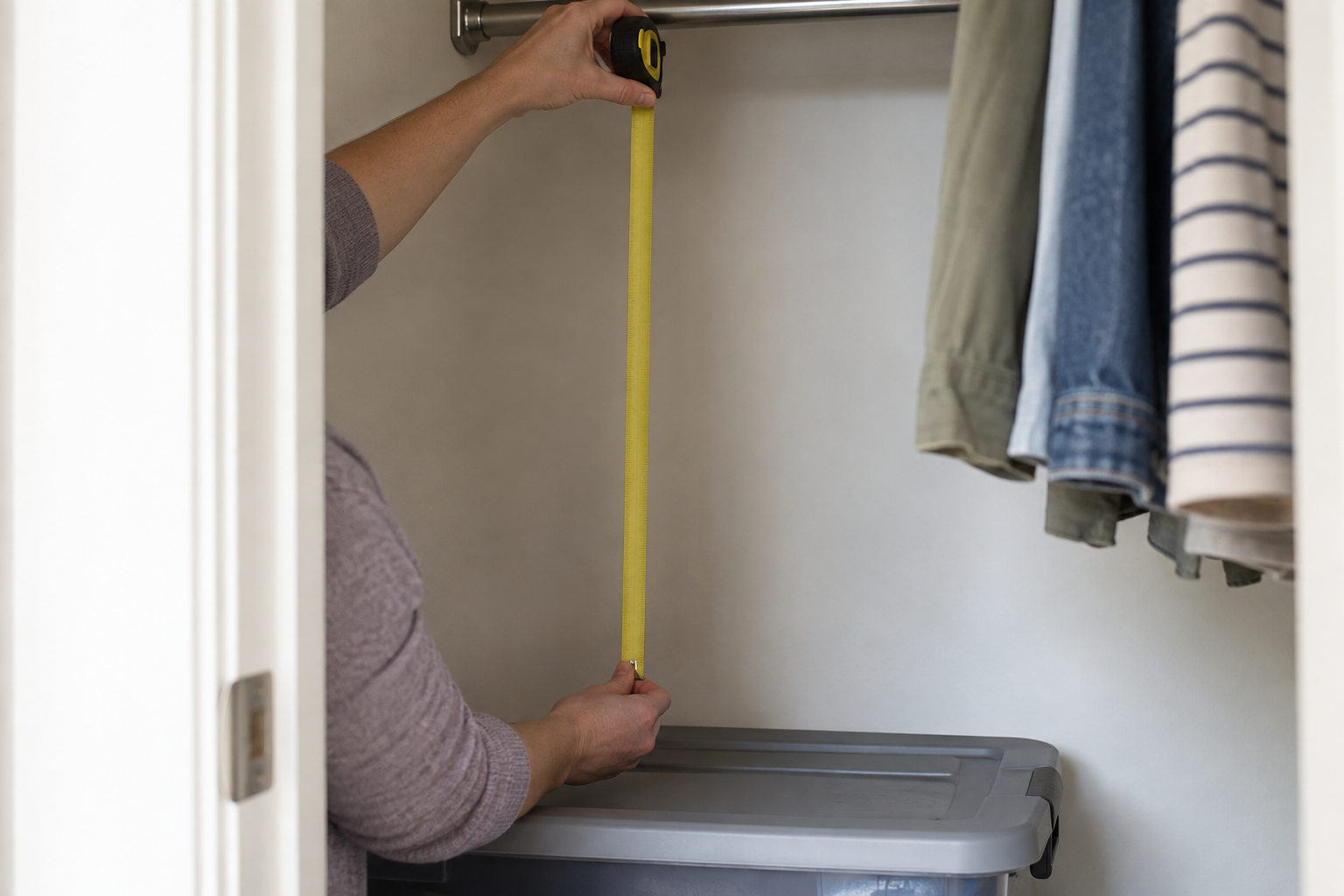
Measure the existing hanging area and everything below it before choosing a second rod. Check the clothes, storage, and access space together so that an apparently open section does not hide an obstruction.
 Save
Save- Available upper rod width: Measure the section of the existing rod that can realistically support a second hanging zone without crowding other storage.
- Rod-to-floor clearance: Measure the vertical space from the existing rod to the floor or lowest obstruction.
- Typical length of short garments: Measure representative shirts, blouses, skirts, or other garments while they are hanging naturally.
- Longest garments in the intended section: Check whether any longer clothing would interfere with a lower rod.
- Proposed lower-rod position: Estimate where the second rod could sit while leaving usable space above and below.
- Floor-storage height: Include bins, baskets, or other items stored beneath hanging clothes.
- Shoe-rack height: Account for any shoe rack or shoe storage that occupies the lower closet area.
- Drawer clearance: Make sure drawers can still open normally beneath or near the proposed second rod.
- Nearby hanging-organizer clearance: Account for any hanging closet organizer already using rod width or vertical space.
- Closet-door or opening clearance: Make sure the second hanging zone does not make clothing difficult to reach through the closet opening.
- Attachment fit with the existing rod: Compare the product’s attachment requirements with the actual existing closet rod.
- Usable lower hanging width: Measure the width available for garments on the second level after accounting for other closet storage.
Renter warning: A double-hang closet rod can fit inside the closet and still be impractical if it crowds long garments, drawers, shoes, or floor storage. Measure the full hanging area before adding a second level.
7 Things to Check Before Choosing a Double-Hang Closet Rod
1. Available Vertical Space
Start at the existing closet rod and measure downward through the area you want to use. Consider the clothing already hanging there, not just the empty distance to the floor. The proposed lower rod needs room beneath the upper garments, and its own garments need usable space below it. Bins, baskets, and other floor storage reduce that space even if they sit well below the original rod.
Total closet height alone does not tell you whether two hanging levels will fit. Space above the existing rod may be irrelevant to this arrangement. Compare your measurements with the intended lower-rod position and the clothes assigned to each level before deciding whether the layout is practical.
2. Garment Length
Shorter garments are generally easier to divide between two hanging levels, but category names are only a starting point. Measure representative clothes while they hang naturally on the hangers you actually use. Include the distance from the rod through the hanger to the lowest part of the garment, rather than measuring the fabric alone. Different hangers and hanging methods can change that drop.
 Save
SaveCheck both levels as a pair. Upper garments should not rest on the lower rod, and lower garments should not drag on shoes, bins, or floor storage. If a few pieces are longer than the rest, plan a separate long-hang area instead of squeezing them into a space that does not suit them.
3. Usable Rod Width
Decide whether you need a second hanging level across the full available width or just one section. A partial-width arrangement can preserve space for long garments while giving shorter clothing a separate lower zone. Check whether the product supports the arrangement you have in mind, and include its attachments when judging how much room remains.
A hanging closet organizer already on the original rod also occupies width and may extend into the proposed lower area. Allow for that overlap when laying out both zones. Garments should remain easy to slide aside and remove without moving several other items first. Maximizing rod width is not necessarily the most usable arrangement if it makes everyday access awkward.
4. Existing Closet Rod Condition
The second rod and its clothing add load to the existing setup. Look for looseness, bending, damaged brackets, or instability before considering more storage. An already heavily loaded rod may not be appropriate for an additional hanging level. A visual check alone does not establish capacity. If the rod or supports appear questionable, contact the landlord or property manager before proceeding.
5. Attachment Method
Double-hang systems may use straps, hooks, clips, adjustable supports, or other product-specific attachments. Attachment design varies, so do not assume a method shown for one model applies to another. Compare the exact product attachment requirements with your existing closet rod and follow the official instructions. Confirm compatibility before buying rather than relying on a similar-looking product photograph.
6. Floor and Drawer Clearance
Check for conflicts with shoes, shoe racks, bins, drawers, laundry baskets, and low freestanding shelves. Consider the garments hanging from the lower rod as well as the rod itself. Gaining hanging space can reduce usable floor-storage space. Drawers still need to open, and baskets should remain removable without pushing clothing aside. Decide which storage you need to preserve before placing the lower level.
7. Access to Both Hanging Levels
Consider whether you can reach both rods, slide hangers, and remove garments comfortably. Clothes hidden behind crowded rows may become harder to find even when they technically fit. Keep frequently used clothing visible and accessible on whichever level suits your routine. Maximum storage density is not always the most usable arrangement. Leave enough room to browse clothing without repeatedly rearranging neighboring garments.
How to Decide Where the Second Rod Should Go
A full-width second level may suit a wardrobe dominated by shorter garments when the area below is available. A partial-width level at one end of the closet can create a short-hang zone while preserving a long-hang section beside it. Check for conflicts with hanging organizers, including their lower compartments. Preserve floor storage where you still need bins or baskets. Compare these layouts against your clothing and access needs; no single arrangement is best for every closet.
How to Set Up a Double-Hang Closet Rod Step by Step
Use this checklist alongside the official product instructions.
 Save
Save- Empty enough of the closet to work comfortably. Move nearby clothing and floor items.
- Inspect the existing closet rod and supports. Stop if the rod, brackets, or supports appear loose, bent, damaged, or unstable.
- Measure available rod width and vertical space. Include floor storage and nearby closet accessories.
- Separate short garments from long garments. Identify which clothing could realistically use a double-hang section.
- Decide whether the second rod should use the full width or only part of it. Preserve long-hang space where needed.
- Compare the closet measurements with the product specifications. Check exact attachment and adjustment requirements.
- Attach the double-hang rod according to the official instructions. Do not invent or substitute installation steps.
- Confirm that the lower rod is positioned without interfering with nearby storage. Check shoes, bins, drawers, and clothing.
- Add a small number of lightweight garments first. Remain within documented product requirements.
- Check both the original rod and the second rod for movement, sagging, or interference. Remove clothing if the setup appears unstable.
- Adjust garment placement or rod position if access or clearance is poor. Prioritize practical use rather than maximum storage density.
What Should You Hang on the Upper and Lower Rods?
Zone by actual garment length and closet dimensions. Shirts, blouses, skirts, suitable short jackets, and other shorter garments may fit above. Shirts, folded trousers on hangers, skirts, or children’s clothing may fit below. These are options, not fixed rules: use the available clearance to decide.
Double-Hang Closet Rod vs Hanging Closet Organizer
A second rod primarily adds hanging space for shorter garments, requiring vertical clearance and potentially reducing floor storage. A hanging closet organizer adds shelf or cubby storage for folded clothing and accessories, but reduces hanging width and adds load to the existing rod. Choose according to whether you need hanging or shelf-like storage.
Double-Hang Closet Rod vs Freestanding Garment Rack
A double-hang rod stays inside the closet without consuming separate room floor area, but depends on existing structure, condition, and dimensions. A freestanding rack adds hanging space independently of the closet rod but occupies bedroom or closet floor area. It needs a stable footprint; follow official product-specific stability or anchoring instructions.
Common Double-Hang Closet Rod Mistakes
- Buying before measuring vertical space.
- Ignoring garment length.
- Trying to double-hang long garments.
- Using the entire closet width when a partial section would work better.
- Ignoring the condition of the existing closet rod.
- Assuming the second rod creates additional structural capacity.
- Blocking shoes, bins, drawers, or floor storage below.
- Crowding both hanging levels.
- Ignoring attachment compatibility.
- Exceeding documented product limits.
- Failing to re-check the setup after adding clothing.
- Assuming a reversible setup is automatically damage-free.
Is a Double-Hang Closet Rod Good for Renters?
Used as designed, a reversible, no-drill model can use vertical space for shorter garments, preserve a long-hang section, and reduce the need for furniture. This approach to closet storage without drilling still adds load to existing supports. Vertical clearance, floor-storage loss, crowding, and product-specific fit and capacity remain limitations; damage-free use is not guaranteed.
Frequently Asked Questions
Are double-hang closet rods worth it?
They can be useful when shorter garments leave unused vertical space and the existing closet setup is suitable. Check fit and everyday access before deciding.
How does a double-hang closet rod work?
It creates a second hanging level below an existing closet rod using a product-specific attachment system. The exact attachment method and available adjustments vary by model.
How much weight can a double-hang closet rod hold?
Capacity varies by product. Check official technical documentation and consider the existing closet rod and supports, which must also carry the added load.
Will a double-hang closet rod damage the existing closet rod?
Damage is possible if the system is unsuitable, overloaded, or used on an unstable existing rod. A reversible attachment does not guarantee damage-free use.
How high should a second closet rod be?
There is no universal height. Placement depends on garment length, floor storage, and the exact product’s adjustment range. Measure the usable space on both levels.
Can I use a double-hang rod for pants?
Folded trousers on hangers may work where garment drop and clearance are suitable. Measure them on their hangers and check what occupies the space beneath.
Can I use a double-hang rod for dresses or coats?
Long garments generally need more uninterrupted vertical space. Preserving a separate long-hang section may be more practical; shorter pieces may fit if measured clearance allows.
Can I use only part of the closet for double hanging?
A partial-width arrangement can preserve long-hang space and may suit mixed wardrobes. Check whether the product supports your intended layout before choosing the lower hanging zone.
Can I still keep shoes or bins below a double-hang rod?
It depends on the available lower clearance. Measure before setup, including garment drop and storage height, and leave enough access to remove shoes or bins.
Are double-hang closet rods good for small rental closets?
They can help where vertical space is underused, but clothing must remain accessible and the existing closet setup must be suitable. Avoid crowding both levels.
Final Thoughts
Measure first, separate short and long garments, assess vertical clearance, and inspect the existing rod condition. Choose full-width or partial-width use carefully while preserving floor-storage and drawer access. Follow official instructions and add clothing gradually. A double-hang closet rod should improve usable storage rather than maximize density.