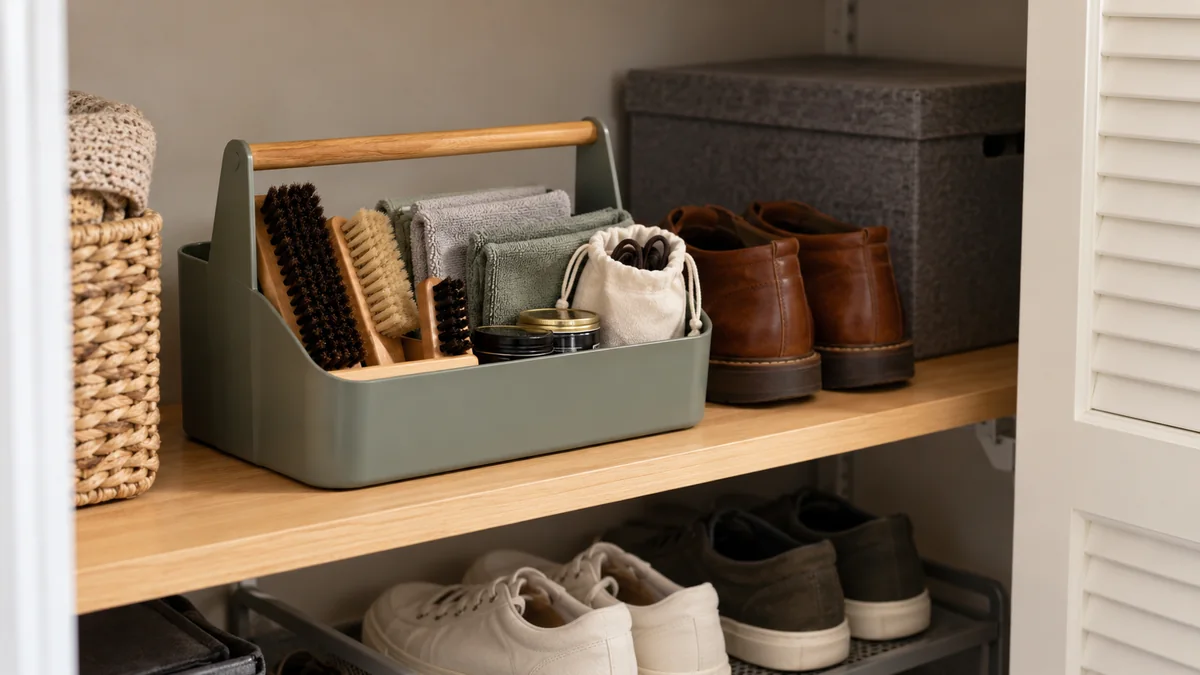
Shoe care supplies storage ideas help renters organize brushes, polish, cleaning cloths and spare laces in a small apartment without drilling into walls. Unlike ordinary shoe storage, shoe care supplies may include liquids, aerosols and residue-covered tools, so the best setup prioritizes safety, ventilation and clean separation.
These 12 ideas focus on portable organizers and existing cabinets, alongside practical limitations, a comparison table, an illustrative household scenario and a simple reset routine. No firsthand testing is claimed.
Plan a dry, sensible shoe care storage zone
 Save
Start by separating dry accessories from chemical products, reading each manufacturer’s storage instructions and checking which supplies you actually use. Measure the tallest bottle and cabinet door clearance before buying a caddy. A practical no-drill storage setup should be stable, low, accessible to adults and protected from children, pets and heat. Never rely on a decorative basket to make incompatible chemical products safe to store together.
Check before choosing an organizer
- Retain original product labels and follow their storage instructions.
- Keep flammable products away from heat, sparks and direct sunlight.
- Store sealed liquids upright in an appropriate tray where allowed.
- Keep cleaning chemicals separate from food, medication and children’s supplies.
- Dry and clean reusable brushes and cloths before storage.
12 shoe care supplies storage ideas without drilling
1. Audit products and tools
Gather shoe brushes, cloths, spare laces, polish, protective sprays and insoles. Check dates, labels and damaged containers.
Practical limitation: Do not store leaking or unidentified chemicals.
2. Measure a designated cabinet space
Choose an existing dry low shelf and measure both bottles and organizer height.
Practical limitation: Avoid obstructing a cabinet door or ventilation.
3. Use a removable cleaning caddy
 Save
Keep brushes and cleaning cloths in a washable divided carrier.
Practical limitation: Keep products upright and away from food-contact items.
4. Stand liquid products in a spill tray
 Save
A shallow chemical-resistant removable tray can catch minor drips.
Practical limitation: Follow product labels; a tray does not prevent dangerous fumes.
5. Keep sprays in approved conditions
Read instructions for temperature, ventilation and storage away from ignition sources.
Practical limitation: Do not put flammable aerosols near heaters, outlets with sparks or direct sun.
6. Separate dry brushes and cloths
Store clean, completely dry brushes and cloths in a ventilated basket.
Practical limitation: Dirty or damp cloths can transfer residue and odors.
7. Put spare laces in small pouches
Group extra laces and replacement insoles by type in removable pouches.
Practical limitation: Label the pouch, not products that require original safety labels.
8. Keep polishes sealed and upright
Group polish tins and waxes in a compact tray, retaining original packaging.
Practical limitation: Follow each product’s safety instructions.
9. Create a shoe-cleaning work zone
Use a portable mat and take the caddy to a suitable ventilated area.
Practical limitation: Avoid spills on rental floors and never use strong chemicals in enclosed closets.
10. Store accessories away from children and pets
Use a suitably secured location for chemical products and sharp tools.
Practical limitation: Accessibility for adults must not compromise child and pet safety.
11. Avoid damp under-sink cupboards
A dry interior utility shelf is preferable to leak-prone or humid spaces.
Practical limitation: Check suitability against the products’ label requirements.
12. Reset the station after every use
Wipe the tray, clean brushes per instructions, let cloths dry and close all containers.
Practical limitation: Dispose of empty and hazardous containers according to local rules.
Compare compact shoe care organizing options
| Supply | Simple storage method | What to check |
|---|---|---|
| Brushes and cloths | Removable ventilated divider | Fully dry |
| Polish tins | Stable low tray | Sealed and label-compliant |
| Liquid cleaner | Upright in a suitable spill tray | Label and product compatibility |
| Spare laces | Small drawer pouch | Easy identification |
| Aerosol protectors | Manufacturer-approved location | Flammability, heat and ventilation |
Illustrative example: a renter’s hallway closet
Imagine a renter whose shoe brushes, spare laces and care products occupy several drawers. A spray can sits next to a radiator and used polishing cloths are stored damp. This is an illustrative scenario, not a firsthand apartment inspection. They move spray products to an appropriate location following the package instructions, let brushes and cloths dry fully, and put dry accessories into a small removable divider. Sealed products are kept upright in an appropriate low utility-cabinet tray, separate from food and personal-care supplies.
What improves: easier retrieval and safer separation of tools. What remains product-specific: the correct storage conditions and safe handling for each chemical formulation.
A ten-minute shoe care station reset
- Check every container is closed and correctly labeled.
- Clean brushes and let cloths dry according to their care instructions.
- Check a removable tray for spills or damaged packaging.
- Return dry tools and small accessories to their compartments.
- Put products back in their label-approved storage location.
Chemical storage and renter safety
Some footwear cleaners and waterproofing sprays contain flammable or irritating ingredients. Read the actual manufacturer’s label before use or storage. Avoid heat and ignition sources, and do not use aerosol products in confined, poorly ventilated spaces. Never mix cleaning chemicals. For general household chemical safety, consult the Poison Control household cleaning product guidance. Follow your local disposal requirements and prevent children and pets from accessing hazardous supplies.
For adjacent no-drill organization, explore bag storage ideas and closet organization ideas. Confirm destination URLs and publication status before publishing this staging draft.
Common mistakes to avoid
Storing aerosols near heat: this creates an avoidable hazard. Mixing chemicals with everyday accessories: spills may contaminate other items. Sealing damp cloths: odors can develop. Using an unstable tall organizer: bottles may tip. Discarding product labels: you lose important instructions.
Frequently asked questions
Where should I store shoe cleaning supplies in a small apartment?
Use a suitable dry, low, secured storage area that complies with each product label, keeping dry tools in a portable organizer and chemicals appropriately separated.
Can I keep shoe polish and brushes together?
They can share an organizing station when products remain sealed, supplies are clean and the arrangement follows storage and safety instructions.
Can I store waterproofing spray in a closet?
Only if the product label permits those conditions. Many aerosols require particular precautions relating to heat, ventilation and ignition sources.
Do I need to mount a rack?
No. Removable divided caddies, low trays and existing shelves can organize many shoe care items without drilling.
Final takeaway
The most useful shoe care supplies storage ideas combine a small portable tool kit with safe, product-appropriate storage for cleaners and sprays. Measure first, keep equipment dry and protect your rental without permanent fixtures.