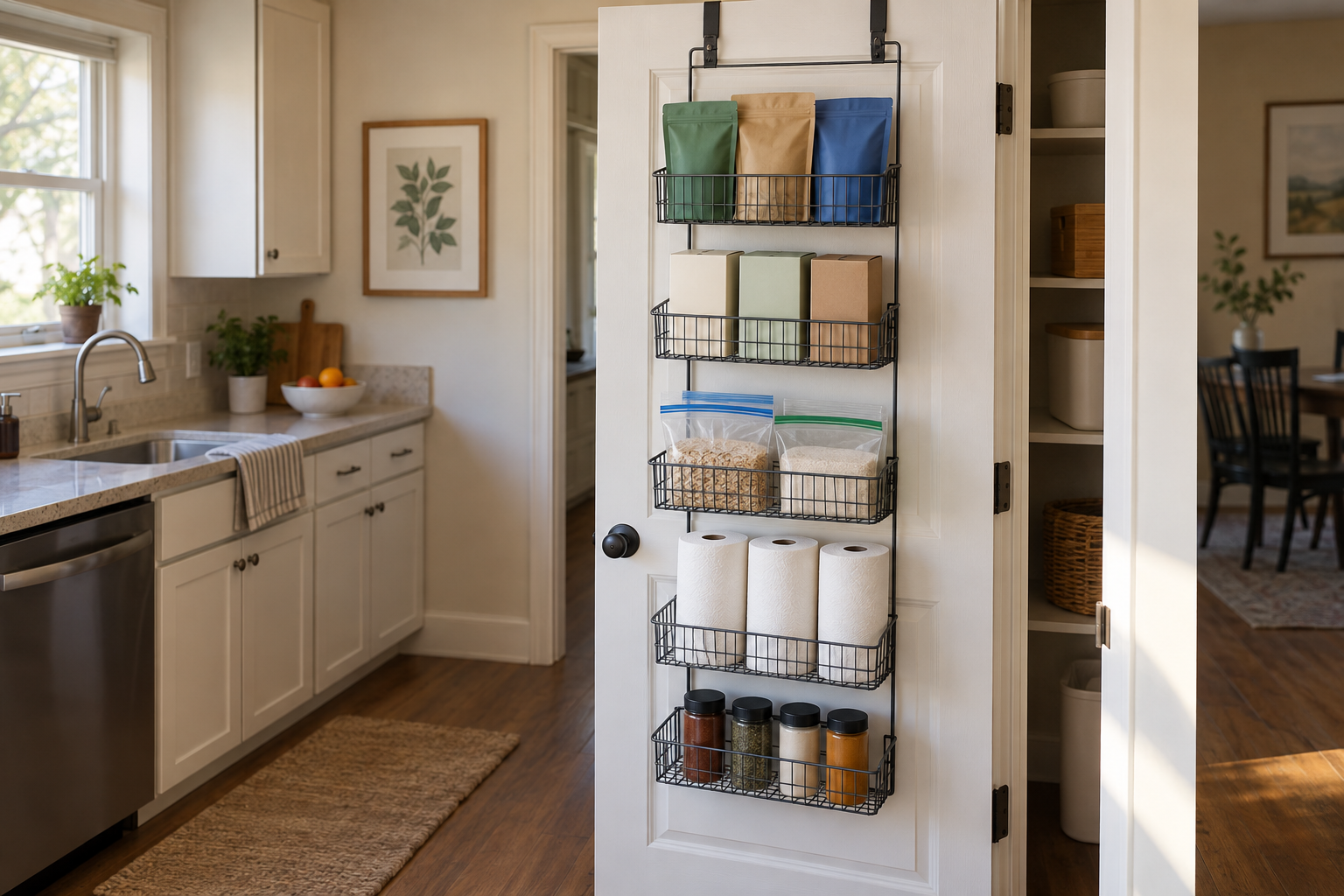
Over-the-door kitchen storage can turn the back of a pantry or utility door into useful vertical space without drilling into walls or cabinets. For renters with limited cupboards, narrow kitchens, or small pantries, that unused door surface can hold lightweight everyday items while keeping counters and shelves less crowded.
The important part is fit. An organizer that is too deep, too wide, or too heavy can stop the door from closing properly, rub against the frame, strike nearby shelves, or place unnecessary stress on hinges. Measure the door first, test the organizer unloaded, and add weight gradually.
This guide covers 10 practical renter-friendly ideas, what to measure before buying, which items are best suited to door storage, and the common mistakes that make an otherwise useful organizer difficult to live with.
Before Choosing Over-the-Door Kitchen Storage, Measure the Door
Good over-the-door kitchen storage works only when the organizer, the door, and the surrounding space all fit together. Measuring just the door width is not enough.
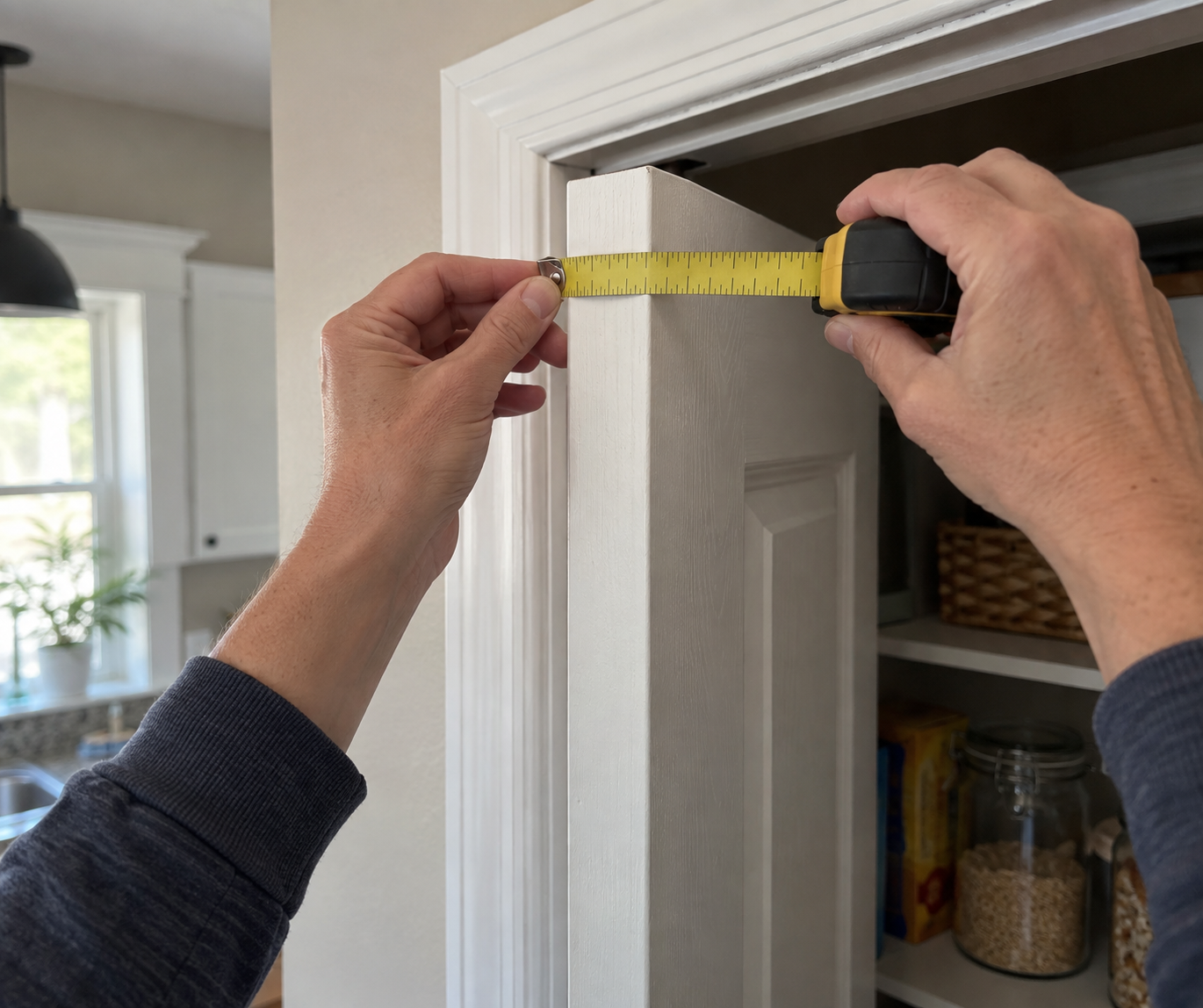
Check the following before buying:
- Door thickness: Measure at the top edge where the hooks or brackets will sit.
- Top clearance: Check the gap between the top of the door and the frame so the bracket can pass through without scraping or stopping the door from closing.
- Usable door width: Measure the clear face of the door while allowing for handles, raised panels, trim, and hinges.
- Loaded depth: Estimate how far the organizer and stored items will project from the door.
- Door swing: Open the door fully and check whether a loaded organizer could hit a wall, cabinet, appliance, pantry shelf, or person using the passage.
- Bottom clearance: Make sure lower baskets do not scrape the floor or interfere with a threshold.
Renter tip: Do not assume that “over-the-door” automatically means damage-free. Poorly fitting hooks, excessive weight, swinging baskets, or rough metal contact can still mark paint, trim, or the door surface.
If you are measuring another room as well, our guides to over-the-door closet storage and over-the-door bathroom storage explain the same fit-first principle in different spaces.
10 Renter-Friendly Over-the-Door Kitchen Storage Ideas
1. Use a Multi-Tier Pantry Door Rack
A multi-tier hanging rack can create several levels of visible storage on the back of a pantry door. It works best for relatively light items that you use frequently and want to see at a glance.
Choose a rack with basket spacing that suits the items you actually store. Deep baskets may work for packets and bottles, while shallow baskets can be better for spice jars, wraps, or snack packs. Check the organizer’s total load rating and distribute weight evenly rather than filling the lowest baskets with the heaviest items.
2. Store Spices in Shallow Door Baskets
Spice jars take up surprisingly valuable cabinet space. Shallow baskets can keep them visible without requiring a permanent wall-mounted spice rack.
Avoid baskets that are so deep that small jars disappear behind one another. The goal is easy identification and retrieval, not simply maximum capacity. Keep glass containers secure enough that they cannot jump or tip when the door moves.
3. Use Clear or Open Bins for Snack Storage
Lightweight snack packets, tea, drink mixes, and individually wrapped items are good candidates for door storage because they add relatively little weight.
Open or clear bins make inventory easier to see. Group similar items together and avoid overfilling the pockets or baskets so contents remain easy to remove without pulling against the organizer.
4. Store Foil, Wraps, and Food-Storage Bags Vertically
Boxes of foil, parchment, plastic wrap, and food-storage bags can occupy a large section of a drawer. A narrow over-the-door basket can keep these long, lightweight boxes upright and visible.
Check basket height so the boxes cannot fall out when the door swings. If the organizer flexes or rattles when the door moves, reduce the load rather than relying on extra improvised fasteners.
5. Create a Small Baking-Supplies Zone
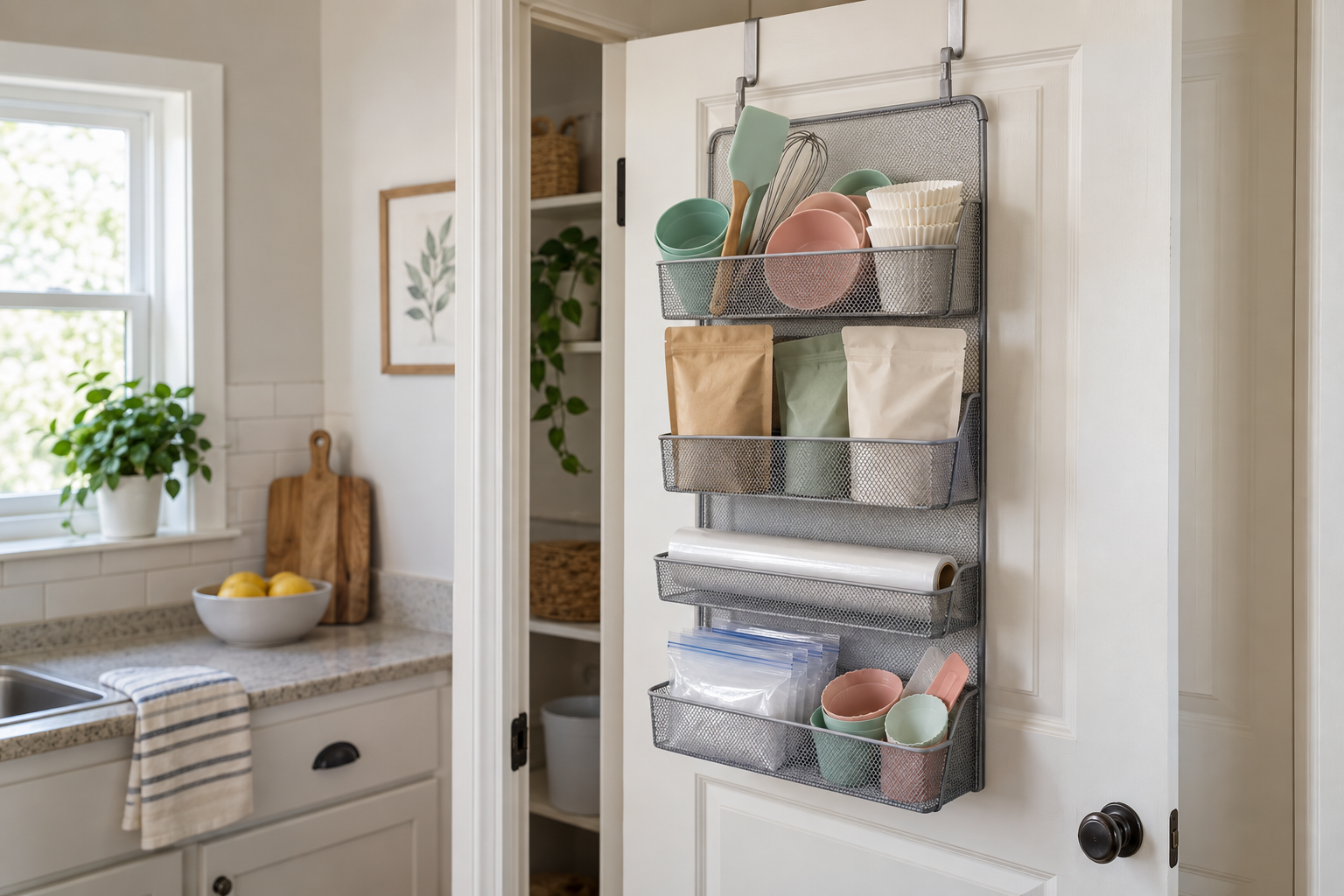
Lightweight baking accessories such as measuring cups, silicone tools, piping bags, paper liners, and small packets can be grouped together behind a door.
Avoid putting heavy glass jars, large bags of flour, or bulky appliances on a door simply because the basket is large enough. Door storage is most practical when the load remains moderate and stable.
6. Use Pocket Organizers for Lightweight Kitchen Accessories
A fabric or clear-pocket organizer can work for items that do not need rigid shelving, such as reusable bags, lightweight cloths, small packets, or soft kitchen accessories.
Choose pockets that are easy to clean and avoid loading them with sharp tools, breakable items, or anything heavy enough to stretch the material and pull the organizer out of shape.
7. Keep Frequently Used Cleaning Accessories Together
If the kitchen has a utility or pantry door near the cleaning area, a small over-the-door organizer may hold lightweight cloths, gloves, spare sponges, or similar accessories.
Do not place hazardous household chemicals where children or pets can reach them. The U.S. Consumer Product Safety Commission recommends keeping household chemicals and cleaning supplies secured and out of children’s reach. A door that swings through a busy area is also a poor location for bottles that could leak, fall, or strike the wall.
8. Use Adjustable Baskets for Mixed-Height Items
Some door racks allow individual baskets to be repositioned. Adjustable spacing can make one organizer more useful because tall packets, bottles, and shorter containers do not all need the same vertical clearance.
Adjust the basket positions before loading the rack fully. Leave enough vertical room to lift items out comfortably instead of packing shelves so tightly that every removal requires moving something else first.
9. Reserve Lower Baskets for Light Backup Supplies
Lower baskets can be harder to reach quickly, so they are often better for lightweight backups than everyday essentials. Spare napkins, extra food-storage bags, paper goods, or unopened lightweight supplies can work well here.
Check floor clearance every time you reposition a lower basket. An organizer that drags across the floor or threshold can damage both the rack and the door over time.
10. Create Zones Instead of Filling Every Basket
The best over-the-door setup is not necessarily the fullest one. Dividing the organizer into simple zones makes it easier to maintain and can reduce unnecessary weight.
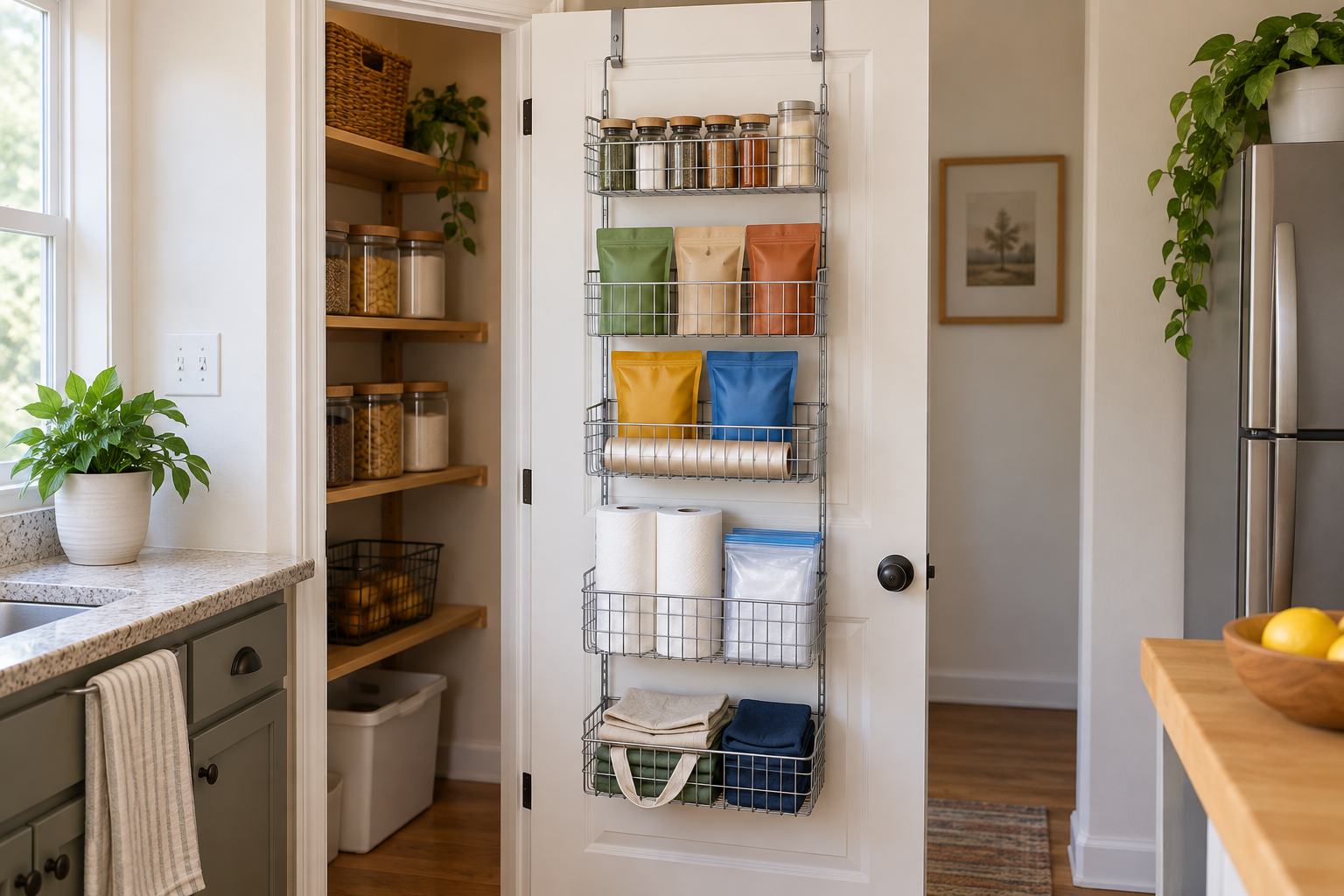
For example, keep spices and seasonings near eye level, snacks or packets in the middle, and lightweight backups lower down. Leave an empty basket if that makes frequently used items easier to see and prevents the door from becoming overloaded.
Which Over-the-Door Kitchen Organizer Fits Your Needs?
Use this comparison as a starting point. The correct choice depends on your actual door measurements, the organizer’s instructions, and the weight of the items being stored.
| Organizer Type | Best For | Main Advantage | What to Check |
|---|---|---|---|
| Multi-tier metal rack | Pantry items and mixed supplies | High vertical capacity | Door thickness, top gap, total load |
| Shallow basket rack | Spices and small jars | Easy visibility | Basket depth, item stability |
| Clear pocket organizer | Packets and soft accessories | Lightweight and visible | Pocket strength, cleaning, door clearance |
| Adjustable basket system | Mixed-height items | Flexible spacing | Basket locking, overall depth |
| Narrow over-door rack | Small pantry or utility doors | Uses less door width | Handle clearance, loaded depth |
What Should You Store on a Kitchen Door?
Door storage is most useful for lightweight, stable items that benefit from visibility. Good candidates may include:
- spice jars and seasoning packets
- tea, drink mixes, and lightweight snacks
- foil, parchment, wraps, and food-storage bags
- measuring cups and lightweight baking accessories
- napkins, paper goods, reusable bags, and soft accessories
- cleaning cloths, gloves, and spare sponges where appropriate
Items that are very heavy, fragile, sharp, unstable, or hazardous are usually better stored on a fixed shelf, in a drawer, or in another secure location.
Common Over-the-Door Kitchen Storage Mistakes
- Buying before measuring the top gap: A rack may fit the door thickness but still prevent the door from closing.
- Ignoring loaded depth: Empty baskets may clear nearby shelves while filled baskets strike them.
- Overloading the door: Large baskets do not automatically mean the door should carry heavy items.
- Blocking handles or locks: The organizer should not interfere with normal operation.
- Letting metal rub against finishes: Check the product’s protective pads and installation instructions.
- Storing unstable glass containers: Door movement can cause jars or bottles to shift.
- Assuming every door is suitable: Lightweight, damaged, unusually narrow, or poorly aligned doors may not be appropriate for added storage.
How to Set Up Over-the-Door Kitchen Storage Step by Step
- Decide which lightweight items you want to move off shelves, counters, or drawers.
- Measure door thickness, top clearance, usable width, loaded depth, and floor clearance.
- Compare your measurements with the organizer’s stated fit and load guidance.
- Install the organizer empty and close the door slowly through its full swing.
- Check for rubbing, rattling, hinge movement, blocked handles, or contact with nearby shelves.
- Add lightweight items gradually, keeping weight distributed rather than concentrated in one basket.
- Open and close the loaded door several times to confirm normal movement.
- Recheck the setup after a few days and reduce the load if the door begins to rub, sag, or close differently.
For more ways to increase kitchen storage without permanent changes, see our main guide to kitchen storage without drilling. If the space under your sink is the bigger problem, our guide to under-sink kitchen storage for renters covers removable organizers that work around plumbing.
Frequently Asked Questions
Is over-the-door kitchen storage renter-friendly?
Over-the-door kitchen storage can be renter-friendly when the organizer hangs without permanent modification, fits the door correctly, and does not damage the finish or interfere with normal operation. Check your lease and the product instructions before installation.
How do I know if an over-the-door organizer will fit?
Measure door thickness, the clearance above the door, available door width, loaded organizer depth, and floor clearance. Then compare those measurements with the exact organizer rather than relying on a generic “fits most doors” description.
Can I put canned food on an over-the-door pantry rack?
Only if the organizer and the door are suitable for that load and the product instructions permit it. Cans add weight quickly, so lightweight packets, spices, wraps, and similar items are often easier on a rental door.
Will an over-the-door organizer stop the door from closing?
It can if the brackets are too thick for the top gap, the rack projects too far into nearby shelving, or the organizer is installed on a door with very tight clearances. Test the organizer empty before loading it.
What is best to store on the back of a pantry door?
Lightweight, stable items that benefit from visibility are usually the most practical choices, such as spices, packets, wraps, food-storage bags, snacks, paper goods, and lightweight kitchen accessories.
Final Thoughts
Over-the-door kitchen storage can add useful vertical capacity to a rental without drilling, but only when the organizer fits the actual door and remains easy to use after it is loaded.
Measure before buying, keep the load moderate, protect the door finish, and test the full door swing before treating the rack as permanent everyday storage.
A well-fitted door organizer should make the kitchen easier to use without making the door harder to close, stressing the hinges, or creating a new obstacle in a small space.