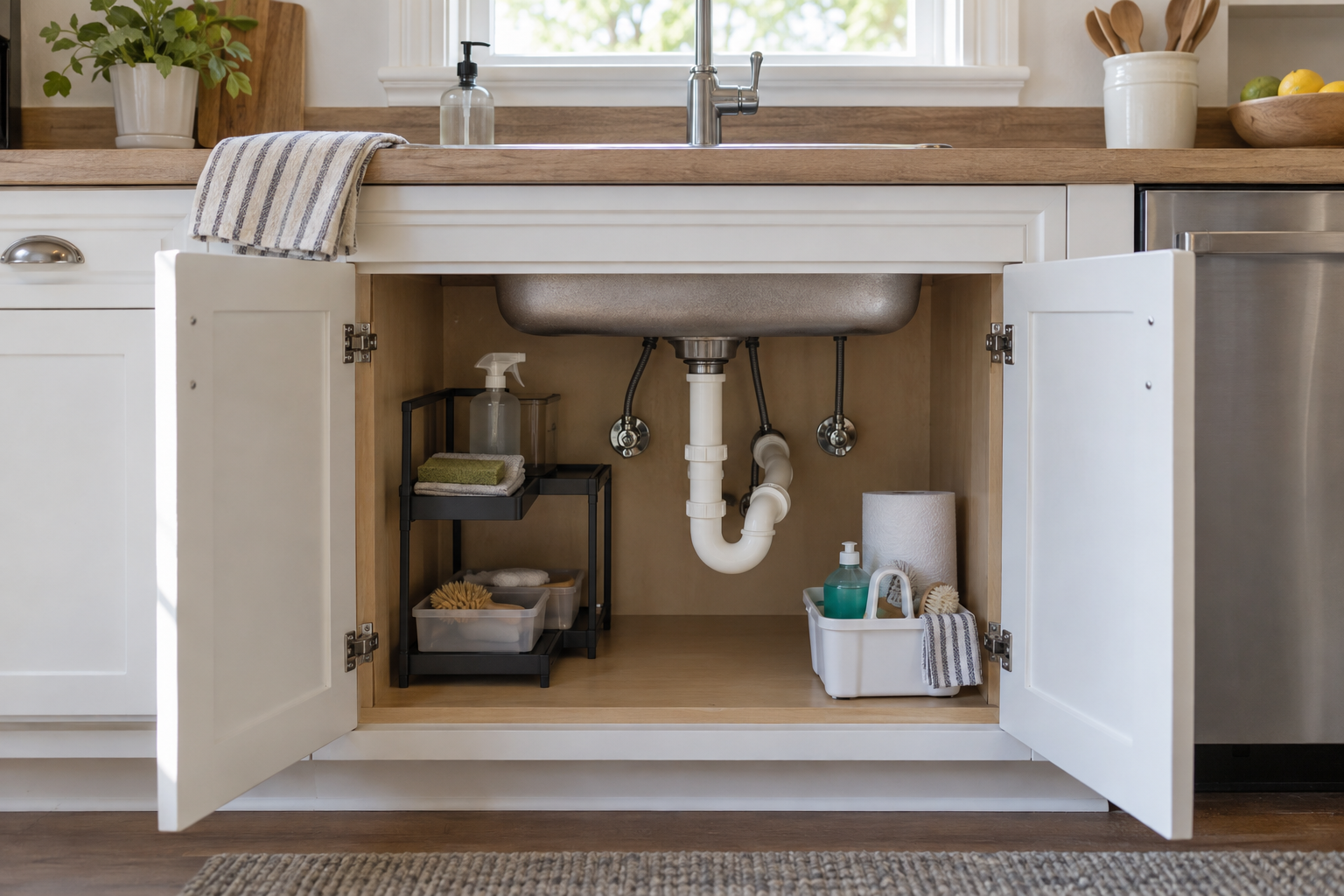
Good under-sink kitchen storage for renters is less about filling every inch and more about working around the plumbing. Pipes, shut-off valves, disposal units, cabinet hinges, and occasional moisture can turn a seemingly large cabinet into an awkward storage space.
The most renter-friendly approach is to use removable, freestanding organizers that improve access without drilling into the cabinet. Start by measuring the usable space, keep plumbing controls reachable, and choose storage that can be removed when you move.
This guide covers 11 practical no-drill ideas for organizing the cabinet under a kitchen sink, including options for small rentals and layouts with pipes running through the middle of the cabinet.
Before Organizing Under the Sink, Measure Around the Plumbing
Under-sink cabinets rarely behave like normal rectangular storage. The drainpipe may occupy the center, water lines may run along the back wall, and shut-off valves can limit where drawers or shelves can sit.
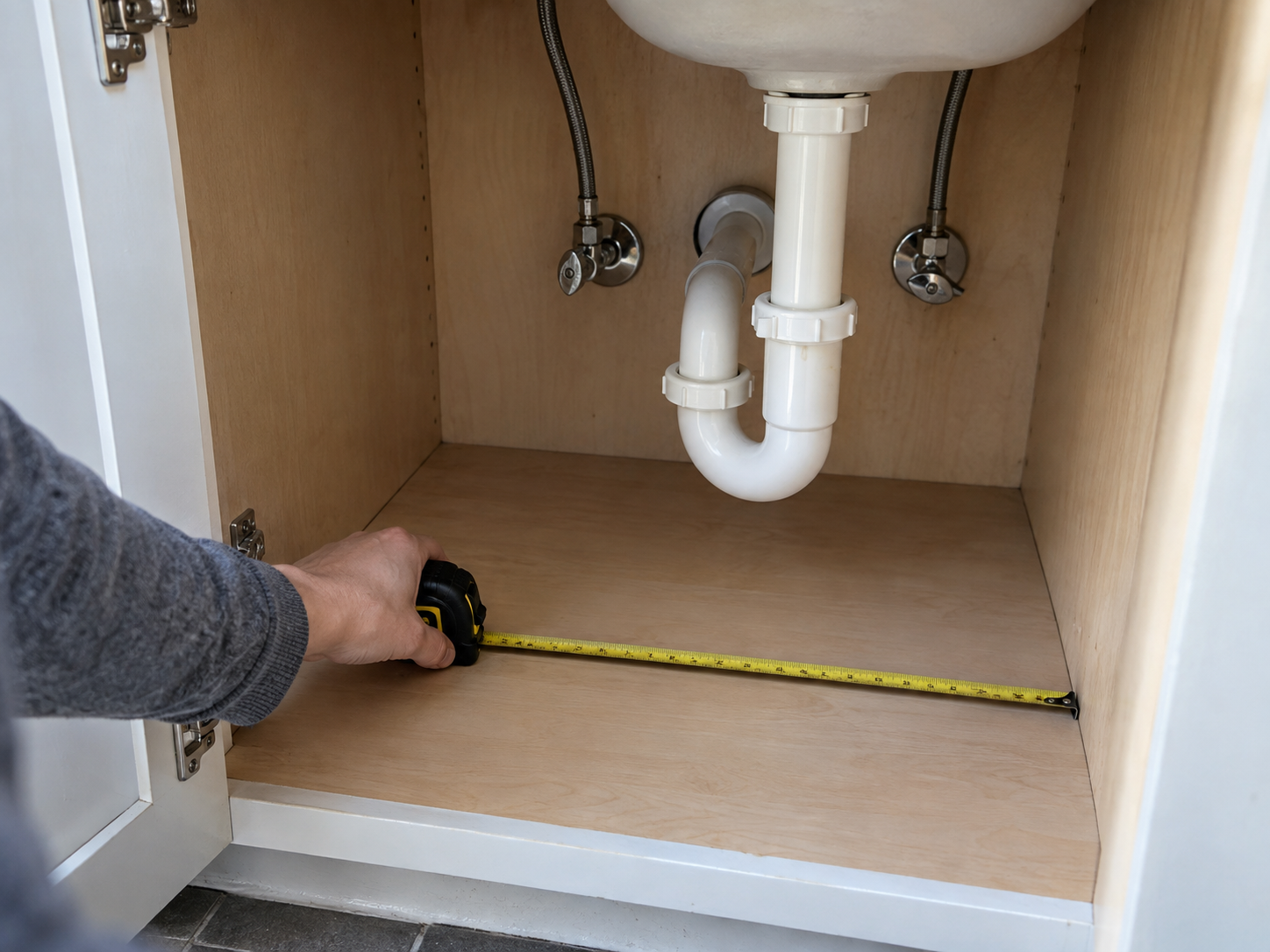
Measure the cabinet before buying anything. Record the internal width, depth, and height, then measure the open areas on each side of the plumbing. Also check the distance between the cabinet floor and the lowest pipe.
- Cabinet width: Measure wall to wall inside the cabinet.
- Usable depth: Measure from the front edge to the back while allowing for pipes and fittings.
- Vertical clearance: Check the height below pipes and the open space beside them.
- Door and hinge clearance: Make sure drawers or bins can slide out without hitting hinges.
- Shut-off valve access: Leave enough room to reach and operate the valves if needed.
- Disposal clearance: If the sink has a garbage disposal, keep storage away from the unit and its connections.
Renter tip: Do not choose an organizer simply because its overall dimensions fit the cabinet. Its shelves, drawer rails, or support frame may still collide with pipes, valves, hinges, or a disposal unit.
11 No-Drill Under-Sink Kitchen Storage Ideas for Renters
1. Use an L-Shaped Two-Tier Organizer
An L-shaped organizer is useful when plumbing occupies the center or rear of the cabinet. Instead of trying to place a full-width shelf across the space, the organizer uses one side of the cabinet while leaving an open area around pipes.
Look for a freestanding version that does not require screws. Before buying, compare the shelf heights with your pipe positions and make sure bottles can stand upright on each level.
2. Add Sliding Drawers for Items at the Back
Pull-out drawers can make deep under-sink cabinets much easier to use. Instead of reaching behind several bottles, you can slide the organizer forward and see the contents.
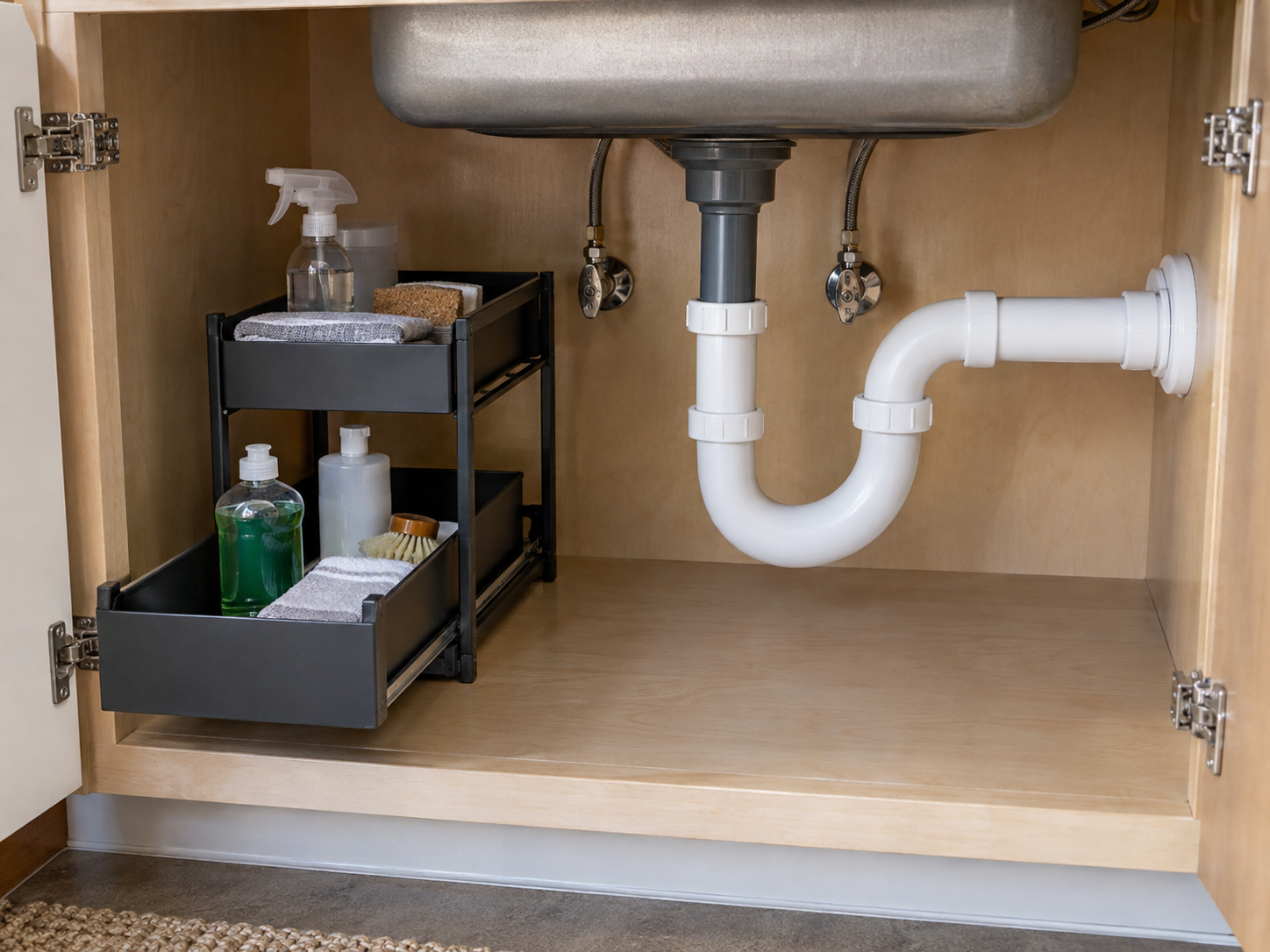
For a rental, choose a freestanding sliding unit rather than one that must be screwed into the cabinet floor. Check the full pull-out distance so the drawer clears the cabinet door and nearby hinges.
3. Use Narrow Bins on Each Side of the Pipes
Narrow open bins are one of the simplest ways to organize irregular under-sink space. One bin can hold dishwashing supplies, another can hold cloths or sponges, and another can hold trash bags or other lightweight household items.
Bins also make it easier to remove an entire category at once when you need access to plumbing. Choose washable materials rather than absorbent cardboard, especially in a cabinet where small drips or condensation may occur.
4. Add a Tension Rod for Suitable Spray Bottles
A properly fitted tension rod can use some of the empty space above short containers. In an appropriate cabinet, spray bottles can hang by their trigger handles while the cabinet floor remains available for bins.
Do not overload the rod, and make sure it cannot press against or interfere with plumbing. If children can access the cabinet, household cleaners should not be left within reach. The U.S. Consumer Product Safety Commission recommends keeping household chemicals and cleaning supplies in a locked cabinet or box and out of children’s reach.
5. Use a Small Turntable in an Open Corner
A compact turntable can work well in a corner that is difficult to reach directly. Rotating the tray brings smaller bottles and supplies toward the front without requiring a fixed installation.
Keep the turntable clear of pipe fittings and choose a diameter that allows it to rotate fully. Taller bottles should be stable enough that they do not tip when the tray turns.
6. Add a Freestanding Shelf Riser
A small shelf riser can create a second storage level where plumbing leaves enough vertical clearance. This works best on one side of the cabinet rather than directly beneath the drain assembly.
Use the lower level for low-profile items and the upper level for light, frequently used supplies. Check the riser’s load rating and make sure it stands flat on the cabinet base.
7. Keep Everyday Cleaning Supplies in a Portable Caddy
A handled caddy is useful when several cleaning products are used together. Instead of storing each bottle separately, the whole group can be lifted out when needed and returned afterward.
This approach also makes plumbing inspection easier because the cabinet can be cleared quickly. Keep products in their original labeled containers and follow the storage instructions on each label.
8. Use the Cabinet Door Only for Lightweight Storage
The inside of the cabinet door may hold lightweight cloths, gloves, small brushes, or other suitable items with an over-door organizer or a removable system that is compatible with the surface.
Check the lease and product instructions before using adhesives. Also make sure the organizer does not hit the sink bowl, shelves, plumbing, or stored bottles when the door closes.
Avoid loading a lightweight cabinet door with heavy bottles. Added weight can place unnecessary stress on hinges and may make the door difficult to close.
9. Add a Waterproof Liner or Under-Sink Mat
A removable waterproof liner or tray can help protect the cabinet base from minor bottle leaks and make cleanup easier. It can also make small drips more noticeable before they spread into stored items.
A liner is not a substitute for fixing a plumbing leak. If you notice active dripping, moisture, swelling, staining, or a persistent musty smell, clear the area and report or address the plumbing problem according to your rental arrangement.
10. Use Stackable Bins Only Where Vertical Space Is Clear
Stackable bins can work well on one side of the cabinet when there is enough unobstructed height. They are useful for backup sponges, dishwasher supplies, trash bags, and other small items that do not need to be accessed constantly.
Do not build a tall stack directly in front of shut-off valves or pipe joints. The ability to see and reach the plumbing is more important than gaining one additional storage layer.
11. Divide the Cabinet Into Simple Storage Zones
The most effective under-sink setup is often a combination of several small solutions rather than one large organizer. Divide the cabinet according to how often items are used and where the plumbing allows safe access.
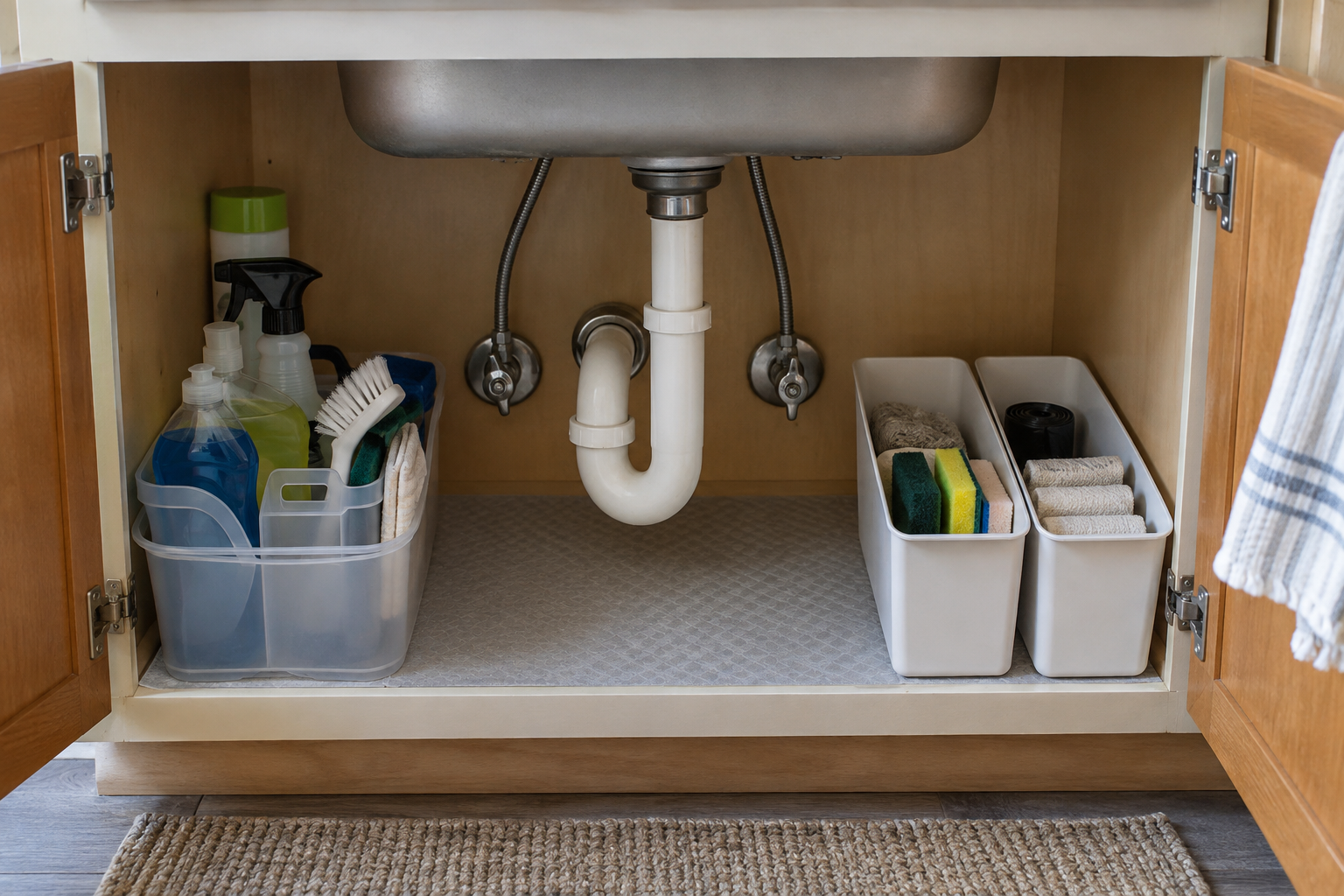
A practical layout might place everyday supplies toward the front, backups at the side or rear, and a completely open plumbing zone around shut-off valves and connections.
A Simple Three-Zone Layout for a Small Rental Kitchen
If you are unsure where to begin, organize the cabinet into three zones:
| Zone | Best Use | Suggested Organizer | Main Check |
|---|---|---|---|
| Left side | Frequently used supplies | Sliding drawer, L-shaped organizer, or caddy | Door and hinge clearance |
| Center / plumbing area | Keep mostly open | None or very low-profile storage | Access to pipes and shut-off valves |
| Right side | Backups and lightweight items | Narrow bins, shelf riser, or turntable | Pipe position and vertical clearance |
This layout is only a starting point. The plumbing arrangement may be reversed or offset, so adapt the storage zones to the actual cabinet rather than forcing the cabinet to match a standard diagram.
What Should You Store Under the Kitchen Sink?
The under-sink cabinet is commonly used for dishwashing and household cleaning supplies, but it should not become a general storage space for everything that fits.
- Dishwashing liquid and dishwasher supplies, when stored according to their labels
- Sponges, scrubbers, brushes, and cleaning cloths
- Trash bags and recycling liners
- Rubber gloves and lightweight cleaning accessories
- Suitable household cleaners when the cabinet is secure and appropriate for the household
If young children can access the kitchen, do not rely on ordinary under-sink storage for hazardous cleaners. CPSC guidance recommends keeping household chemicals and cleaning supplies locked up and out of children’s reach. Similar caution is appropriate where pets may access stored products.
Common Under-Sink Storage Mistakes Renters Should Avoid
- Buying before measuring: A highly rated organizer is still useless if the plumbing runs through its frame.
- Blocking shut-off valves: Sink valves are useful because they allow the water supply to the fixture to be stopped quickly when needed. This Old House notes their value in responding quickly to plumbing problems.
- Packing items tightly around pipes: Leave enough visibility to notice moisture and enough room to reach fittings.
- Using absorbent storage on the cabinet floor: Cardboard and similar materials can be damaged by small leaks or spills.
- Overloading a tension rod: Use it only for suitable lightweight items within the product’s instructions.
- Assuming every adhesive is renter-safe: Surface finish, weight, installation, removal, and lease rules all matter.
- Storing hazardous products where children can reach them: Use secure, locked, or higher storage as appropriate.
How to Organize Under the Kitchen Sink Step by Step
- Empty the cabinet completely and discard empty or unnecessary items.
- Check the cabinet floor, pipes, fittings, and valves for obvious moisture or damage.
- Measure the usable spaces around the plumbing.
- Group items into daily-use supplies, backups, and items that should be stored elsewhere.
- Choose one primary organizer that fits the largest usable side of the cabinet.
- Add smaller bins or a caddy only where they improve access.
- Keep shut-off valves, pipe joints, and disposal connections visible and reachable.
- Use the setup for a week before buying additional organizers.
For a broader look at rental-kitchen organization, see our guide to kitchen storage without drilling. It covers cabinet risers, rolling carts, over-door storage, drawer dividers, freestanding shelving, and other reversible ways to increase storage throughout the kitchen. If you are solving a similar problem in another room, our guide to organizing under a bathroom sink shows how to work around plumbing in a smaller cabinet.
Frequently Asked Questions
How do I organize under my kitchen sink without drilling?
Use freestanding organizers such as L-shaped shelves, sliding drawers, narrow bins, portable caddies, turntables, shelf risers, and appropriately fitted tension rods. Measure around the plumbing first and keep valves accessible.
What type of organizer works best around sink pipes?
L-shaped organizers, narrow side bins, small sliding drawers, and separate shelf risers are often easier to fit around plumbing than a single full-width shelf. The best option depends on where the pipes and shut-off valves sit in the cabinet.
Can renters use adhesive organizers inside kitchen cabinets?
Only when the lease allows it and the organizer is compatible with the cabinet surface. Follow the manufacturer’s installation, weight, and removal instructions because removable adhesive can still mark unsuitable finishes.
How do I protect the cabinet under my sink from leaks?
A removable waterproof liner or tray can help contain minor bottle spills and make small drips easier to see. It does not replace plumbing repairs; active leaks should be addressed promptly.
Should cleaning products be stored under the kitchen sink?
They are commonly stored there, but storage must be appropriate for the household and consistent with product labels. Where children can access the cabinet, CPSC recommends that household chemicals and cleaners be locked up and kept out of reach.
Final Thoughts
Under-sink kitchen storage works best when the plumbing determines the layout. Measure first, protect access to valves and fittings, then use removable organizers to make the remaining space easier to reach.
For most renters, a simple combination of one sliding or L-shaped organizer, a few washable bins, and a clearly open plumbing zone will be more practical than filling the entire cabinet with storage products.
Keep the setup reversible, avoid permanent cabinet changes, and review it occasionally for moisture, movement, or overcrowding. A well-organized rental kitchen should make everyday items easier to use without making maintenance harder.